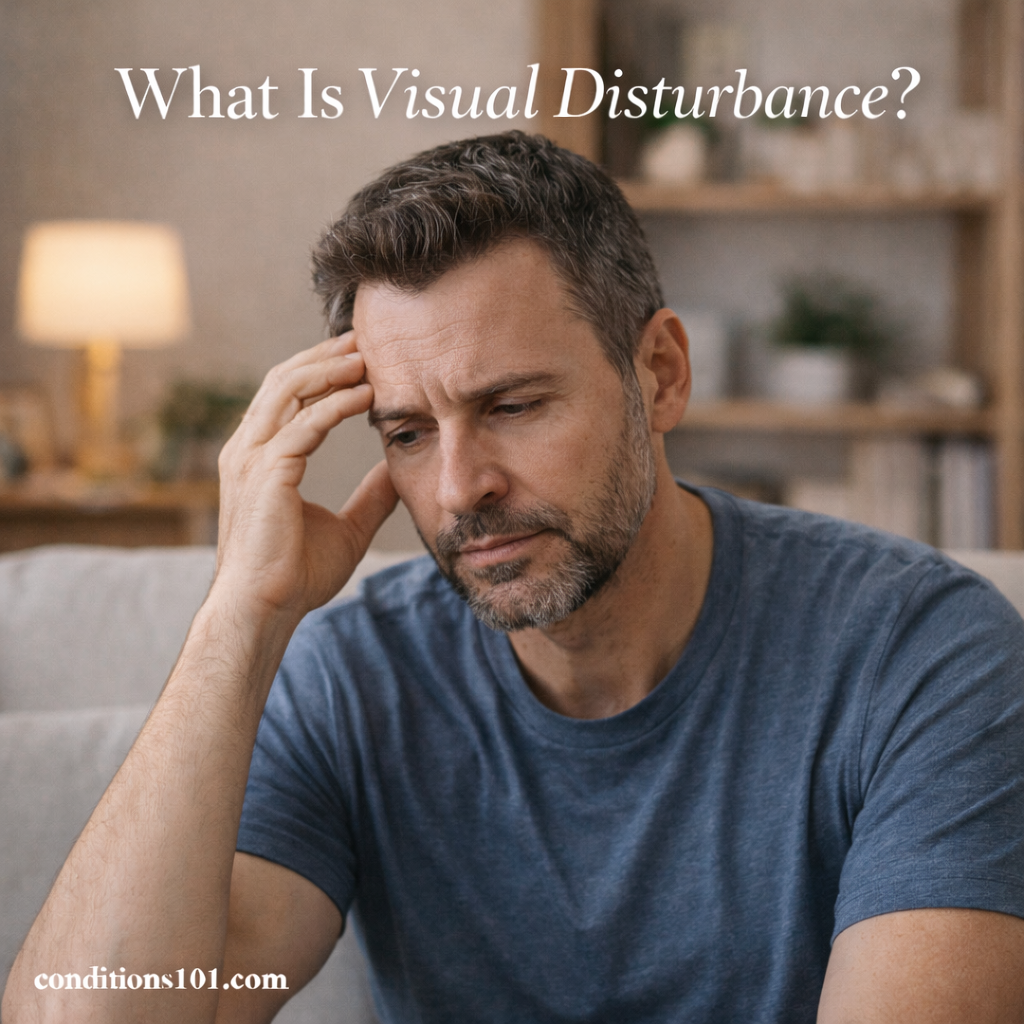
Visual disturbance is a general term used to describe changes, irregularities, or disruptions in how a person sees. These changes may affect clarity, color, brightness, movement, or the overall visual experience. Visual disturbances can be temporary or ongoing and may occur in one or both eyes.
Rather than referring to a single condition, visual disturbance is a descriptive phrase used to explain unusual or altered visual sensations.
Understanding Visual Disturbance
Vision relies on a complex system involving the eyes, optic nerves, and brain. Visual disturbances can occur when any part of this system processes visual information differently than usual.
A visual disturbance may involve:
- Changes in sharpness or clarity
- Altered perception of light or color
- Unexpected visual patterns or effects
- Difficulty focusing or tracking objects
The experience can vary widely between individuals.
Common Types of Visual Disturbances
Visual disturbances can present in many forms. Common examples include:
- Blurred or hazy vision
- Double vision
- Flickering or flashing lights
- Dark spots, bright spots, or shapes
- Wavy or distorted lines
- Difficulty adjusting to light or darkness
Some people experience only one type, while others notice multiple changes at once.
How Visual Disturbances Are Experienced

Visual disturbances may:
- Appear suddenly or gradually
- Come and go intermittently
- Affect central vision, peripheral vision, or both
- Occur during specific activities or environments
The intensity and duration can range from brief and subtle to more noticeable and disruptive.
Visual Disturbance vs. Vision Changes
Not all vision changes are considered visual disturbances.
- Normal vision changes may include temporary eye strain or fatigue
- Visual disturbances often feel unusual, unexpected, or unfamiliar
- Disturbances may interfere more noticeably with visual tasks
The distinction often depends on how different the experience feels compared to a person’s usual vision.
Situations Where Visual Disturbance May Occur
Visual disturbances are often discussed in connection with various everyday or situational factors.
These may include:
- Fatigue or lack of rest
- Stress or emotional strain
- Prolonged screen use
- Sudden changes in lighting
- Physical or sensory overload
In many cases, visual disturbances are temporary and context-dependent.
Visual Disturbance and Sensory Processing
Vision is closely linked with how the brain processes sensory input. Changes in sensory processing can sometimes influence how visual information is perceived.
This may involve:
- Heightened sensitivity to light
- Difficulty filtering visual stimuli
- Visual overload in busy environments
These experiences highlight that visual disturbances are not always limited to the eyes alone.
Visual Disturbance Across the Lifespan
Visual disturbances can occur at any age.
- Children may experience visual changes as vision develops
- Adults may notice disturbances during periods of stress or fatigue
- Older adults may experience changes related to aging or sensory processing
The meaning and impact of visual disturbance often depend on individual circumstances.
How People Describe Visual Disturbances
People use a wide range of terms to describe visual disturbances, such as:
- “Things look off”
- “My vision feels distorted”
- “I’m seeing unusual patterns”
- “My sight doesn’t feel steady”
These descriptions reflect personal perception rather than a single defined experience.
Why Visual Disturbance Is a Broad Term
Visual disturbance is intentionally broad because visual experiences can vary greatly. The term allows people to describe changes in vision without immediately assigning a specific explanation or cause.
This makes it useful in general health and educational contexts.
Visual Disturbance in Daily Life
Visual disturbances may affect everyday activities such as:
- Reading or using screens
- Driving or navigating spaces
- Working in bright or dim environments
- Focusing on detailed tasks
The level of impact depends on the type and duration of the disturbance.
Key Takeaways
- Visual disturbance refers to changes or irregularities in visual perception
- It is a descriptive term, not a diagnosis
- Disturbances can affect clarity, light, color, or visual patterns
- Experiences may be temporary or ongoing
- Visual disturbances can occur at any age
- Individual experiences vary widely
Understanding visual disturbance helps clarify how people describe changes in vision and supports clearer communication about sensory experiences.