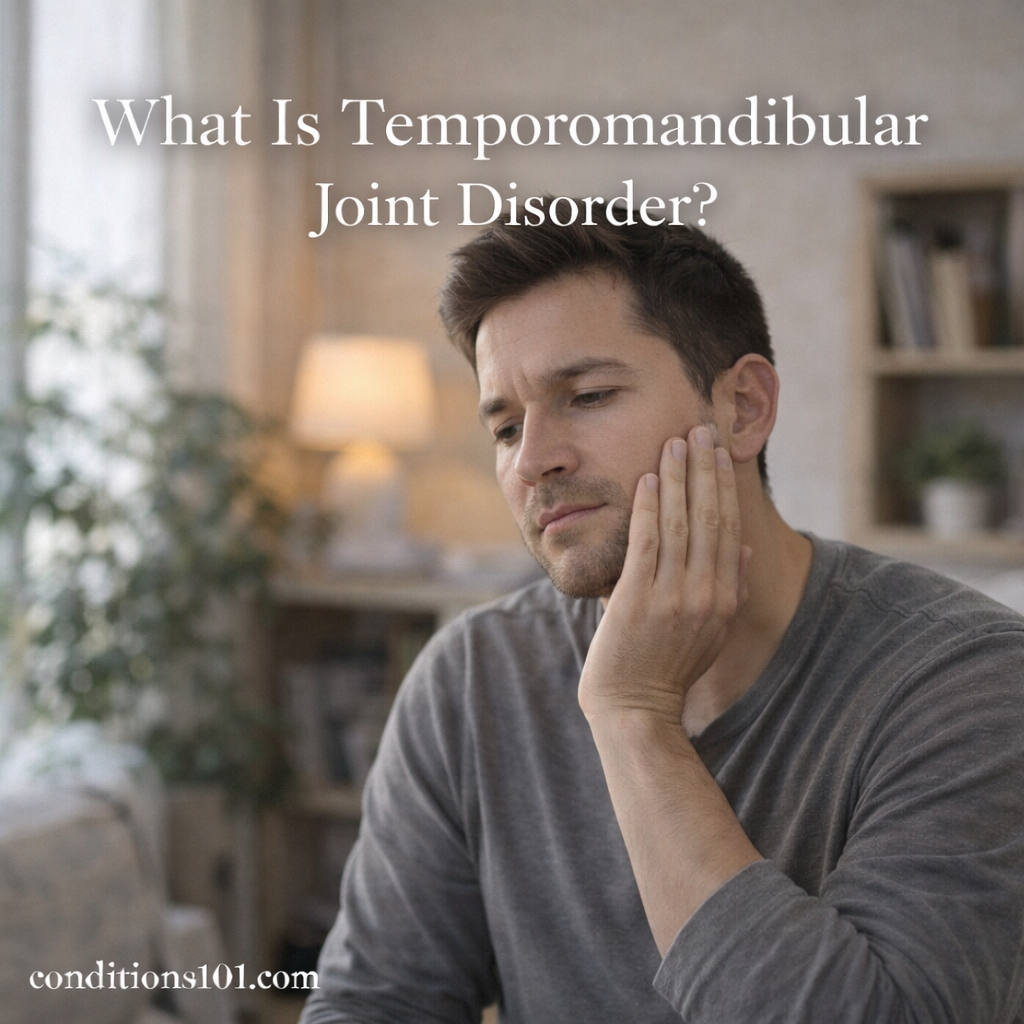
Temporomandibular joint disorder (often abbreviated as TMJ disorder or TMD) is a term used to describe conditions that affect the temporomandibular joints, which connect the lower jaw to the skull. These joints are located on each side of the face, just in front of the ears, and play a key role in everyday movements such as talking, chewing, and yawning.
Temporomandibular joint disorder is not a single disease. Instead, it refers to a group of disorders involving the jaw joints, surrounding muscles, or related structures.
What Is the Temporomandibular Joint?
The temporomandibular joint is one of the most complex joints in the body. It allows the jaw to move both up and down and side to side.
This joint supports actions such as:
- Opening and closing the mouth
- Chewing and biting
- Speaking and facial expression
- Swallowing
Because it is used frequently throughout the day, the joint and surrounding muscles are subject to repeated stress.
How Temporomandibular Joint Disorder Is Described
Temporomandibular joint disorder generally involves dysfunction in how the jaw joint or surrounding muscles move or coordinate. This may involve:
- The joint itself
- The muscles that control jaw movement
- The cartilage or disc within the joint
Symptoms and experiences can vary widely from person to person.
Common Experiences Associated With TMJ Disorder

People with temporomandibular joint disorder may notice a range of sensations, including:
- Jaw discomfort or tenderness
- Clicking, popping, or grinding sounds in the jaw
- Stiffness or limited jaw movement
- Facial discomfort around the jaw or ears
- Tension in the jaw muscles
These experiences may be occasional or more persistent, depending on the individual and circumstances.
Possible Factors Linked to TMJ Disorder
Temporomandibular joint disorder is often associated with multiple contributing factors rather than a single cause. These may include:
- Jaw muscle tension
- Repetitive jaw movements
- Teeth grinding or clenching
- Jaw alignment differences
- Physical stress on the jaw area
Because many factors can overlap, TMJ disorder is considered complex and variable.
TMJ Disorder vs. Jaw Pain
Not all jaw discomfort is considered temporomandibular joint disorder.
- Jaw pain may occur temporarily due to muscle fatigue or tension
- TMJ disorder involves ongoing issues related to the joint, muscles, or movement patterns
The distinction is often based on persistence, pattern, and how the jaw functions over time.
Why Temporomandibular Joint Disorder Is Considered Lesser-Known
Although jaw discomfort is relatively common, TMJ disorder is sometimes classified as lesser-known because:
- Symptoms can mimic other conditions
- Experiences vary widely between individuals
- It involves both muscular and joint components
- It may be discussed under different names or classifications
This variability can make TMJ disorder harder to recognize or clearly define.
Impact on Daily Life
Because the temporomandibular joint is used frequently, dysfunction can affect routine activities such as:
- Eating and chewing
- Speaking clearly
- Yawning comfortably
- Maintaining jaw relaxation
Even mild symptoms may influence comfort and awareness during everyday tasks.
Key Takeaways
- Temporomandibular joint disorder affects the jaw joints and related muscles
- It is a group of conditions, not a single disease
- The temporomandibular joint enables essential jaw movements
- Symptoms and experiences vary widely
- TMJ disorder is often influenced by multiple factors