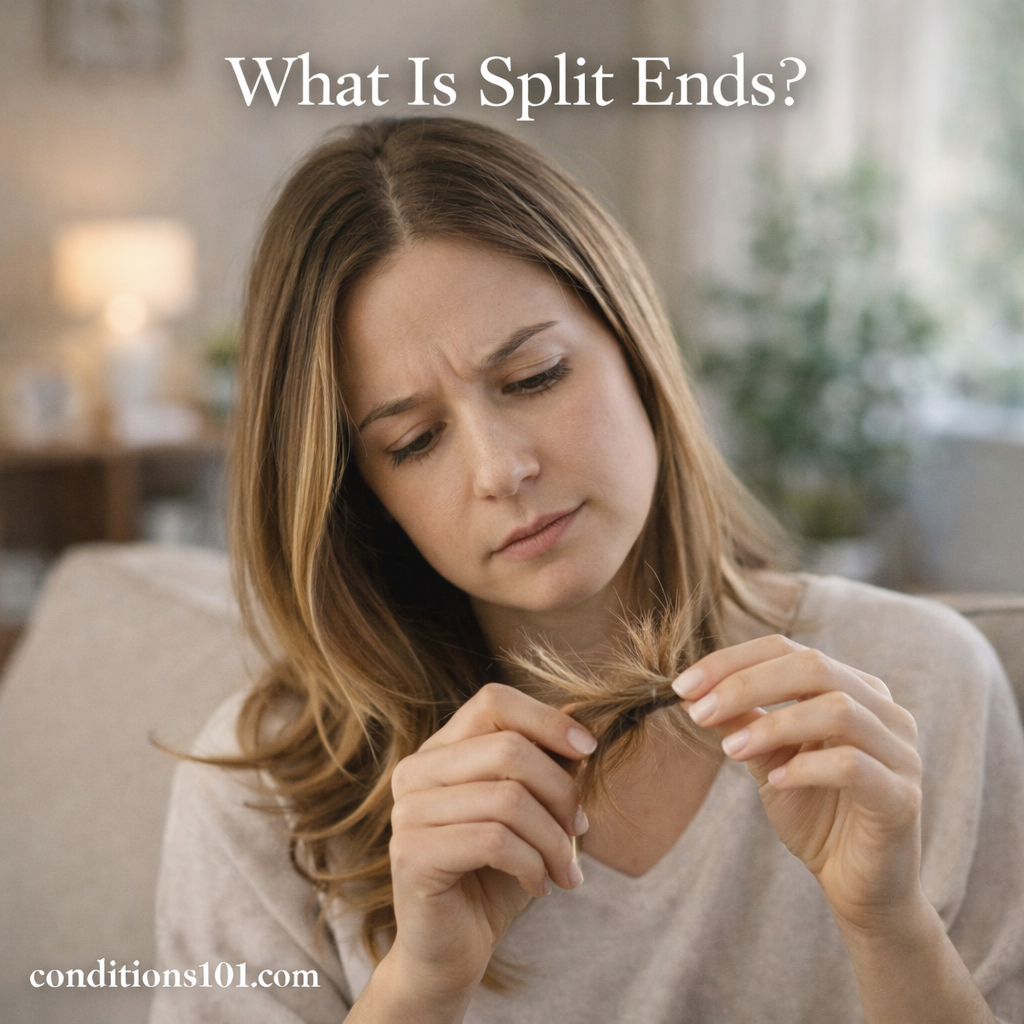
Split ends are a common hair condition where the tip of a hair strand frays or separates into multiple parts. This happens when the protective outer layer of the hair (the cuticle) becomes worn down, allowing the inner structure of the hair to split.
Split ends are also known by the technical term trichoptilosis. They are not a disease or medical condition, but rather a structural change in the hair fiber that affects appearance, texture, and manageability.
How Split Ends Form
Hair is exposed to daily stress from routine activities and environmental factors. Over time, these stresses can weaken the hair shaft, especially at the ends, which are the oldest and most fragile part of the strand.
Common contributors include:
- Repeated brushing or detangling
- Heat exposure from styling tools
- Friction from clothing or pillows
- Environmental exposure such as sun or dry air
- Chemical processes like coloring or perming
When damage accumulates faster than the hair can withstand it, the strand may begin to split.
Types of Split Ends
Split ends can appear in several forms, not just a simple two-way split. Common types include:
- Classic split – the strand divides into two ends
- Multiple splits – the strand separates into several branches
- Feathering – many small splits along the tip
- Thinning ends – gradual tapering rather than a clean split
Each type reflects different levels or patterns of wear on the hair fiber.
Why Split Ends Are More Noticeable Over Time

Once a hair strand splits, the separation does not reverse on its own. As the hair continues to grow and experience friction, the split can travel further up the strand, making hair appear:
- Frizzy or uneven
- Dull or dry
- Difficult to style
- Prone to tangling
This is why split ends often become more visible the longer hair grows without being trimmed.
Split Ends vs. Hair Breakage
Although they can look similar, split ends and hair breakage are not the same.
- Split ends occur at the tip of the hair and involve the strand separating lengthwise
- Hair breakage happens when a strand snaps entirely, often leaving shorter pieces
Both are signs of hair fiber stress, but they affect hair length and appearance differently.
Are Split Ends a Health Concern?
Split ends are considered a cosmetic and structural hair issue, not a health problem. They do not indicate illness, infection, or disease.
However, persistent or widespread hair damage may prompt people to pay closer attention to hair habits, environmental exposure, or overall hair care routines.
Why Understanding Split Ends Matters
Learning what split ends are helps explain:
- Why hair may feel rough even when clean
- Why longer hair often requires more maintenance
- Why trims are commonly discussed in hair care conversations
Understanding the structure of hair and how damage occurs allows for more informed decisions about hair care practices and expectations.
Key Takeaways
- Split ends occur when the hair’s outer layer wears down
- They affect the ends of the hair strand, not the scalp
- Split ends come in multiple forms, not just one type
- They are a cosmetic hair concern, not a medical issue
- Once formed, splits do not naturally rejoin