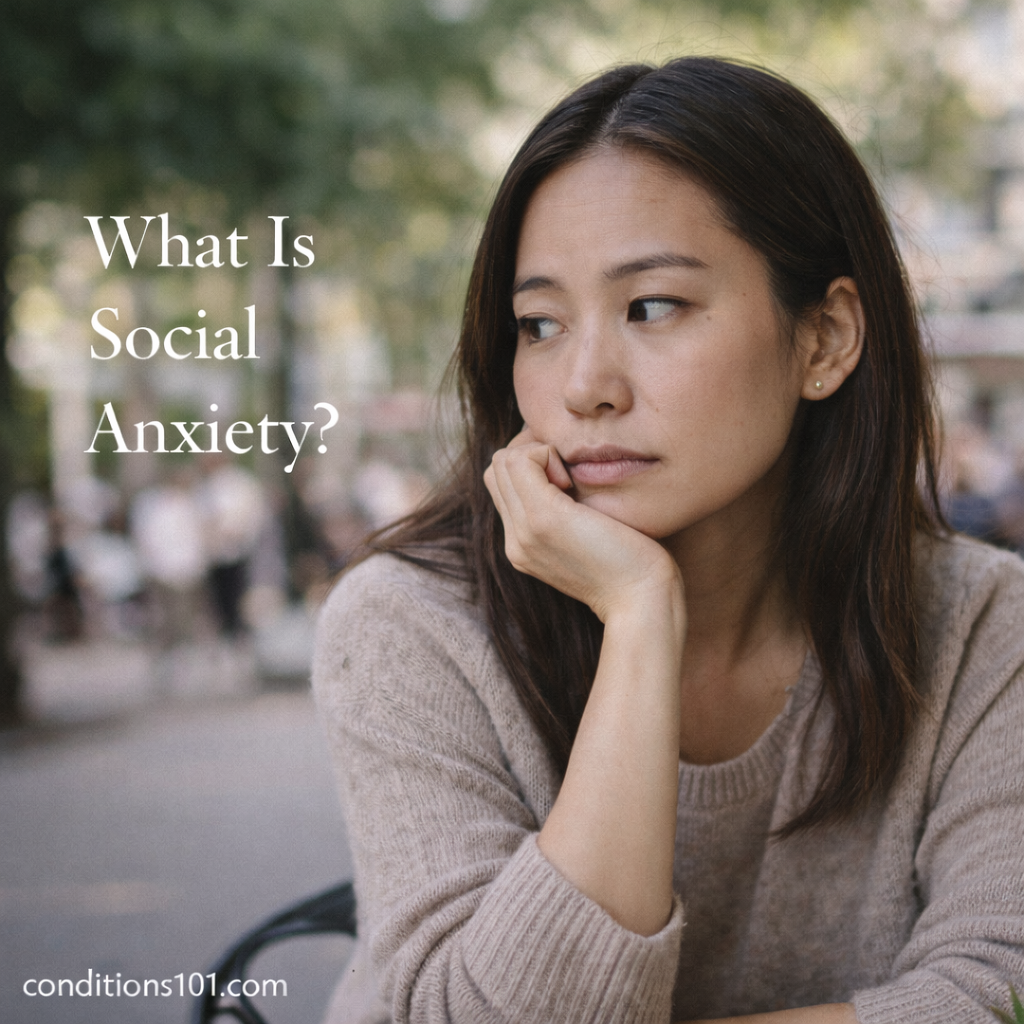
Social anxiety is a mental health condition characterized by an intense and persistent fear of social situations where a person may feel observed, judged, or evaluated by others. This fear goes beyond typical nervousness and can interfere with daily activities, relationships, work, or school.
Social anxiety is not simply shyness. It involves a strong emotional and physical response to social interactions that feels difficult to control. This article explains social anxiety in a clear, educational way without providing medical advice, diagnosis, or treatment.
Understanding Social Anxiety
Social anxiety centers on fear related to social performance or interaction. People with social anxiety often worry about how they are perceived by others and may fear embarrassment, rejection, or making mistakes in public.
These fears may occur before, during, or after social situations and can feel overwhelming, even when the situation seems routine to others.
Common Social Situations That Can Trigger Anxiety
Social anxiety can arise in many everyday situations, especially those involving attention or interaction.
Common triggers may include:
- Speaking in groups or meetings
- Meeting new people
- Making phone calls
- Eating or drinking in public
- Participating in class or work discussions
- Being observed while performing tasks
Triggers vary widely, and not all social situations cause anxiety for every person.
Emotional and Thought-Related Experiences
Social anxiety often involves strong internal thoughts and emotions related to social interaction.
Common experiences may include:
- Fear of being judged or criticized
- Worry about saying the wrong thing
- Excessive self-consciousness
- Anticipating negative outcomes
- Replaying social interactions afterward
These thought patterns can increase anxiety and reinforce avoidance over time.
Physical Sensations Associated With Social Anxiety
Social anxiety can also involve physical responses, especially during or before social situations.
These may include:
- Increased heart rate
- Sweating
- Shaking or trembling
- Blushing
- Muscle tension
- Upset stomach
Physical reactions are part of the body’s natural stress response.
Social Anxiety vs. Normal Nervousness
Many people feel nervous in social situations from time to time. Social anxiety differs in its intensity and impact.
Social anxiety generally involves:
- Fear that feels excessive or disproportionate
- Anxiety that persists over time
- Avoidance of social situations
- Interference with daily functioning
Normal nervousness is usually temporary and does not significantly limit daily life.
Avoidance and Its Role in Social Anxiety
Avoidance is a common feature of social anxiety. People may avoid situations that trigger fear in order to reduce discomfort.
Avoidance may include:
- Declining invitations
- Staying quiet in group settings
- Avoiding eye contact
- Leaving situations early
While avoidance may provide short-term relief, it can reinforce anxiety over time.
How Social Anxiety Can Affect Daily Life

Social anxiety can influence many areas of life, depending on severity and circumstances.
Potential impacts include:
- Difficulty forming or maintaining relationships
- Challenges at work or school
- Reduced participation in activities
- Increased isolation or loneliness
Some individuals experience social anxiety in specific situations, while others feel it more broadly.
Social Anxiety Across Different Life Stages
Social anxiety can develop at different points in life.
It is often discussed in relation to:
- Childhood or adolescence
- Academic or work-related pressures
- Social transitions or life changes
Experiences may change over time, but social anxiety can persist if not addressed.
Common Misunderstandings About Social Anxiety
Social anxiety is sometimes misunderstood or minimized.
Common misconceptions include:
- It is the same as being shy
- People can “just get over it”
- It only affects certain personality types
- It always involves avoiding all social contact
In reality, social anxiety exists on a spectrum and affects people differently.
Key Takeaways
- Social anxiety involves persistent fear of social situations
- It includes emotional, cognitive, and physical responses
- Social anxiety differs from normal nervousness
- Avoidance is a common feature
- Experiences vary widely between individuals