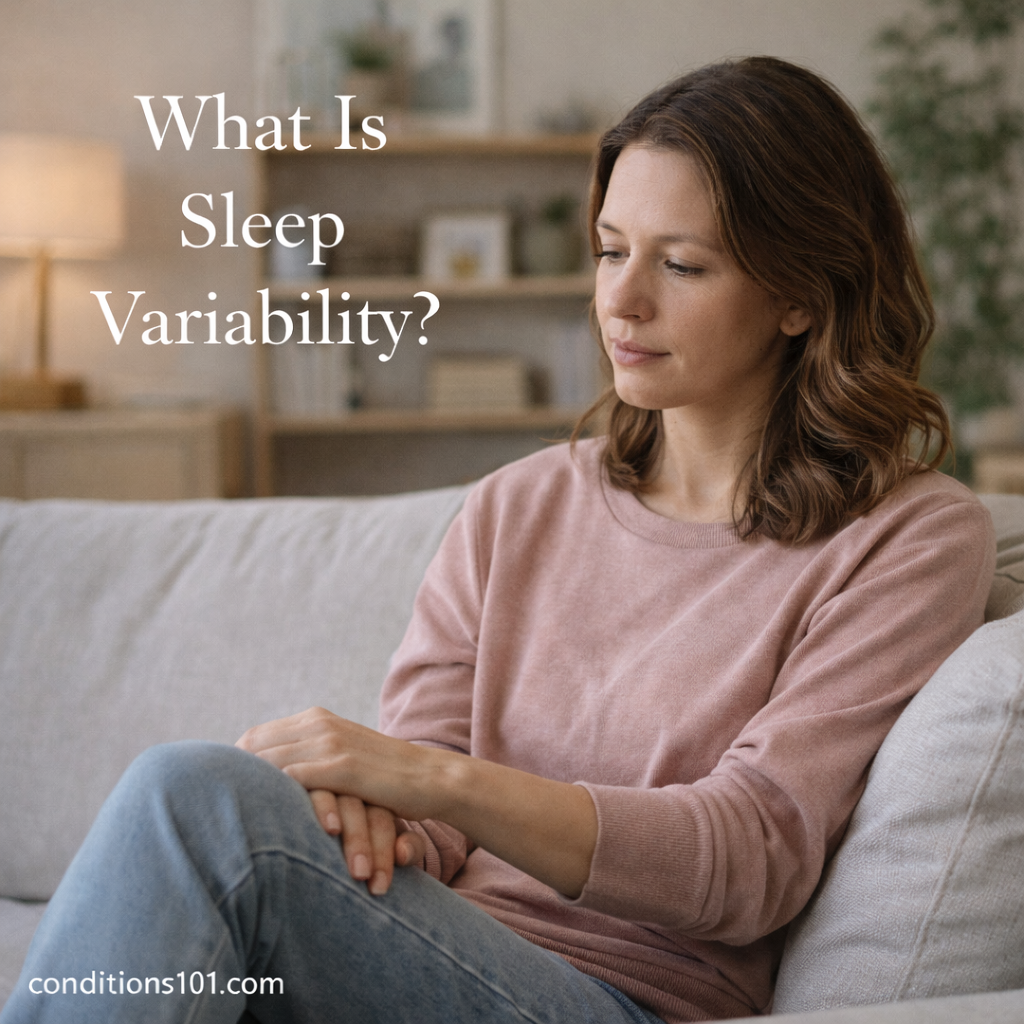
Sleep variability refers to the natural differences in sleep patterns from one night to another. It describes how aspects of sleep—such as bedtime, wake time, total sleep duration, or perceived sleep quality—can change across days rather than remaining exactly the same each night.
Sleep variability is a descriptive concept, not a medical diagnosis. It is often used in discussions about sleep habits, routines, and overall sleep patterns. This article provides an educational overview of sleep variability without offering medical advice, diagnosis, or treatment.
Understanding Sleep Patterns
Sleep is influenced by internal biological rhythms and external daily factors. While many people aim for consistent sleep schedules, real-life sleep often fluctuates due to routine changes, environment, and lifestyle.
Sleep patterns may vary in:
- Time spent asleep
- Time it takes to fall asleep
- Bedtime and wake-up time
- Perceived restfulness
These variations are common and part of normal sleep behavior.
What Does Sleep Variability Mean?
Sleep variability describes how much sleep differs from night to night. High variability means sleep patterns change frequently, while low variability means sleep tends to be more consistent.
Sleep variability can involve:
- Going to bed at different times
- Waking up earlier or later than usual
- Sleeping longer on some nights and shorter on others
- Feeling more rested some mornings than others
Variability focuses on patterns over time rather than any single night of sleep.
Common Causes of Sleep Variability
Sleep variability often reflects everyday life rather than a specific problem.
Daily Schedule Changes
Variations in routine can affect sleep timing.
Examples include:
- Work or school schedule differences
- Social activities or events
- Weekend vs. weekday routines
- Travel or time zone changes
Lifestyle and Habits
Daily choices can influence how sleep unfolds.
These may include:
- Meal timing
- Caffeine or screen use
- Evening activities
- Physical activity levels
Even small habit changes can shift sleep patterns.
Environmental Factors
Sleep is sensitive to surroundings.
Influences may include:
- Noise levels
- Light exposure
- Room temperature
- Sleeping location
Environmental changes often contribute to night-to-night differences.
Sleep Variability vs. Sleep Duration
Sleep variability is not the same as sleep duration.
Sleep duration:
- Refers to total time spent asleep
Sleep variability:
- Refers to how much sleep patterns change over time
A person may get enough sleep overall while still experiencing high variability, or have consistent timing with shorter or longer sleep duration.
Sleep Variability Across the Lifespan
Sleep variability can look different at various life stages.
- Children may have variable sleep due to development and schedules
- Adolescents often experience shifts in sleep timing
- Adults may see variability linked to work, family, or stress
- Older adults may notice changes in sleep timing or duration
These changes reflect adaptation rather than uniform sleep needs.
How Sleep Variability Is Discussed
Sleep variability is commonly mentioned in:
- Sleep tracking discussions
- Habit and routine analysis
- Educational content about sleep patterns
It is used to describe trends over time rather than to label or diagnose sleep conditions.
Why Understanding Sleep Variability Matters
Learning about sleep variability helps people:
- Recognize normal fluctuations in sleep
- Understand the role of routine and environment
- Avoid overreacting to occasional poor sleep
- Use accurate, non-medical language when describing sleep
Education supports realistic expectations about sleep.
Sleep Variability and Everyday Life
In daily life, sleep variability may be noticed as:
- Feeling more rested some days than others
- Needing different amounts of sleep on different nights
- Adjusting sleep schedules for responsibilities or events
These experiences are common and widely shared.
Key Takeaways
- Sleep variability describes changes in sleep patterns over time
- It is a general, non-diagnostic concept
- Variability can involve timing, duration, or perceived quality
- Daily habits and environment often influence sleep variability
- Sleep variability is a normal part of human sleep patterns
Final Thoughts
Sleep variability reflects the flexible and responsive nature of human sleep. Because daily life is not identical from one day to the next, some degree of variation in sleep is expected.
Understanding what sleep variability means can help normalize common sleep experiences and support a balanced, informed perspective on sleep and rest.