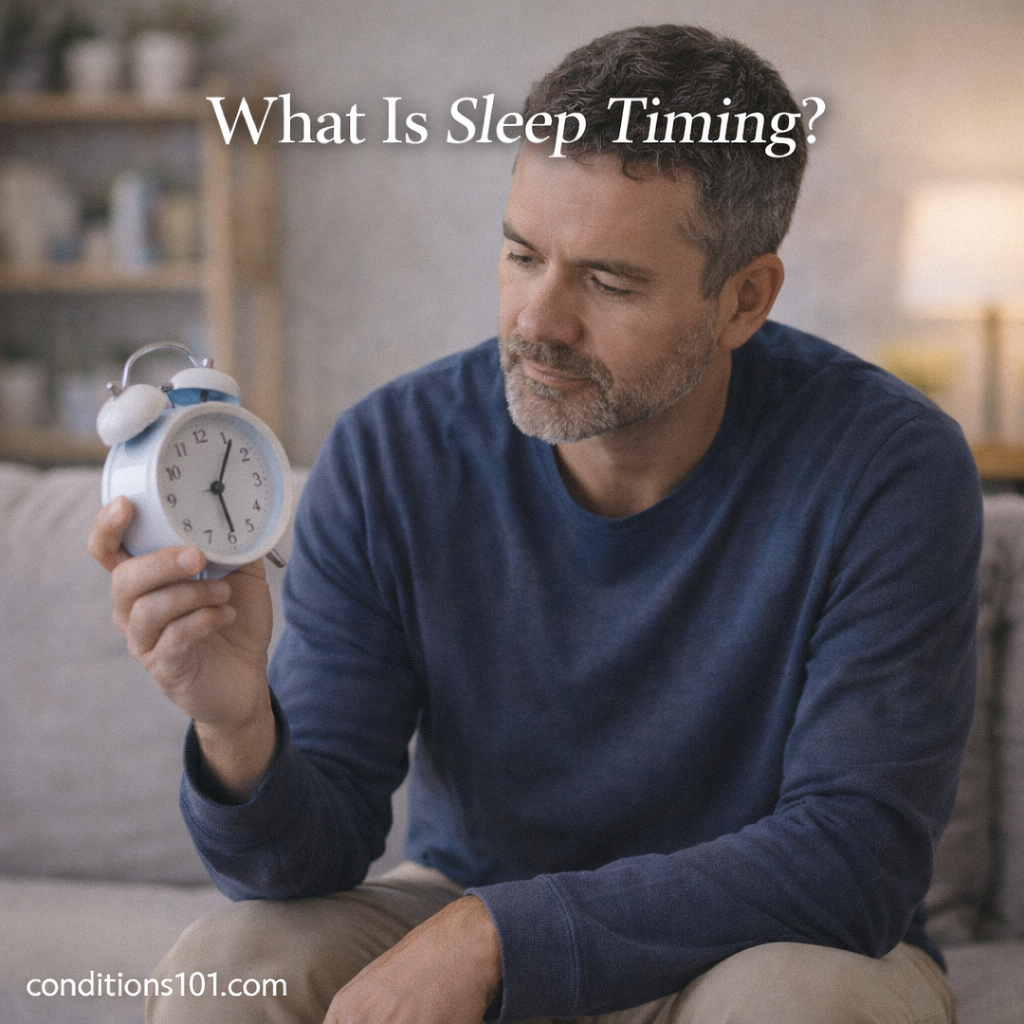
Sleep timing refers to when a person falls asleep and wakes up within a 24-hour day. Rather than focusing on how long someone sleeps or how restful that sleep feels, sleep timing looks at the placement of sleep in relation to the body’s internal clock and daily schedule.
Sleep timing is a key concept in sleep and fatigue education because it helps explain why people can feel tired or alert at different times of day, even when total sleep duration is similar.
A Simple Definition of Sleep Timing
Sleep timing can be defined as:
- The clock time a person goes to sleep
- The clock time a person wakes up
- The consistency of these times across days
It describes the schedule of sleep, not the quality or depth of sleep itself.
How Sleep Timing Fits Into the Sleep–Wake Cycle
Sleep timing is closely connected to the body’s natural sleep–wake rhythm, which influences alertness, energy, and fatigue across the day.
This rhythm helps regulate:
- When the body feels ready for sleep
- When alertness naturally increases
- Daily patterns of energy and rest
Sleep timing that aligns well with these internal patterns often feels easier to maintain than schedules that work against them.
Why Sleep Timing Matters
Sleep timing matters because the body is more prepared for sleep at certain times than others. When sleep occurs at times that do not match internal rhythms, it may feel harder to fall asleep or wake up refreshed.
Sleep timing influences:
- Ease of falling asleep
- Morning alertness
- Daytime energy levels
- Consistency of daily routines
Even with enough total sleep hours, poorly aligned sleep timing can contribute to feelings of fatigue.
Common Sleep Timing Patterns
People naturally differ in their preferred sleep timing.
Common patterns include:
- Earlier sleep timing, with earlier bedtimes and wake times
- Later sleep timing, with later bedtimes and wake times
- Variable sleep timing, where sleep and wake times shift day to day
These patterns are shaped by both biology and lifestyle.
Factors That Influence Sleep Timing

Many internal and external factors can affect when sleep occurs.
Common influences include:
- Exposure to light, especially in the evening
- Work or school schedules
- Social activities and routines
- Screen use at night
- Travel across time zones
- Daily consistency of bedtime and wake time
Changes in any of these factors can shift sleep timing earlier or later.
Sleep Timing vs. Sleep Duration
Sleep timing and sleep duration are related but separate concepts.
Sleep timing focuses on:
- When sleep happens
Sleep duration focuses on:
- How long sleep lasts
A person may sleep for many hours but still feel fatigued if sleep timing is misaligned with their daily demands or internal rhythms.
How Sleep Timing Can Affect Daily Life
Sleep timing plays a role in how people feel and function throughout the day.
It may influence:
- Morning grogginess or alertness
- Ability to concentrate during the day
- Energy levels in the afternoon or evening
- Consistency of daily habits and routines
Stable sleep timing often supports more predictable energy patterns.
Sleep Timing and Consistency
Consistency is an important part of sleep timing. Large day-to-day shifts in bedtime or wake time can make sleep feel less predictable.
Irregular sleep timing may involve:
- Sleeping much later on some days
- Waking up at very different times across the week
- Catch-up sleep on days off
These patterns can affect how smoothly the body transitions between sleep and wakefulness.
Common Misunderstandings About Sleep Timing
“Only Sleep Length Matters”
Total sleep time is important, but timing also plays a role in how restorative sleep feels.
“Everyone Should Follow the Same Sleep Schedule”
Natural sleep timing varies from person to person. What feels early or late differs across individuals.
“Late Sleep Timing Always Means Poor Sleep”
Later sleep timing is not inherently negative. The impact depends on how well it fits with daily responsibilities and routines.
Why Sleep Timing Is Discussed in Sleep Education
Sleep timing is commonly covered because it helps explain:
- Differences in alertness throughout the day
- Why fatigue can occur even with enough sleep
- How routines and light exposure shape sleep habits
- The relationship between sleep schedules and daily functioning
Understanding sleep timing supports a more complete picture of sleep and fatigue.
Key Takeaways
- Sleep timing refers to when sleep occurs within a 24-hour day
- It focuses on bedtime, wake time, and consistency
- Sleep timing is separate from sleep quality and duration
- Many factors influence sleep timing, including routines and light exposure
- Understanding sleep timing helps explain everyday patterns of energy and fatigue