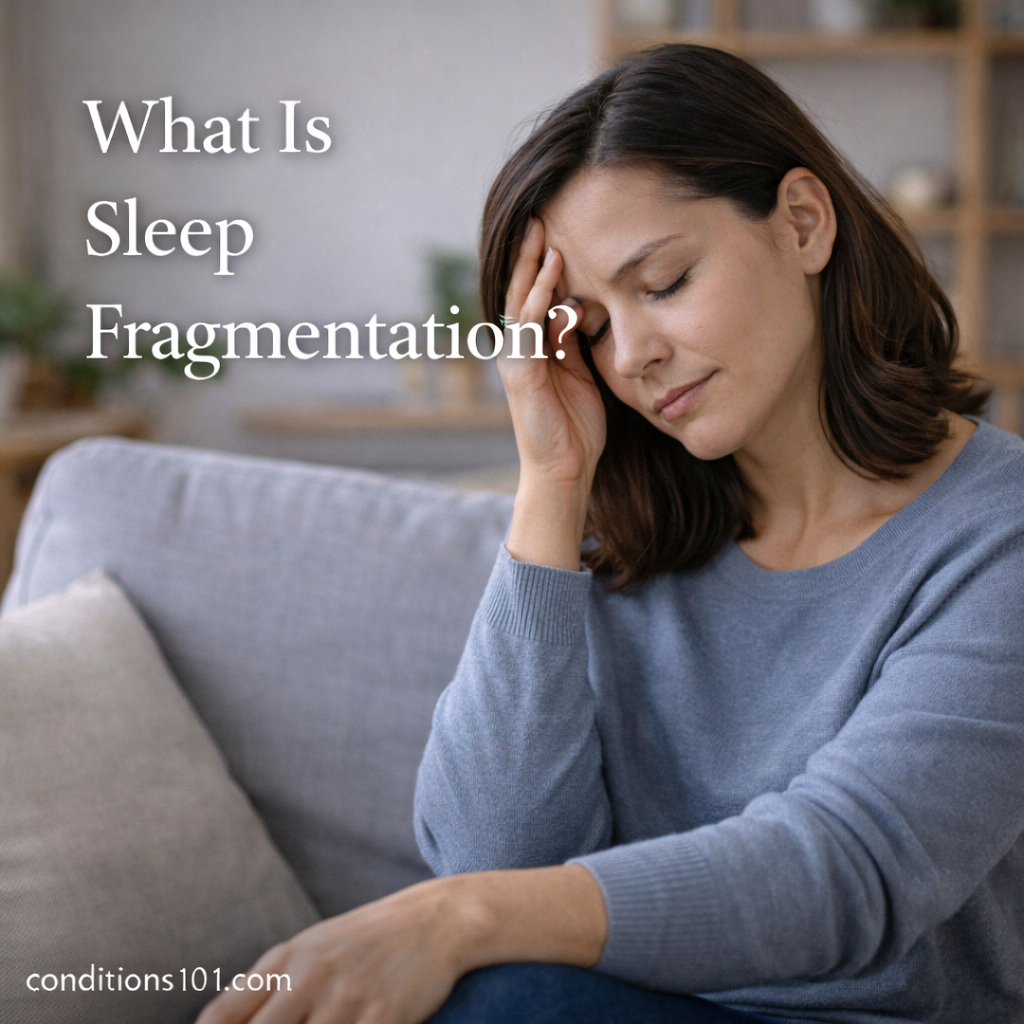
Sleep fragmentation refers to a pattern of disrupted sleep in which a person experiences frequent awakenings or brief arousals throughout the night. Even if total sleep time appears adequate, repeated interruptions can prevent the body and brain from moving smoothly through normal sleep stages. As a result, sleep may feel unrefreshing.
This article provides education-only, evergreen information to explain what sleep fragmentation is, how it is commonly described, and how it can affect rest and daily functioning. It does not provide medical advice, diagnosis, or treatment.
Understanding Normal Sleep Structure
Sleep is not a single, continuous state. It occurs in repeating cycles that include lighter and deeper stages.
A typical night of sleep involves:
- Light sleep stages
- Deeper restorative sleep stages
- Periods of rapid eye movement (REM) sleep
These stages cycle several times during the night. Continuous, uninterrupted sleep allows these cycles to progress naturally.
What Happens During Sleep Fragmentation
In sleep fragmentation, the normal flow of sleep cycles is repeatedly interrupted. These disruptions may be brief and not always remembered.
Sleep fragmentation often involves:
- Frequent brief awakenings
- Transitions into lighter sleep stages
- Difficulty staying asleep for long periods
- Reduced time spent in deeper sleep
Even short disruptions can affect sleep quality when they occur repeatedly.
How Sleep Fragmentation Is Commonly Described
People experiencing sleep fragmentation often describe their sleep differently from simple insomnia.
Common descriptions include:
- Sleeping for many hours but still feeling tired
- Waking up repeatedly during the night
- Feeling restless or unsettled while sleeping
- Not feeling refreshed upon waking
In many cases, individuals may not recall every awakening but notice the effects the next day.
Sleep Fragmentation vs. Difficulty Falling Asleep
Sleep fragmentation is different from difficulty falling asleep at bedtime.
Sleep fragmentation involves:
- Trouble staying asleep
- Repeated interruptions after sleep has begun
Difficulty falling asleep focuses on:
- Taking a long time to fall asleep initially
- Feeling alert or restless at bedtime
Both patterns can affect sleep quality, but they involve different parts of the sleep process.
Common Factors Associated With Sleep Fragmentation
Sleep fragmentation does not have a single cause and is often linked to a combination of influences.
Commonly discussed factors include:
- Environmental noise or light
- Stress or mental alertness
- Irregular sleep schedules
- Physical discomfort during sleep
- Sleep environment disruptions
These factors may interact differently for each person.
The Role of Micro-Arousals
Some sleep disruptions are very brief and are known as micro-arousals. These are short shifts to lighter sleep that may not fully wake a person.
Micro-arousals can:
- Interrupt deeper sleep stages
- Occur without conscious awareness
- Accumulate over the night
Although brief, repeated micro-arousals can significantly affect sleep quality.
How Sleep Fragmentation Can Affect Daily Life

Fragmented sleep may influence how a person feels and functions during the day.
Common effects include:
- Daytime sleepiness
- Reduced concentration or focus
- Low energy or motivation
- Irritability or mood changes
These effects can occur even when total sleep duration seems sufficient.
Sleep Fragmentation and Sleep Quality
Sleep quality refers to how restorative sleep feels, not just how long someone sleeps.
Sleep fragmentation can reduce sleep quality by:
- Limiting time in deeper sleep stages
- Interrupting REM sleep
- Preventing full physical and mental recovery
As a result, sleep may feel light or unsatisfying.
Temporary vs. Ongoing Sleep Fragmentation
Sleep fragmentation can be short-term or persistent.
Temporary sleep fragmentation
- Occurs during periods of stress or schedule changes
- May follow travel or environmental disruptions
- Often resolves when conditions improve
Ongoing sleep fragmentation
- Persists over time
- May occur most nights
- Can lead to accumulated sleep disruption
Duration can influence how noticeable the effects become.
Common Misconceptions About Sleep Fragmentation
Several misunderstandings exist around fragmented sleep.
- Sleep fragmentation is not always remembered
- It is not the same as sleeping too little
- It can occur even in quiet environments
- Long sleep duration does not guarantee good sleep quality
Clarifying these points helps explain why someone may feel tired despite spending many hours in bed.
Why Learning About Sleep Fragmentation Matters
Understanding sleep fragmentation helps explain why sleep can feel unrefreshing even when time in bed seems adequate. Education supports awareness of sleep patterns and how interruptions affect overall rest without assuming a specific cause.
Key Takeaways
- Sleep fragmentation involves repeated interruptions during sleep
- Disruptions may be brief and not fully remembered
- It differs from difficulty falling asleep
- Fragmented sleep can reduce sleep quality and daytime energy
- Education helps clarify how sleep structure affects rest