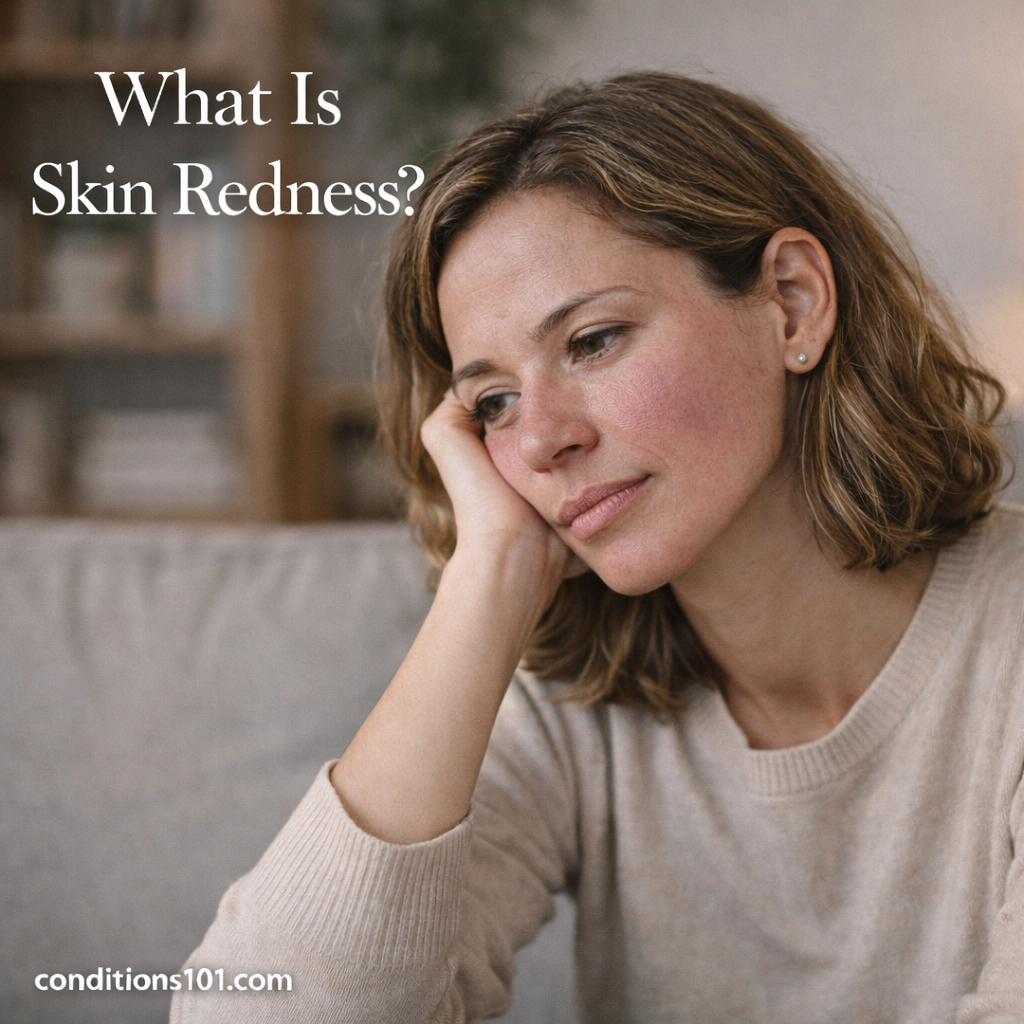
Skin redness refers to a visible change in skin color where areas appear pink, red, or flushed compared to the surrounding skin. This change occurs when blood flow near the surface of the skin increases, making blood vessels more noticeable. Skin redness can affect small patches or larger areas and may appear suddenly or develop gradually.
Skin redness is a common and often temporary appearance change. It can occur for many reasons, ranging from everyday environmental factors to short-term skin reactions. In many cases, it resolves on its own once the underlying trigger passes.
Understanding what skin redness is can help people better recognize normal skin responses and distinguish short-term changes from ongoing skin concerns.
How Skin Redness Appears
Skin redness can look different depending on the cause, skin tone, and location on the body.
Common appearance features include:
- Pink, red, or flushed areas of skin
- Warmth in the affected area
- Patchy or uneven color changes
- Redness that fades when pressure is applied and returns when released
Redness may be isolated to one area, such as the face or hands, or appear more widely across the body.
Common Causes of Skin Redness
Skin redness is often linked to temporary triggers that affect blood flow or skin sensitivity.
Environmental factors
- Heat or cold exposure
- Sun exposure
- Wind or dry air
- Sudden temperature changes
Physical and lifestyle factors
- Physical activity or exertion
- Emotional stress or embarrassment
- Skin friction or pressure
- Hot showers or baths
Skin reactions
- Sensitivity to skincare products
- Mild irritation from shaving or cosmetics
- Temporary reactions to soaps or detergents
In many situations, redness fades once the trigger is removed or the skin has time to settle.
Temporary vs. Ongoing Skin Redness
Skin redness can be either short-lived or more persistent, depending on the situation.
Temporary redness
- Appears after exercise, heat, or irritation
- Fades within minutes or hours
- Does not typically cause lasting skin changes
Ongoing redness
- May appear frequently or remain visible for longer periods
- Can fluctuate in intensity
- May be influenced by repeated triggers or skin sensitivity
Educational discussions focus on recognizing patterns rather than assigning causes or outcomes.
Areas Commonly Affected by Skin Redness
Skin redness can occur anywhere on the body, but some areas are more commonly affected.
Frequently affected areas include:
- Face and cheeks
- Nose and forehead
- Neck and chest
- Hands and arms
These areas often have more surface blood vessels or are more exposed to environmental factors.
Skin Redness and Skin Tone

Skin redness can appear differently depending on natural skin tone.
- In lighter skin tones, redness may appear bright pink or red
- In medium skin tones, it may look deeper red or warm-toned
- In darker skin tones, redness may appear as darker patches, warmth, or subtle color changes rather than bright red
Because of these differences, redness may not always look the same from person to person.
How Skin Redness Can Affect Daily Life
Even when temporary, skin redness can influence how people feel about their appearance.
Possible impacts include:
- Increased self-awareness
- Changes in skincare routines
- Avoidance of certain environments or activities
Understanding that skin redness is common and often temporary can help put these experiences into perspective.
When Skin Redness May Feel Concerning
Skin redness may feel more noticeable or concerning when:
- It appears unexpectedly
- It lasts longer than usual
- It occurs repeatedly in the same area
- It is accompanied by other visible skin changes
Educational content focuses on awareness rather than evaluation or treatment.
Key Takeaways
- Skin redness is a visible change in skin color caused by increased blood flow near the skin’s surface.
- It is common and often linked to temporary environmental, physical, or lifestyle factors.
- Skin redness can vary in appearance based on skin tone and location.
- Redness may be temporary or recurring, depending on individual sensitivity and triggers.
- Understanding skin redness helps normalize common appearance-related changes.