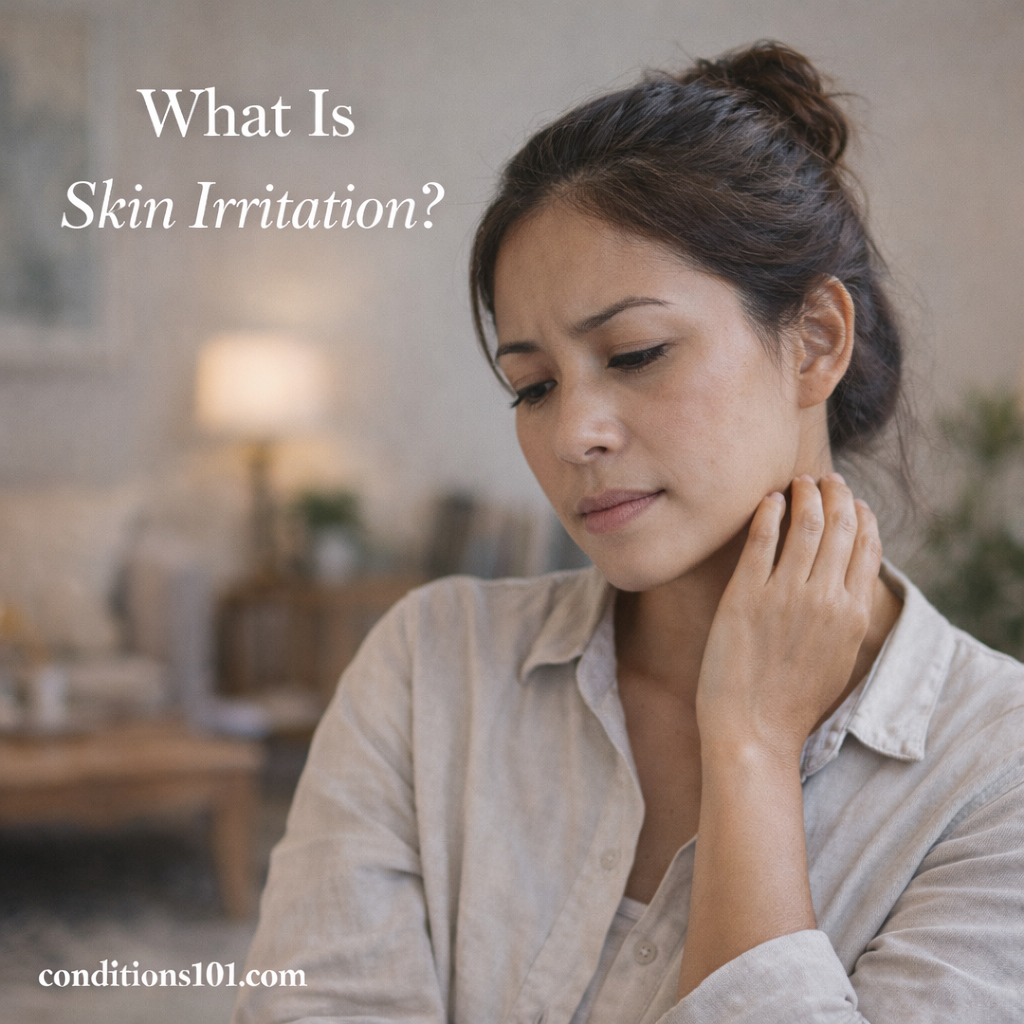
Skin irritation is a general term used to describe discomfort or changes in the skin that occur when it reacts to internal or external factors. It is commonly associated with sensations or visible changes that signal the skin is not responding well to a particular substance, environment, or condition.
Skin irritation can range from mild and temporary to more persistent, depending on the cause and individual sensitivity.
How Skin Irritation Occurs
The skin acts as a protective barrier between the body and the outside world. When this barrier is disrupted or overwhelmed, irritation may occur.
Common mechanisms include:
- Direct contact with irritating substances
- Environmental exposure
- Friction or pressure
- Changes in moisture or temperature
- Sensitivity to certain ingredients or materials
These factors can affect the skin’s outer layers, leading to irritation.
Common Signs of Skin Irritation

Skin irritation can appear differently from person to person. Commonly discussed signs include:
- Redness or discoloration
- Itching or tingling sensations
- Dryness or flaking
- Tightness or sensitivity
- Mild swelling or rough texture
Not all signs occur at once, and some may be subtle.
Areas Commonly Affected
Skin irritation can develop anywhere on the body, but it often appears in areas that are more exposed or sensitive, such as:
- Face and neck
- Hands
- Arms and legs
- Scalp
- Areas with frequent friction, such as under clothing or accessories
Common Triggers of Skin Irritation
Many different triggers are associated with skin irritation. These can vary widely based on lifestyle, environment, and skin type.
External Triggers
- Soaps, detergents, or cleaning products
- Fragrances or cosmetic ingredients
- Weather conditions, such as cold, heat, or wind
- Fabrics or materials that rub against the skin
Internal or Lifestyle-Related Factors
- Stress
- Dehydration
- Hormonal changes
- Sensitivity or genetic factors
Skin irritation is often the result of multiple contributing factors rather than a single cause.
Temporary vs Ongoing Skin Irritation
Skin irritation is sometimes short-lived and resolves once the triggering factor is removed. In other cases, irritation may recur or persist over time.
Educational discussions often distinguish between:
- Occasional irritation linked to a specific exposure
- Repeated irritation associated with ongoing sensitivity
Understanding this difference helps explain why some people experience irritation more frequently than others.
Why Skin Irritation Is Common
Skin irritation is widely discussed in general health education because it is extremely common and can affect people of all ages. The skin is constantly interacting with the environment, making it vulnerable to irritation under everyday conditions.
Increased product use, environmental changes, and lifestyle factors all contribute to how often skin irritation occurs.
Key Takeaways
- Skin irritation refers to discomfort or visible changes in the skin
- It often results from disruption of the skin’s protective barrier
- Signs can include redness, itching, dryness, or sensitivity
- Triggers vary and may be environmental, lifestyle-related, or personal
- Skin irritation can be temporary or ongoing