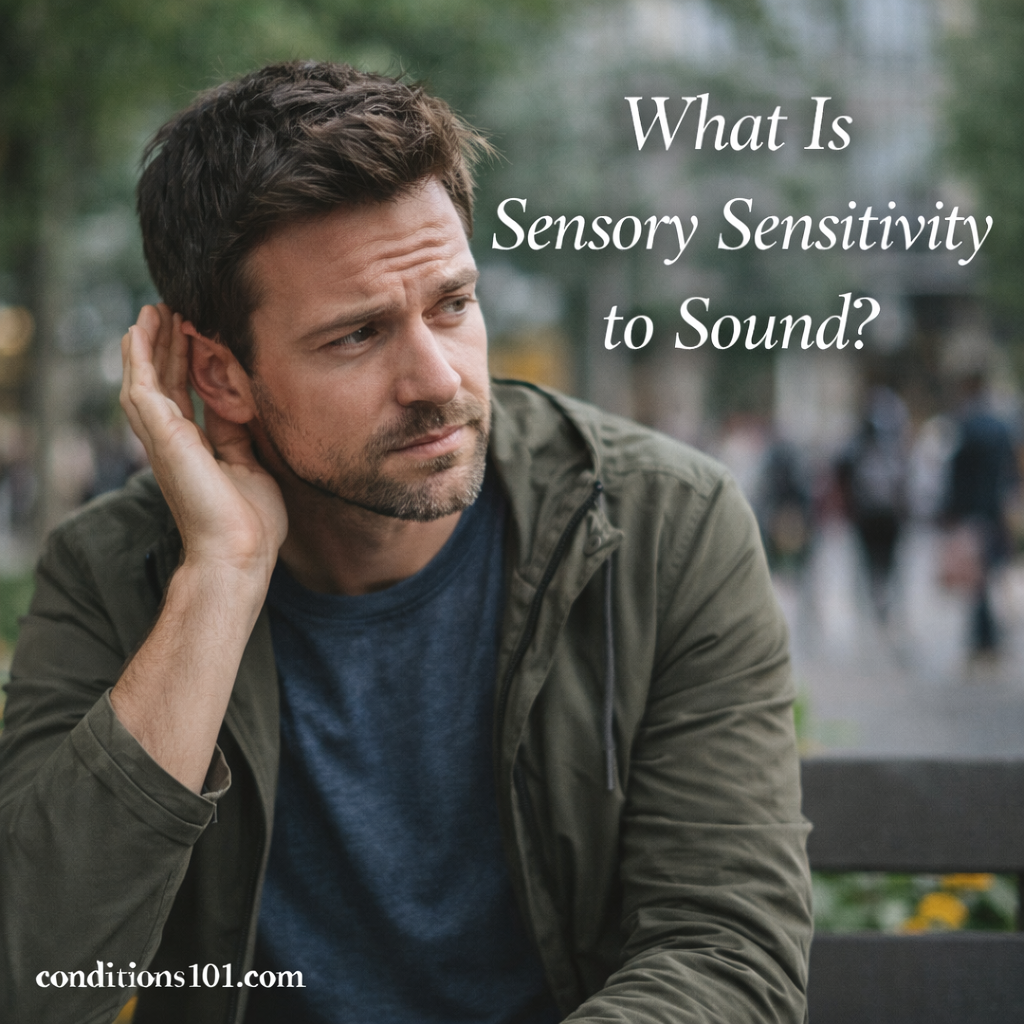
Sensory sensitivity to sound refers to heightened awareness or responsiveness to everyday noises that others may find neutral or easy to ignore. People with sound sensitivity may perceive certain sounds as louder, more distracting, uncomfortable, or overwhelming, even when the volume is not objectively high.
This sensitivity exists on a spectrum and can vary from mild annoyance to significant discomfort. It is a descriptive term, not a diagnosis, and is commonly discussed in educational and general health contexts.
Understanding Sensory Sensitivity to Sound
The human nervous system continuously processes sounds from the environment. Sensory sensitivity to sound occurs when this processing system reacts more strongly to auditory input than expected.
This does not necessarily involve damage to hearing. Instead, it relates to how the brain interprets and responds to sound signals.
Key aspects include:
- Increased awareness of background noise
- Difficulty filtering or ignoring sounds
- Strong reactions to specific sound types
- Feeling mentally or physically strained by noise
How Sensory Sensitivity to Sound May Feel
Experiences of sound sensitivity differ between individuals. Some people may notice only certain sounds, while others may feel affected by many types of noise.
Common experiences may include:
- Discomfort from everyday sounds like traffic, appliances, or conversations
- Feeling startled or tense in noisy environments
- Difficulty concentrating when background noise is present
- A sense of overwhelm in crowded or loud spaces
These responses are subjective and influenced by context and environment.
Types of Sounds That May Trigger Sensitivity
Sound sensitivity is not always related to loudness alone. Certain qualities of sound may be more noticeable or difficult to tolerate.
These may include:
- High-pitched or sharp noises
- Repetitive sounds
- Sudden or unexpected noises
- Continuous background hums or buzzes
- Overlapping conversations
Triggers vary widely, and not all sounds affect everyone the same way.
Sensory Sensitivity to Sound vs. Hearing Problems
Sensory sensitivity to sound is different from hearing loss or hearing damage.
- Hearing issues involve how sound is detected by the ears
- Sensory sensitivity involves how sound is processed and interpreted by the brain
Many people with sound sensitivity have normal hearing ability, but experience discomfort due to heightened sensory processing rather than auditory impairment.
Situations Where Sound Sensitivity May Be More Noticeable
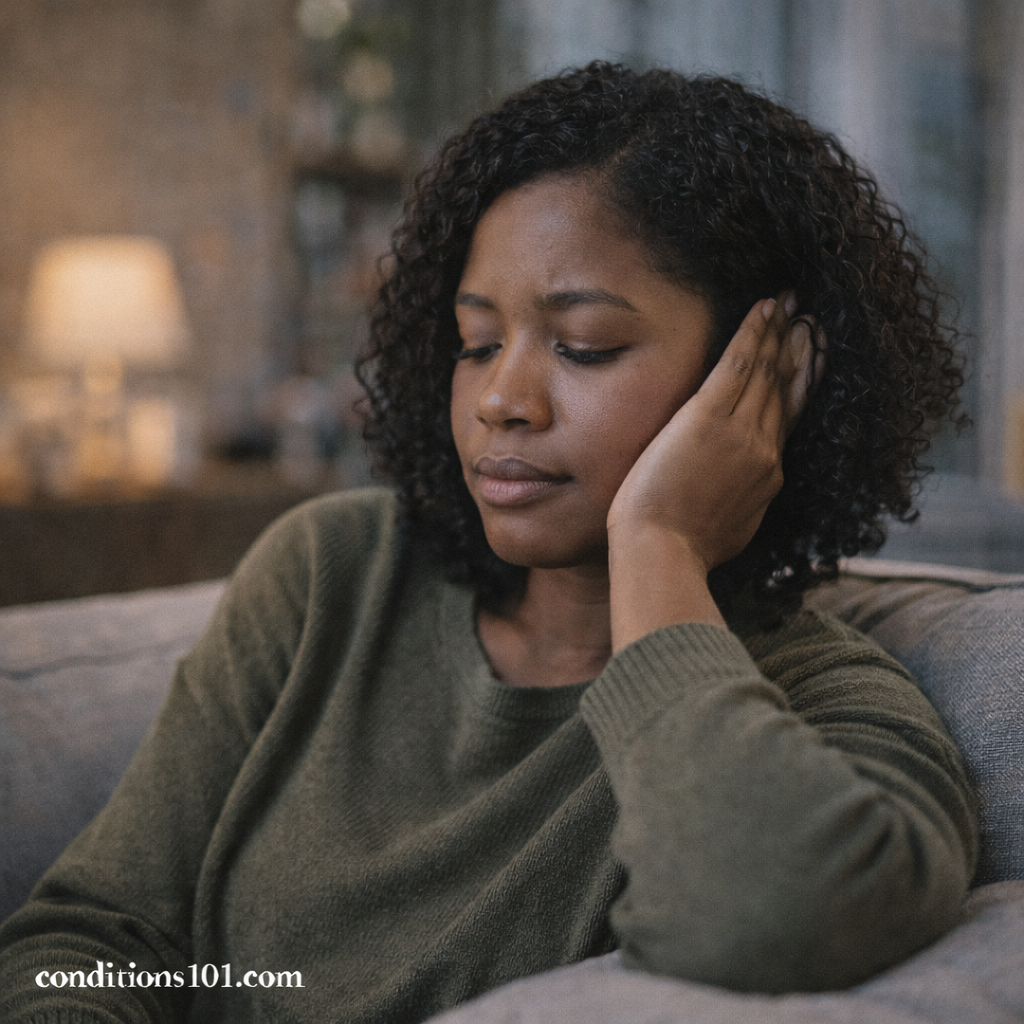
Sound sensitivity often becomes more noticeable in certain environments or situations.
Examples include:
- Busy public spaces
- Open offices or shared work areas
- Social gatherings
- Environments with unpredictable noise
- Periods of fatigue or stress
Context can play a significant role in how sounds are perceived.
Factors That May Influence Sensory Sensitivity to Sound
Several factors can affect how sensitive a person feels to sound at any given time.
Environmental Factors
- Noise levels and acoustics
- Crowded or enclosed spaces
- Lack of quiet or rest periods
Internal Factors
- Stress or emotional state
- Fatigue or lack of rest
- Cognitive load or mental focus
Sensitivity may increase or decrease depending on these influences.
Sensory Sensitivity to Sound Across the Lifespan
Sound sensitivity can be present at any age. It may appear in childhood, emerge later in life, or fluctuate over time.
Changes in routine, environment, or daily demands can influence how noticeable sound sensitivity feels at different life stages.
Common Misconceptions About Sound Sensitivity
“It means hearing is damaged”
Sound sensitivity does not automatically indicate hearing damage. Many people with sensitivity have typical hearing thresholds.
“Everyone reacts the same way to noise”
Sound tolerance varies widely. What feels manageable to one person may feel overwhelming to another.
“Sensitivity is constant”
Sensitivity can change based on context, environment, and internal state.
Sensory Sensitivity to Sound in Everyday Life
In daily life, sound sensitivity may influence where people choose to spend time, how they structure routines, or how they respond to busy environments.
People may notice they feel more comfortable in quieter spaces or prefer predictable sound environments. These preferences reflect individual sensory processing rather than weakness or inability.
Why the Term “Sensory Sensitivity to Sound” Is Used
The term is used to describe a pattern of sensory experience without assigning a medical diagnosis. It helps explain differences in how people perceive and respond to sound.
This language supports awareness and understanding of sensory diversity.
Sensory Sensitivity as a Spectrum
Sensory sensitivity to sound exists on a continuum. Some people may notice only occasional discomfort, while others may experience stronger or more frequent reactions.
This spectrum reflects normal variation in sensory processing rather than a single defined condition.
Key Takeaways About Sensory Sensitivity to Sound
- Sensory sensitivity to sound involves heightened responses to everyday noises
- It relates to how sound is processed, not necessarily hearing ability
- Triggers and experiences vary between individuals
- Sensitivity can change depending on environment and internal state
- The term is descriptive and not a diagnosis
Understanding sensory sensitivity to sound helps promote awareness of how differently people experience their environments.