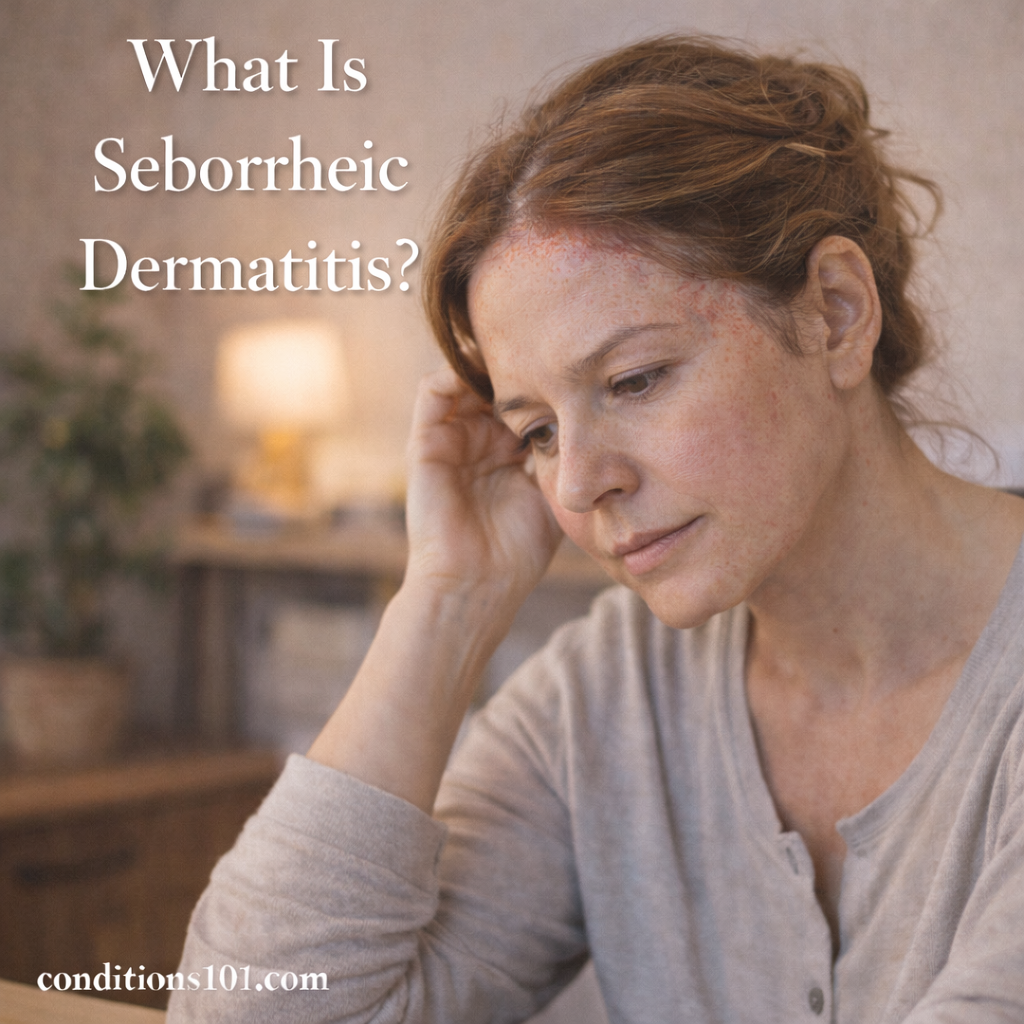
Seborrheic dermatitis is a common, long-term skin condition that causes redness, scaling, and flaking in areas of the body with higher oil production. It most often affects the scalp but can also appear on the face, ears, chest, and other areas where oil glands are active. The condition may come and go over time, with periods of improvement and flare-ups.
This article provides a clear, educational overview of what seborrheic dermatitis is. It is intended for general information only and does not offer medical advice, diagnosis, or treatment.
Understanding Seborrheic Dermatitis
Seborrheic dermatitis is considered a chronic inflammatory skin condition. Unlike temporary dryness or irritation, it tends to persist or recur over time. The skin may look red or inflamed and develop greasy or dry-looking scales.
Although it can be noticeable and uncomfortable, seborrheic dermatitis is not contagious and is not caused by poor hygiene.
Areas Commonly Affected
Seborrheic dermatitis typically appears in regions of the body where oil (sebum) production is higher.
Commonly affected areas include:
- Scalp
- Hairline
- Eyebrows
- Sides of the nose
- Ears or behind the ears
- Chest or upper back
In infants, a similar condition may appear on the scalp and is often referred to as cradle cap.
What Seborrheic Dermatitis Looks and Feels Like

The appearance and sensations associated with seborrheic dermatitis can vary between individuals.
Common features include:
- Red or pink patches of skin
- Flaky or scaly skin that may look greasy or dry
- White or yellowish flakes
- Mild to moderate itching
- Skin that feels irritated or sensitive
Symptoms may be mild in some people and more noticeable in others.
Possible Factors Associated With Seborrheic Dermatitis
Seborrheic dermatitis does not have a single known cause. Instead, it is thought to be influenced by a combination of factors.
Skin Oil Production
Sebum plays a role in seborrheic dermatitis, as the condition tends to appear in oil-rich areas of the body.
Natural Skin Microorganisms
Certain yeast-like organisms naturally live on the skin. In some individuals, sensitivity to these organisms may be associated with skin inflammation and flaking.
Individual Skin Sensitivity
People vary in how their skin reacts to internal and external factors, which may influence the likelihood of developing seborrheic dermatitis.
Environmental and Lifestyle Factors
Symptoms may be influenced by:
- Cold or dry weather
- Stress
- Fatigue
- Changes in routine or environment
These factors may affect skin balance and trigger flare-ups.
Seborrheic Dermatitis vs. Other Skin Conditions
Seborrheic dermatitis can resemble other skin conditions, which may cause confusion.
Seborrheic Dermatitis
- Often affects oily areas
- Flakes may appear greasy or yellowish
- Redness and scaling are common
Dry Skin
- Caused by lack of moisture
- Flakes are usually small and dry
- Often affects multiple areas of the body
Psoriasis
- May produce thicker, well-defined plaques
- Often has silvery scales
- Can extend beyond oily skin areas
Although these conditions may look similar, they have different underlying characteristics.
Who Commonly Experiences Seborrheic Dermatitis?
Seborrheic dermatitis can affect people of all ages. It is commonly reported in:
- Infants (as cradle cap)
- Adolescents and adults
- Individuals with naturally oily skin
- People experiencing higher stress levels
The condition may appear at different life stages and vary in severity over time.
Can Seborrheic Dermatitis Come and Go?
Yes. Seborrheic dermatitis often follows a pattern of flare-ups and periods of improvement. Symptoms may worsen during certain seasons or times of increased stress and improve when conditions stabilize.
How Seborrheic Dermatitis Can Affect Daily Life
For some individuals, seborrheic dermatitis is a mild cosmetic concern. For others, visible flakes or redness may affect comfort or self-confidence.
Potential impacts include:
- Increased attention to skin or scalp appearance
- Mild itching or irritation
- Frustration with recurring symptoms
The degree of impact varies widely between individuals.
Key Takeaways About Seborrheic Dermatitis
- Seborrheic dermatitis is a common, long-term skin condition
- It causes redness, scaling, and flaking in oil-rich areas
- The condition is not contagious
- Symptoms may come and go over time
- Experiences and severity vary between individuals