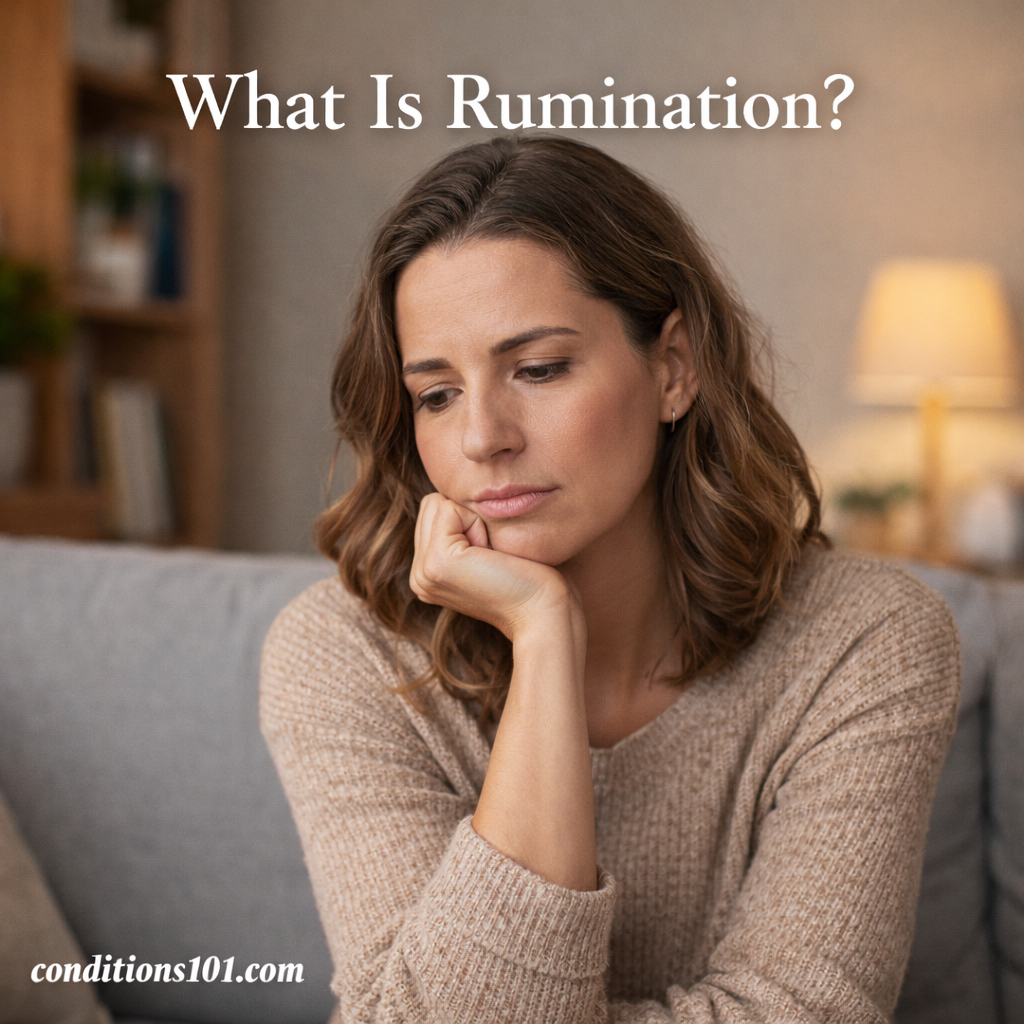
Rumination is a mental process that involves repetitive, persistent thinking about the same thoughts, feelings, or concerns, often without reaching a resolution. These thought patterns tend to circle around causes, consequences, or perceived mistakes rather than leading to problem-solving or action.
In educational and psychological contexts, rumination is discussed as a cognitive habit, not a diagnosis. Many people experience rumination at different points in life, especially during periods of stress, uncertainty, or emotional challenge.
This article explains rumination in a clear, informational way, focusing on what it is, how it differs from healthy reflection, and why it occurs—without providing medical advice, diagnosis, or treatment.
Understanding Rumination in Simple Terms

Rumination can be thought of as “getting stuck in a loop of thinking.” Instead of moving forward or gaining clarity, the mind repeatedly revisits the same ideas.
Common features of rumination include:
- Replaying past events or conversations
- Focusing heavily on “why” something happened
- Repeatedly analyzing negative feelings or outcomes
- Difficulty shifting attention away from certain thoughts
Rumination is not the same as thinking deeply or carefully. The key difference lies in whether the thinking leads to insight or becomes repetitive and unproductive.
Rumination vs. Healthy Reflection
Not all repeated thinking is harmful or unhelpful. Reflection can be constructive, while rumination tends to be circular.
Healthy Reflection
- Aims to understand and learn
- Leads to perspective or decisions
- Has a sense of closure
- Often results in action or acceptance
Rumination
- Focuses on problems without solutions
- Repeats the same thoughts with little new insight
- Feels mentally draining
- Can be difficult to stop once it starts
Understanding this distinction helps clarify why rumination is often discussed in mental and cognitive health education.
Common Types of Rumination
Rumination can take different forms depending on what the mind fixates on.
Past-Focused Rumination
- Replaying past mistakes
- Dwelling on missed opportunities
- Analyzing “what went wrong”
Emotion-Focused Rumination
- Repeatedly thinking about feelings such as sadness, anger, or guilt
- Questioning why certain emotions feel intense or persistent
Self-Evaluative Rumination
- Excessive self-criticism
- Repeatedly questioning personal worth or abilities
These patterns may overlap and shift over time.
Why Do People Ruminate?
Rumination often develops as an attempt to make sense of experiences, even though it may not feel helpful in the long run.
Common Contributing Factors
- Stress or ongoing pressure
- Uncertainty or lack of closure
- Perfectionism or high self-expectations
- Strong emotional reactions
- Habitual thinking styles
From an educational standpoint, rumination is understood as a mental response, not a personal flaw.
Rumination and Mental Focus
Rumination can affect attention and mental clarity because repetitive thinking uses cognitive resources.
People experiencing rumination may notice:
- Difficulty concentrating
- Feeling mentally “stuck”
- Trouble shifting focus to new tasks
- Increased mental fatigue
These effects help explain why rumination is often discussed in cognitive and psychological education.
How Rumination Differs From Worry
Although rumination and worry are related, they are not identical.
Rumination
- Often focused on the past or current feelings
- Centers on meaning, causes, or emotions
Worry
- Typically focused on the future
- Centers on uncertainty and potential outcomes
Both involve repetitive thinking, but their focus and themes differ.
Rumination as a Common Human Experience
Rumination is not rare. Many people experience it occasionally, especially during:
- Major life changes
- Periods of stress
- Emotional events
- Times of uncertainty
Educational discussions emphasize that rumination exists on a spectrum, ranging from brief episodes to more persistent patterns.
Why Understanding Rumination Matters
Learning about rumination supports:
- Better self-awareness
- Clearer conversations about mental and cognitive health
- Improved understanding of how thought patterns influence well-being
- More accurate interpretation of mental health research
In population studies and educational materials, recognizing rumination helps explain differences in emotional and cognitive experiences.
Common Misconceptions About Rumination
“Rumination Means Overthinking on Purpose”
Rumination is often automatic rather than intentional.
“Only Certain People Ruminate”
Rumination can affect people of all ages and backgrounds.
“Rumination Always Means Something Is Wrong”
Occasional rumination is a normal human response and does not automatically indicate a disorder.
Key Takeaways
- Rumination involves repetitive, persistent thinking about the same topics
- It differs from healthy reflection because it lacks resolution
- Rumination can focus on the past, emotions, or self-evaluation
- It is a common mental experience, especially during stress
- Understanding rumination supports mental and cognitive health education