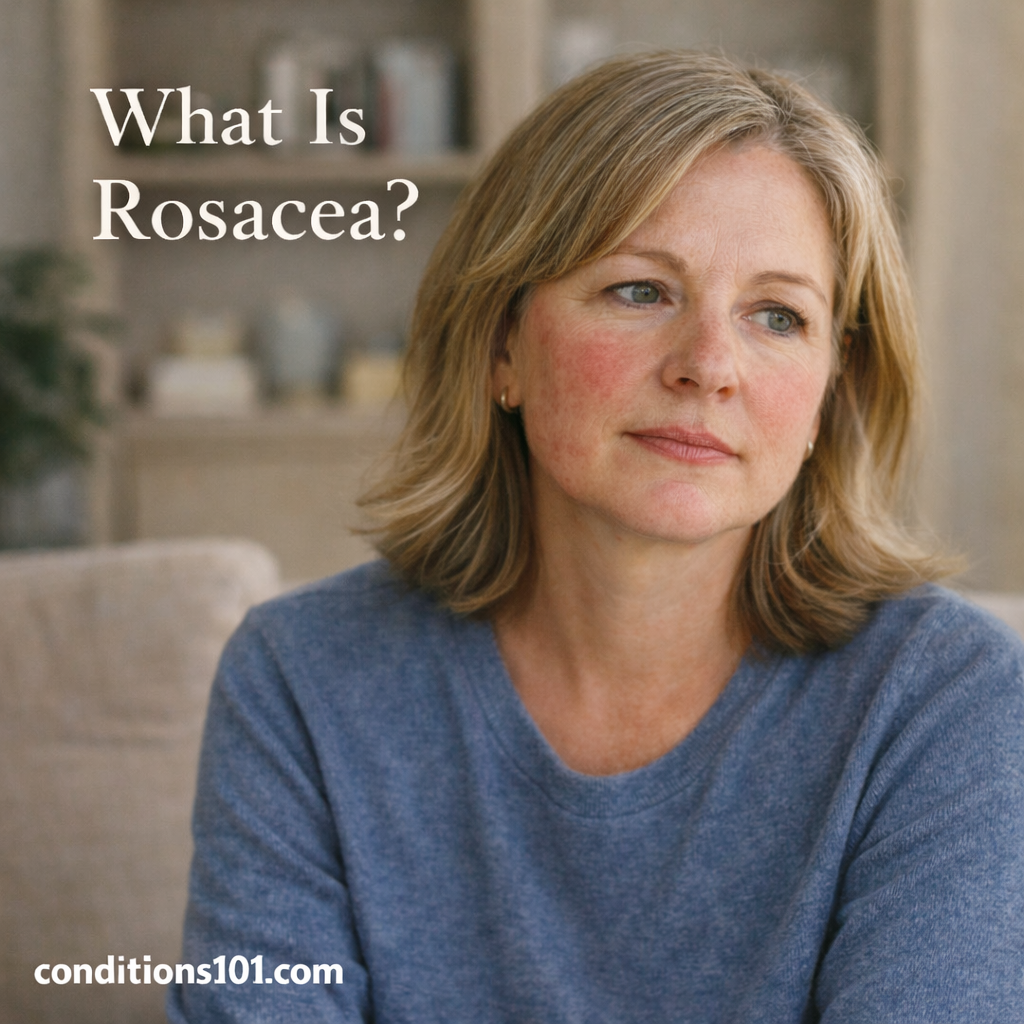
Rosacea is a long-term skin condition that primarily affects the face. It is most commonly associated with persistent redness, flushing, and visible blood vessels, particularly on the cheeks, nose, forehead, and chin. In some people, rosacea may also involve bumps, skin sensitivity, or eye-related symptoms.
This article provides a clear, educational explanation of rosacea for general informational purposes. It does not offer medical advice, diagnosis, or treatment.
Understanding Rosacea
Rosacea is considered a chronic inflammatory skin condition, meaning it tends to develop gradually and may persist over time with periods of improvement and flare-ups. It most often affects adults and is more noticeable on facial skin due to increased blood vessel activity near the surface.
The condition varies widely in appearance and severity. Some people experience mild redness, while others may notice more pronounced changes in skin texture or sensitivity.
What Does Rosacea Look Like?
Rosacea can appear differently from person to person, but it commonly affects the central areas of the face.
Typical visual features may include:
- Persistent facial redness
- Flushing that resembles blushing
- Visible small blood vessels on the skin surface
- Red or pink bumps that may resemble acne
- Skin that feels warm, stinging, or sensitive
Symptoms often develop slowly and may become more noticeable over time.
Common Types of Rosacea
Rosacea is often grouped into several general subtypes based on its most noticeable features.
Erythematotelangiectatic rosacea
- Persistent redness and flushing
- Visible blood vessels
- Skin sensitivity
Papulopustular rosacea
- Red bumps or blemishes
- Facial redness similar to acne
- Concentration on the central face
Phymatous rosacea
- Thickened or textured skin
- Most commonly affects the nose
- Develops gradually over time
Ocular rosacea
- Eye irritation or dryness
- Redness around the eyes
- Sensitivity to light
A person may experience features from more than one subtype.
Why Rosacea Develops
The exact cause of rosacea is not fully understood. It is believed to involve a combination of factors related to skin inflammation, blood vessel function, and the immune system.
Factors commonly associated with rosacea include:
- Increased sensitivity of facial blood vessels
- Inflammatory responses in the skin
- Genetic tendencies
- Environmental influences
Rosacea is not caused by poor hygiene and is not contagious.
Common Triggers Associated With Rosacea
Many people with rosacea notice that certain factors may temporarily worsen redness or flushing. These are often referred to as triggers.
Commonly reported triggers include:
- Heat or temperature changes
- Sun exposure
- Emotional stress
- Spicy foods
- Hot beverages
- Alcohol
- Certain skincare products
Triggers vary between individuals, and not everyone reacts to the same factors.
How Rosacea Can Affect Daily Life

Rosacea can influence daily routines and self-perception, especially when facial redness is persistent or noticeable.
Some people report:
- Increased skin sensitivity
- Discomfort with heat or sun exposure
- Emotional impact related to appearance
- Adjustments to skincare or cosmetic use
The experience of rosacea is highly individual and may change over time.
Who Is Commonly Affected by Rosacea?
Rosacea most often appears in adults, typically beginning in early to middle adulthood. It can affect people of all skin tones, though redness may be more noticeable on lighter skin.
General patterns include:
- Onset often after age 30
- More common in individuals with fair skin
- Occurs in all genders
- Varies widely in severity
Awareness of rosacea has increased as understanding of skin conditions has improved.
Rosacea vs. Acne or Skin Flushing
Rosacea is sometimes confused with acne or temporary flushing, but there are important differences.
- Rosacea does not involve blackheads
- Redness is often persistent rather than temporary
- Flare-ups may follow identifiable triggers
- Skin sensitivity is more common
Understanding these distinctions helps clarify why rosacea is considered a separate condition.
Rosacea as a Long-Term Skin Condition
Rosacea is best understood as a long-term condition that may change in intensity over time. Symptoms may come and go, and patterns can shift with age, environment, and lifestyle factors.
Learning about rosacea supports better skin awareness and informed conversations about skin health.
Key Takeaways
- Rosacea is a chronic skin condition that mainly affects the face
- Common features include redness, flushing, and visible blood vessels
- Symptoms vary widely between individuals
- Triggers may temporarily worsen symptoms
- Rosacea is not contagious and is not caused by poor hygiene