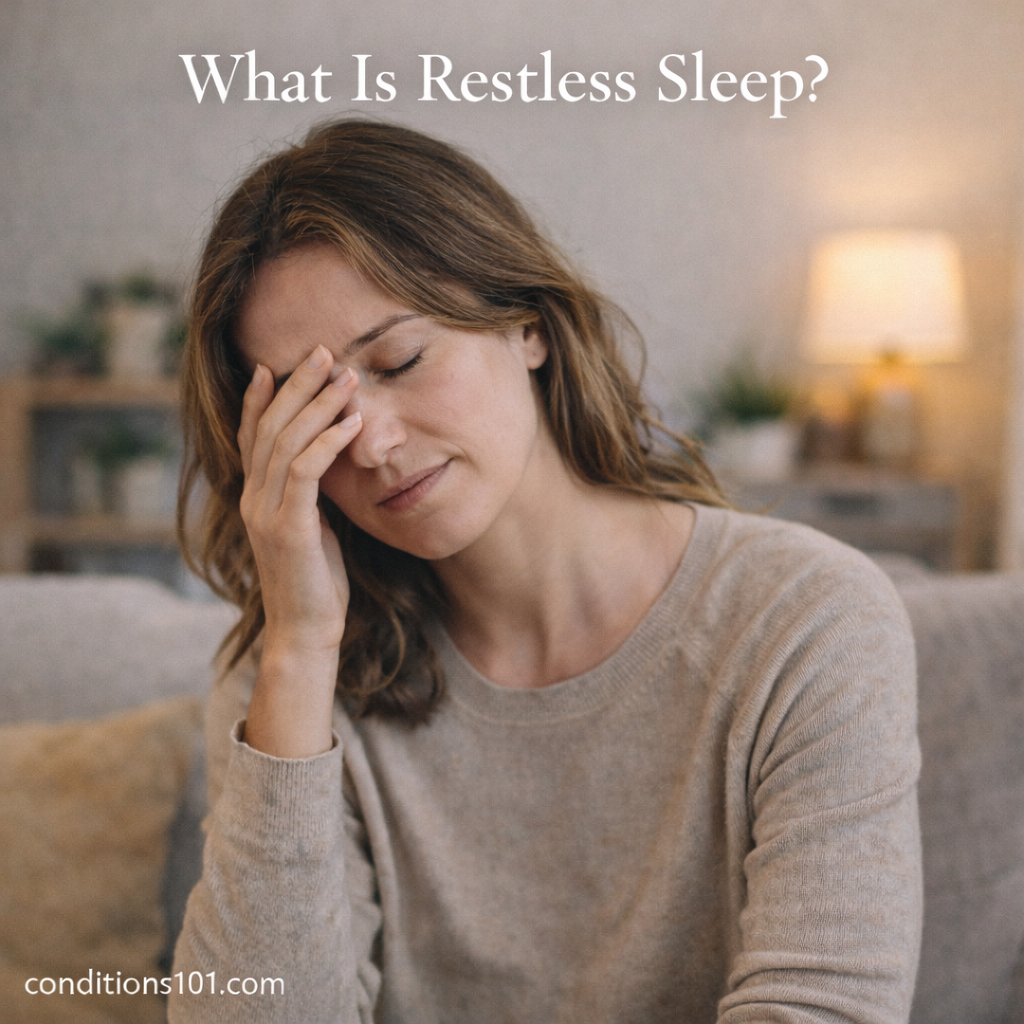
Restless sleep refers to sleep that is frequently interrupted, unsettled, or lacking in deep, restorative quality. People who experience restless sleep may spend enough time in bed but still wake up feeling tired, unfocused, or unrefreshed.
Restless sleep is not a diagnosis or a single condition. Instead, it is a descriptive term used to explain sleep patterns that involve frequent movement, brief awakenings, or difficulty maintaining continuous sleep throughout the night.
This article explains restless sleep in a clear, educational way without providing medical advice, diagnosis, or treatment.
How Normal Sleep Works
Sleep occurs in repeating cycles that move through different stages. These stages include lighter sleep, deeper sleep, and periods of rapid eye movement (REM) sleep.
Healthy sleep typically involves:
- Falling asleep within a reasonable amount of time
- Staying asleep for extended periods
- Cycling smoothly through sleep stages
- Waking up feeling rested
Restless sleep often disrupts one or more parts of this process.
Common Characteristics of Restless Sleep
Restless sleep can present in different ways depending on the individual.
Common characteristics include:
- Frequent tossing and turning
- Light or shallow sleep
- Waking up multiple times during the night
- Difficulty staying asleep
- Feeling tired despite adequate time in bed
Some people may not remember waking up, but still experience poor sleep quality.
Occasional vs. Ongoing Restless Sleep
Restless sleep may be temporary or occur more regularly.
Occasional Restless Sleep
Short-term restless sleep is often linked to temporary changes, such as:
- Stressful events
- Changes in routine or schedule
- Travel or time zone shifts
- Environmental disruptions
In many cases, sleep quality improves once normal routines return.
Ongoing Restless Sleep
Ongoing restless sleep involves repeated nights of disrupted or low-quality sleep over a longer period.
It may involve:
- Consistent nighttime awakenings
- Difficulty reaching deep sleep stages
- Persistent daytime fatigue
Ongoing restless sleep is commonly discussed in general sleep and fatigue education.
Factors That Can Contribute to Restless Sleep
Restless sleep often develops due to a combination of physical, mental, and environmental factors.
Common contributing factors include:
- Stress or mental overactivity
- Irregular sleep schedules
- Excessive screen exposure before bed
- Uncomfortable sleep environments
- Noise or light disruptions
- Physical discomfort during sleep
Individual sensitivity to these factors varies.
Restless Sleep and Movement During the Night
Movement is a normal part of sleep, but excessive or frequent movement may interrupt sleep cycles.
Movement-related aspects of restless sleep may include:
- Frequent position changes
- Shifting due to discomfort
- Partial awakenings caused by movement
These interruptions can reduce time spent in deeper sleep stages.
Restless Sleep vs. Normal Sleep Variation
Everyone experiences occasional nights of poor sleep. Restless sleep becomes more noticeable when disrupted nights occur repeatedly or interfere with daily functioning.
Restless sleep generally involves:
- A pattern of disturbed sleep
- Reduced sense of restfulness
- Ongoing daytime tiredness
Understanding personal sleep patterns helps distinguish normal variation from ongoing restlessness.
How Restless Sleep Can Affect Daily Life

Poor-quality sleep can influence many aspects of daily functioning.
Common daytime effects associated with restless sleep include:
- Fatigue or low energy
- Difficulty concentrating
- Reduced alertness
- Mood changes
- Lower motivation
The impact varies depending on sleep duration, consistency, and overall health.
Why Restless Sleep Is Common
Restless sleep is widely discussed because modern lifestyles often interfere with consistent, high-quality sleep.
Contributing factors include:
- Busy or irregular schedules
- Increased screen time
- Elevated stress levels
- Reduced exposure to natural light during the day
Small disruptions can add up and affect sleep quality over time.
Key Takeaways
- Restless sleep refers to disrupted or non-restorative sleep
- It involves frequent awakenings, movement, or shallow sleep
- Restless sleep may be occasional or ongoing
- Lifestyle, environment, and routine factors often play roles
- Experiences with restless sleep vary widely