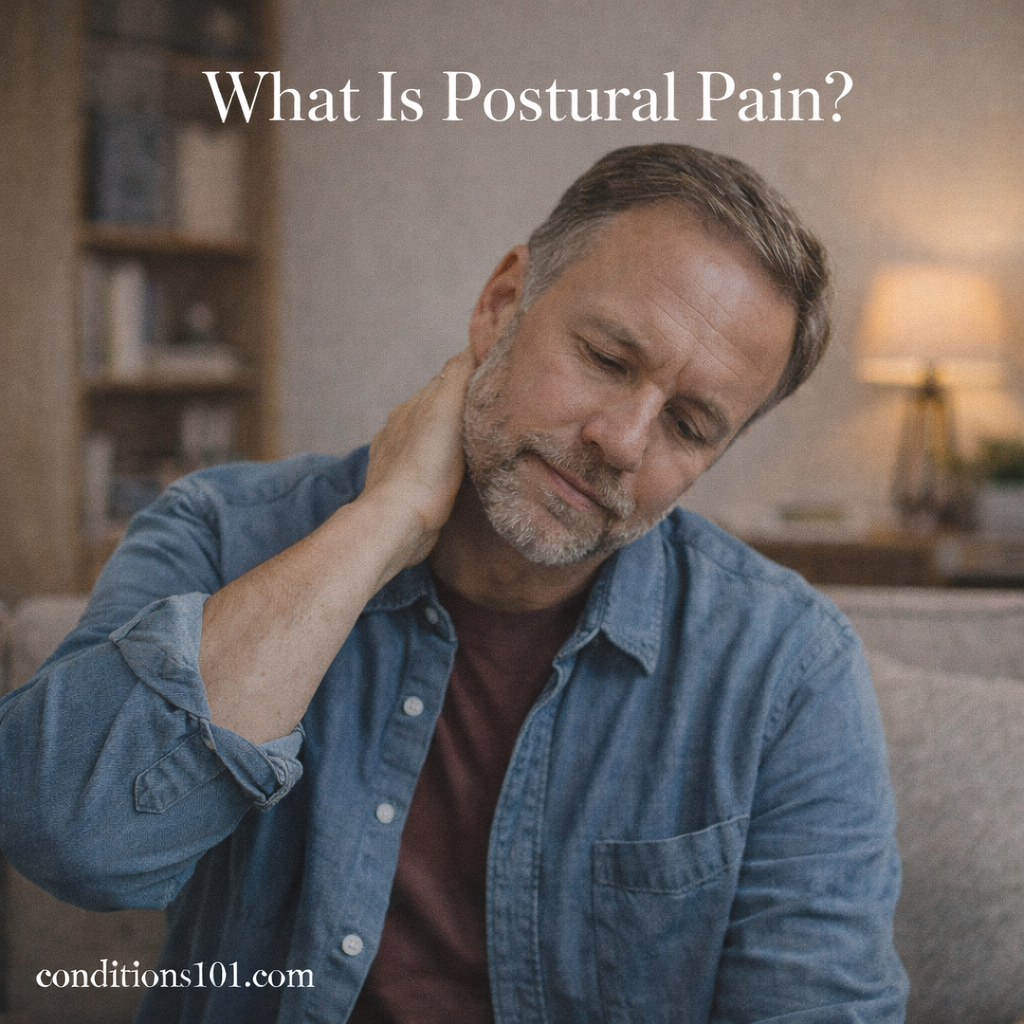
Postural pain refers to physical discomfort that develops or worsens due to how the body is positioned or held over time. It is commonly associated with prolonged sitting, standing, or repetitive positions that place stress on muscles, joints, and connective tissues.
Rather than being a disease, postural pain is considered a physical condition related to body alignment, movement patterns, and daily habits.
How Postural Pain Develops
The human body is designed for movement and balanced alignment. When posture places uneven strain on certain areas, discomfort can gradually develop.
Contributing factors may include:
- Sitting or standing in the same position for long periods
- Slouching or leaning forward
- Poor workstation or seating setup
- Repetitive daily movements
- Muscle imbalance or fatigue
Over time, these factors can lead to tension and soreness in specific parts of the body.
Common Areas Affected by Postural Pain
Postural pain often appears in areas that support posture and movement.
Commonly affected areas include:
- Neck
- Shoulders
- Upper and lower back
- Hips
- Knees
Pain may be localized to one area or felt across multiple regions depending on posture patterns.
What Postural Pain Can Feel Like

Postural pain can present differently from person to person.
Common descriptions include:
- Aching or stiffness
- Muscle tightness
- Dull or persistent soreness
- Discomfort that increases after certain positions
- Relief when changing posture or moving
The discomfort is often gradual rather than sudden.
Postural Pain vs. Other Types of Pain
Postural pain is distinct from pain caused by injury or illness.
Key characteristics of postural pain include:
- Develops over time rather than suddenly
- Often linked to specific positions or habits
- May improve with movement or posture changes
- Usually does not involve visible injury
Educational explanations focus on patterns and sensations rather than diagnosis.
Everyday Situations Linked to Postural Pain
Postural pain commonly appears during routine daily activities.
Examples include:
- Desk or computer work
- Prolonged smartphone or tablet use
- Long periods of driving
- Standing for extended durations
- Sleeping in awkward positions
Because these activities are common, postural pain is widely experienced.
Is Postural Pain a Condition?
Postural pain is generally described as a physical condition, not a disease. It reflects how the body responds to alignment, positioning, and movement habits rather than an underlying illness.
In educational contexts, postural pain is discussed as:
- A functional and mechanical issue
- A lifestyle-related physical condition
- A common source of musculoskeletal discomfort
This framing helps clarify the concept without implying medical conclusions.
Why Postural Pain Is Often Overlooked
Postural pain is sometimes overlooked because:
- It develops gradually
- It may feel mild at first
- It is often normalized as part of daily life
- It does not always limit activity immediately
Clear explanations help distinguish postural pain from other physical discomforts.
Postural Pain in Educational Health Content
Health education resources describe postural pain using neutral language to:
- Improve body awareness
- Avoid diagnostic assumptions
- Support long-term understanding
This approach keeps information accessible, practical, and evergreen.
Key Takeaways
- Postural pain is discomfort related to body position and alignment over time.
- It commonly affects the neck, shoulders, back, and hips.
- The pain often develops gradually and may worsen with prolonged positions.
- Postural pain is considered a physical condition, not a disease.
- Educational discussions focus on understanding posture-related discomfort without diagnosis or treatment.