Physical strain refers to stress placed on the body’s muscles, joints, or connective tissues as a result of physical activity, posture, or repetitive movement. It commonly develops when the body is used in ways that exceed its usual capacity, involve poor alignment, or continue for extended periods without adequate rest or recovery.
This article provides an education-only overview of physical strain, explaining what it is, how it occurs, common situations where it develops, and how it differs from related physical concepts. The information is intended for general understanding and does not provide medical advice, diagnosis, or treatment.
Understanding Physical Strain
Physical strain occurs when the body experiences mechanical stress during movement or activity. This stress can affect muscles, tendons, ligaments, and joints, especially when movements are repeated, forceful, or poorly supported.
Strain is a normal part of physical activity to some degree. The body is designed to handle stress and adapt to it. Problems may arise when strain is excessive, unbalanced, or prolonged, particularly without adequate rest.
How Physical Strain Develops
Physical strain usually develops gradually rather than from a single moment. It often results from patterns of use over time.
Common contributing factors include:
- Repetitive movements
- Prolonged static postures
- Lifting or carrying heavy loads
- Sudden increases in physical activity
- Poor body mechanics or alignment
- Inadequate recovery between activities
These factors may occur at work, during exercise, or as part of daily routines.
Common Situations Associated With Physical Strain
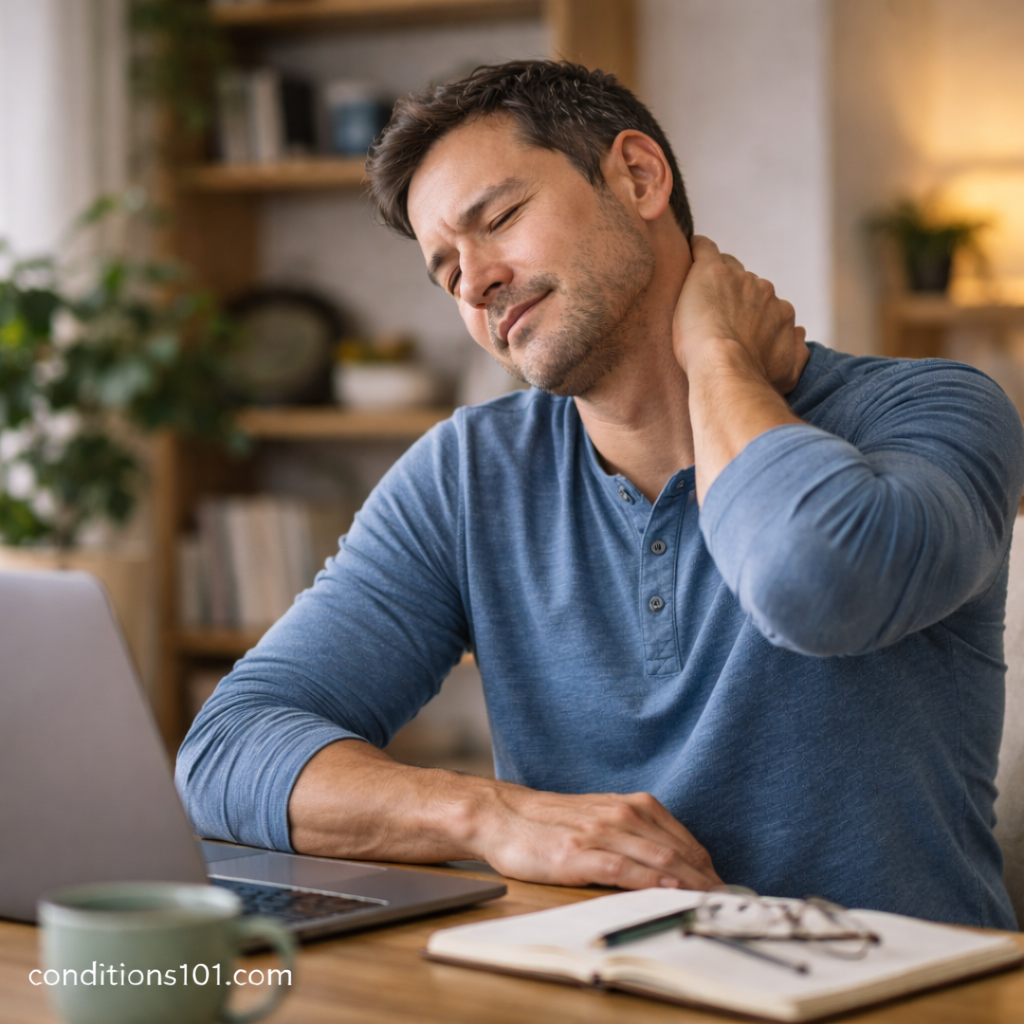
Physical strain can develop in many everyday contexts, not just during intense physical activity.
Work-related activities
- Sitting or standing for long periods
- Repetitive tasks involving hands or arms
- Manual labor or lifting
- Poorly designed workspaces
Daily routines
- Household chores
- Carrying children or groceries
- Prolonged phone or computer use
- Repetitive movements during hobbies
Physical activity and exercise
- Sudden changes in activity level
- Improper technique
- Insufficient warm-up or cool-down
- Overuse of specific muscle groups
Strain can affect people of all ages and activity levels.
Areas of the Body Commonly Affected
Physical strain can occur anywhere in the body, but some areas are more commonly affected due to their frequent use or load-bearing role.
Commonly affected areas include:
- Neck and shoulders
- Lower back
- Wrists and hands
- Knees
- Hips
The specific area involved often reflects the type of activity or posture contributing to the strain.
Physical Strain vs. Injury
Physical strain is sometimes confused with injury, but they are not the same.
Physical strain
- Develops gradually
- Often related to overuse or posture
- May fluctuate with activity levels
- Does not necessarily involve tissue damage
Acute injury
- Often occurs suddenly
- May result from trauma or force
- Typically has a clear starting point
- May involve structural damage
Strain can increase vulnerability to injury, but not all strain leads to injury.
Physical Strain vs. Muscle Soreness
Another common comparison is between physical strain and normal muscle soreness.
Muscle soreness
- Common after new or intense activity
- Usually temporary
- Often resolves within a short time
Physical strain
- May persist if contributing factors remain
- Often linked to ongoing habits or posture
- Can recur with repeated exposure
Understanding the difference helps clarify why strain is often discussed in education and ergonomics.
Why Physical Strain Is Discussed in Pain and Physical Health Education
Physical strain is a frequent topic in pain and physical health education because it is closely tied to how people move, work, and live.
Educational discussions focus on:
- Understanding how movement patterns affect the body
- Recognizing early signs of physical overload
- Improving awareness of posture and activity balance
- Supporting informed conversations about physical well-being
The goal is to increase awareness, not to diagnose or treat conditions.
Common Misconceptions About Physical Strain
Several misunderstandings often appear in discussions about physical strain.
“Only athletes experience physical strain”
Physical strain can affect anyone, including people with sedentary routines.
“Pain always means serious damage”
Discomfort related to strain does not automatically indicate injury.
“Rest alone fixes all strain”
While rest is important, ongoing patterns often influence whether strain returns.
“Physical strain happens only during exercise”
Daily activities and work environments are common contributors.
Key Takeaways
- Physical strain refers to stress placed on muscles, joints, or connective tissues
- It often develops gradually from repeated or prolonged physical demands
- Common contributors include posture, repetition, and overuse
- Physical strain differs from acute injury and normal soreness
- Education focuses on awareness of movement and daily habits