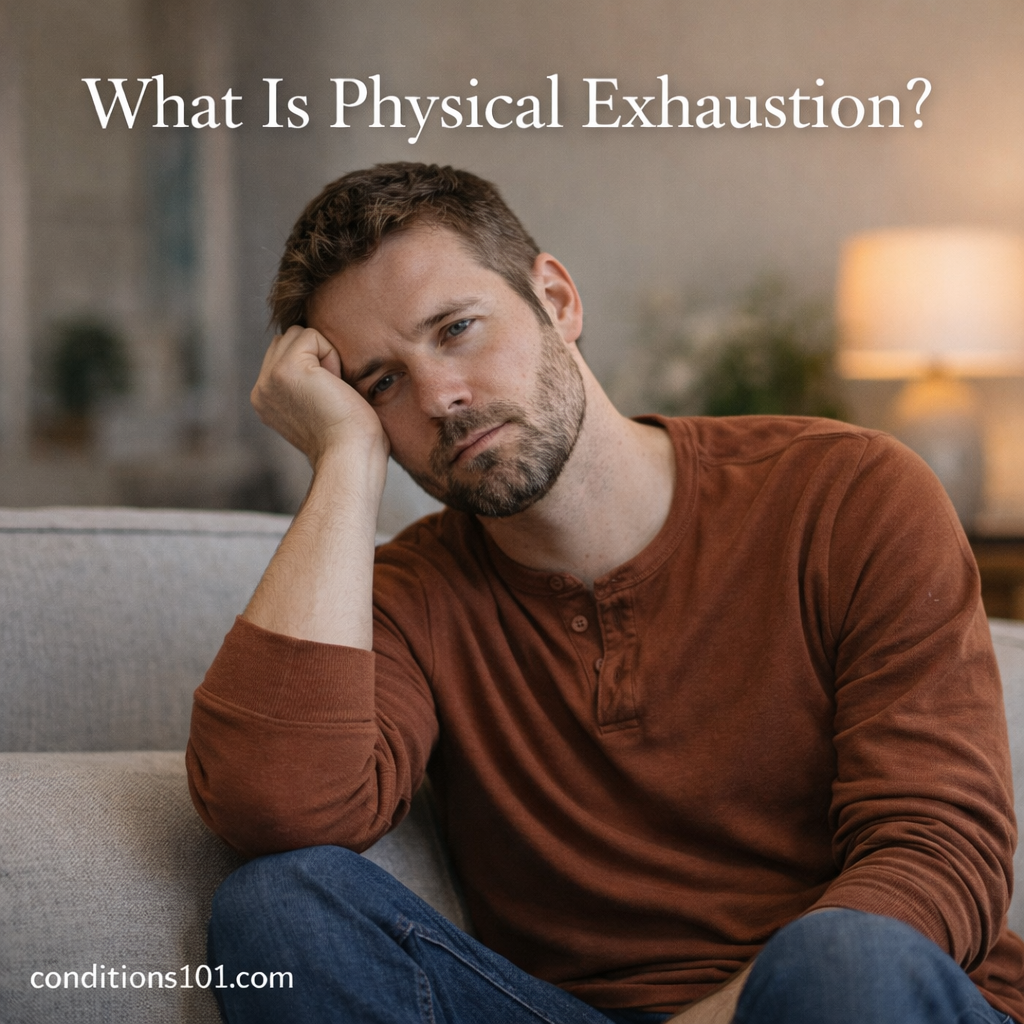
Physical exhaustion is a state of extreme physical fatigue that occurs when the body’s energy reserves are depleted and recovery has not kept pace with physical demands. It can develop gradually over time or appear suddenly after prolonged exertion, inadequate rest, or sustained physical stress.
In educational contexts, physical exhaustion is discussed as a broad condition rather than a diagnosis. It describes how the body feels and functions when it has been pushed beyond its current capacity to recover. Physical exhaustion is real, measurable through symptoms, and can significantly affect daily functioning.
Understanding Physical Exhaustion
The body relies on a balance between activity and recovery. Physical exhaustion arises when this balance is disrupted for extended periods.
Common contributors include:
- Prolonged physical activity without adequate rest
- Repeated high-demand days with limited recovery time
- Inadequate sleep over time
- Physically demanding work or routines
- Ongoing physical stressors
Physical exhaustion reflects the body’s need for restoration rather than a specific injury or illness.
How Physical Exhaustion Feels

People experiencing physical exhaustion often report a combination of physical and mental effects.
Common Physical Sensations
- Persistent tiredness that does not improve with short rest
- Heavy or weak muscles
- Slower physical movements
- Reduced stamina or endurance
- Increased effort required for simple tasks
Cognitive and Functional Effects
- Difficulty concentrating
- Slower reaction times
- Reduced motivation for physical tasks
- Feeling physically “drained” or depleted
These symptoms may fluctuate but often worsen when rest remains insufficient.
Physical Exhaustion vs Normal Tiredness
Everyone feels tired occasionally, especially after a busy day. Physical exhaustion differs in intensity and duration.
Normal Tiredness
- Improves with rest or sleep
- Is proportional to recent activity
- Does not significantly impair daily functioning
Physical Exhaustion
- Persists despite rest
- Builds over days or weeks
- Interferes with work, movement, or daily routines
The key difference lies in recovery. With physical exhaustion, the body struggles to bounce back.
Common Situations Linked to Physical Exhaustion
Physical exhaustion is often associated with demanding or repetitive physical demands.
Examples include:
- Physically intensive jobs
- Long periods of caregiving or manual labor
- Athletic overtraining without adequate recovery
- Extended travel or disrupted sleep schedules
- Sustained periods of physical strain
These examples illustrate how physical exhaustion can develop in everyday life, not just extreme situations.
The Role of Sleep and Recovery
Sleep plays a central role in physical recovery. During sleep, the body repairs tissues, restores energy stores, and regulates physical systems.
When recovery is insufficient:
- Muscles remain fatigued
- Energy production becomes less efficient
- Physical performance declines
- Fatigue accumulates rather than resolving
Over time, this contributes to the persistent fatigue characteristic of physical exhaustion.
How Physical Exhaustion Affects Daily Life
Physical exhaustion can influence multiple areas of daily functioning.
Physical Impact
- Reduced ability to perform physical tasks
- Increased need for rest breaks
- Lower tolerance for physical exertion
Lifestyle Impact
- Difficulty maintaining routines
- Reduced participation in activities
- Increased reliance on energy-conserving behaviors
These effects can create a cycle where physical demands feel increasingly overwhelming.
Physical Exhaustion and Stress
Physical and mental stress often overlap. While physical exhaustion focuses on bodily fatigue, stress can amplify how exhaustion feels.
Stress may:
- Increase muscle tension
- Disrupt sleep quality
- Reduce perceived energy levels
- Slow recovery
This interaction helps explain why physical exhaustion often feels more intense during stressful periods.
Misconceptions About Physical Exhaustion
Several common misunderstandings can make physical exhaustion harder to recognize or explain.
Common Myths
- “Exhaustion only happens after extreme activity”
- “Feeling exhausted means you are weak”
- “Pushing through always builds endurance”
Educational Clarifications
- Physical exhaustion can develop gradually
- It reflects physical limits, not personal failure
- Recovery is essential for sustained performance
Understanding these points helps frame physical exhaustion in a more accurate and supportive way.
Why Physical Exhaustion Can Persist
Physical exhaustion may last longer than expected when contributing factors remain in place.
Contributing factors may include:
- Ongoing physical demands
- Repeated sleep disruption
- Limited opportunities for recovery
- High cumulative workload
Without sufficient recovery time, fatigue can continue to build rather than resolve.
Why Learning About Physical Exhaustion Matters
Education about physical exhaustion helps people:
- Recognize early signs of excessive fatigue
- Understand the role of recovery and rest
- Make sense of persistent physical tiredness
- Communicate experiences more clearly
Educational information provides context but does not replace professional evaluation.
Key Takeaways
- Physical exhaustion is a state of deep physical fatigue
- It develops when recovery does not match physical demands
- Symptoms can affect both body and daily functioning
- Sleep and rest play critical roles in recovery
- Physical exhaustion is common and widely experienced
Physical exhaustion highlights the body’s need for balance between effort and recovery. Understanding how and why it occurs can support better awareness of physical limits and the importance of restorative time in everyday life.