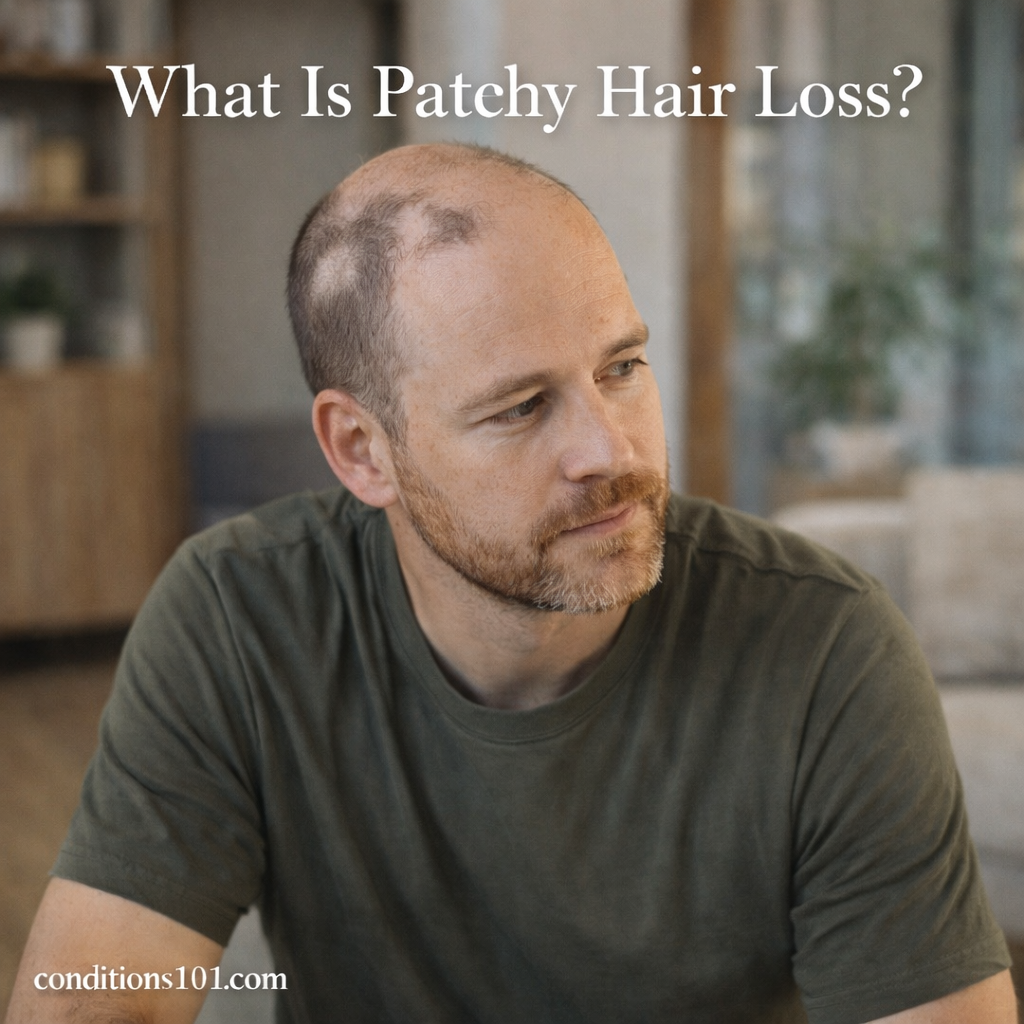
Patchy hair loss refers to hair loss that occurs in distinct areas rather than evenly across the scalp or body. Instead of gradual thinning, hair is lost in clearly defined patches that may vary in size, shape, and location.
This pattern of hair loss can affect the scalp, face, or other areas of the body where hair normally grows. Patchy hair loss is a descriptive term, not a diagnosis, and is used to explain how hair loss appears rather than why it happens.
How Patchy Hair Loss Typically Appears
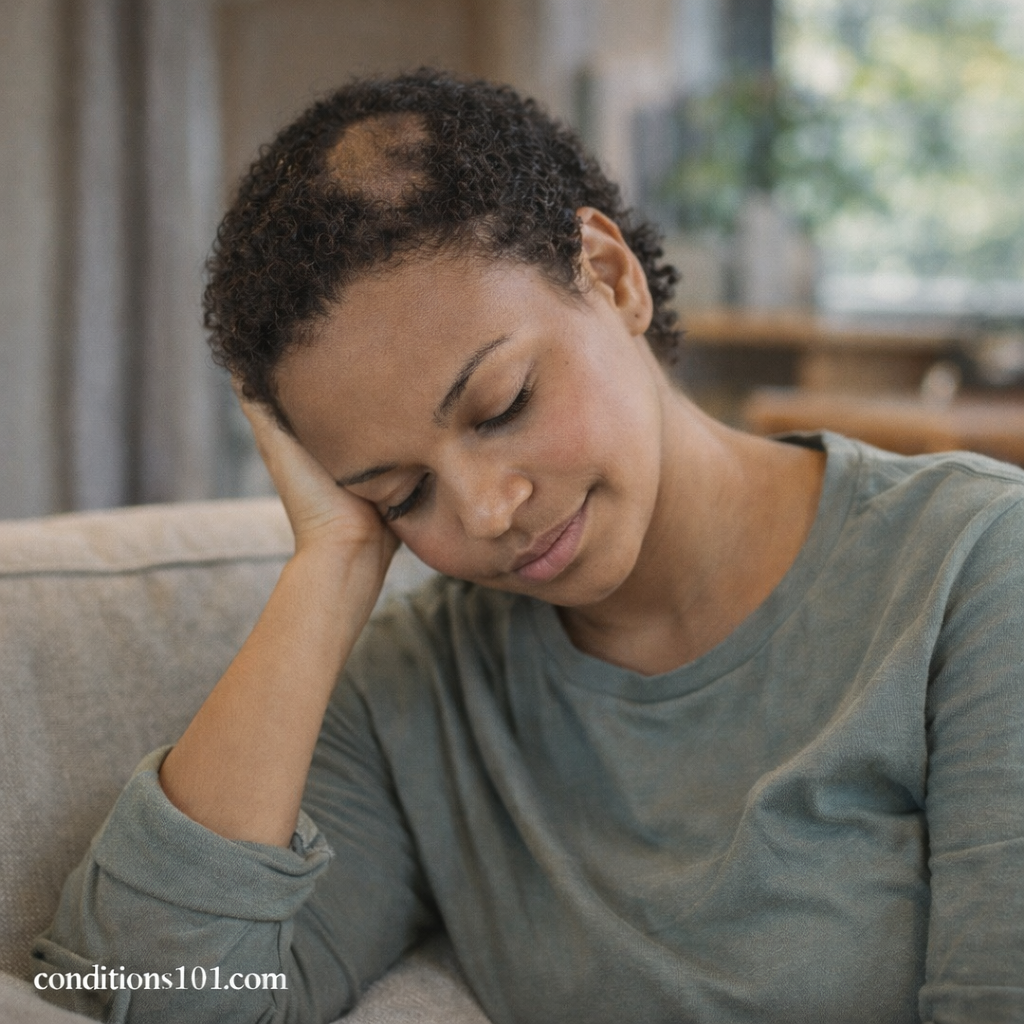
Patchy hair loss is usually noticeable because of its uneven distribution. Common visual characteristics include:
- One or more bald or thinning patches
- Round, oval, or irregularly shaped areas
- Smooth or normal-looking skin in affected spots
- Areas that contrast clearly with surrounding hair
The patches may remain the same size, expand, or change over time. In some cases, hair may regrow in previously affected areas.
Areas Commonly Affected
Patchy hair loss can occur in different locations depending on the individual.
Commonly affected areas include:
- Scalp
- Beard or facial hair
- Eyebrows or eyelashes
- Arms, legs, or other body hair
Not everyone experiences hair loss in the same places, and patterns can vary widely.
Patchy Hair Loss vs. General Hair Thinning
Patchy hair loss is different from diffuse or overall hair thinning.
- Patchy hair loss involves localized areas of hair loss
- General thinning involves gradual reduction in hair density across a larger area
Because the patterns look different, the term “patchy” helps distinguish this type of hair loss from other appearance-related changes.
Possible Factors Associated With Patchy Hair Loss
From an educational standpoint, patchy hair loss is commonly discussed in connection with a range of factors. These may include:
- Immune-related responses
- Physical or emotional stress
- Hormonal changes
- Skin or scalp conditions
- Hair grooming practices or traction
This article does not evaluate causes or treatments but explains how the term is commonly used in informational contexts.
Emotional and Appearance-Related Impact
Hair plays a significant role in personal appearance and identity. Patchy hair loss can sometimes affect how individuals feel about their appearance, even when it does not impact physical health.
People may experience:
- Self-consciousness in social settings
- Changes in grooming habits
- Increased attention to hairstyles or coverings
These reactions are common and do not reflect the severity or significance of the hair loss itself.
Is Patchy Hair Loss Permanent?
Patchy hair loss is not always permanent. In some cases, hair may regrow fully or partially over time, while in others the pattern may persist or change.
Because outcomes vary widely, the term itself does not imply permanence, progression, or severity.
Common Misunderstandings About Patchy Hair Loss
There are several misconceptions surrounding patchy hair loss.
- It does not always indicate a serious condition
- It is not limited to the scalp
- It can affect people of any age or gender
- It does not always worsen over time
Understanding the descriptive nature of the term can help reduce unnecessary worry or assumptions.
Why Understanding the Term Matters
Knowing what “patchy hair loss” means can help people:
- Better interpret health or appearance-related information
- Communicate observations clearly
- Understand differences between hair loss patterns
- Navigate educational or general health resources
The term provides clarity without assigning cause or treatment.
Key Takeaways
- Patchy hair loss describes hair loss in distinct, uneven areas
- It is a visual pattern, not a diagnosis
- Affected areas can include the scalp, face, or body
- The pattern may change, remain stable, or improve over time
- The term focuses on appearance rather than cause or treatment
Final Thoughts
Patchy hair loss is a commonly used term to describe uneven hair loss patterns that stand out visually. While it can affect appearance and confidence, it is a neutral descriptive phrase used in educational and informational contexts.
This article is intended for general informational purposes only and does not provide medical advice, diagnosis, or treatment.