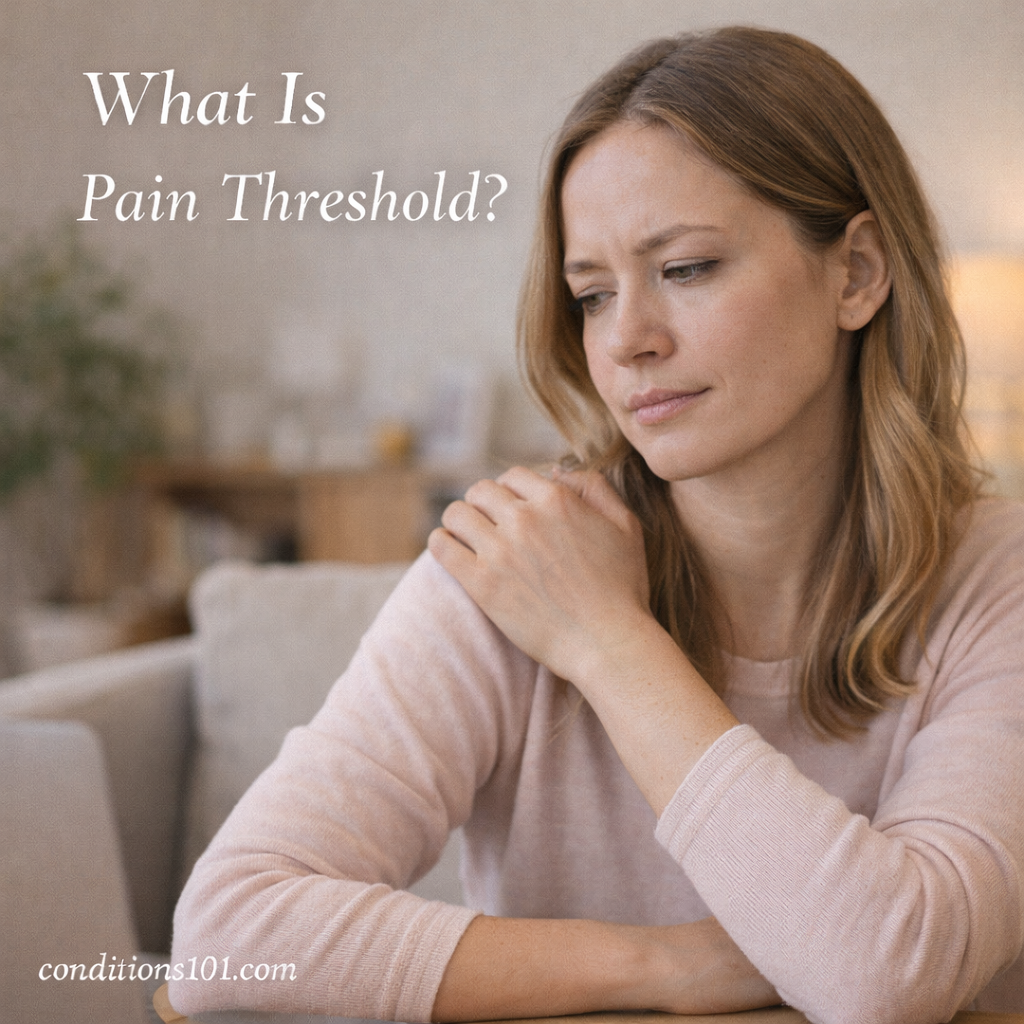
Pain threshold is a term used to describe the point at which a sensation begins to be perceived as painful. It reflects how the body and brain interpret sensory input rather than how severe pain feels once it is experienced.
This article explains pain threshold in a clear, educational way. It does not provide medical advice, diagnosis, or treatment.
Understanding Pain Threshold
Pain threshold refers to the minimum level of stimulus—such as pressure, heat, or movement—at which a person starts to feel pain instead of neutral sensation.
For example, gentle pressure on the skin may feel neutral, but as pressure increases, there comes a point where it is first recognized as painful. That point is the pain threshold.
Pain threshold is not fixed and can vary between individuals and situations.
Pain Threshold vs. Pain Tolerance
Pain threshold is often confused with pain tolerance, but they describe different aspects of pain perception.
Pain Threshold
- The point when a sensation first becomes painful
- Focuses on when pain begins
- Relates to sensory detection
Pain Tolerance
- How much pain a person can endure
- Focuses on how long or how intensely pain can be handled
- Relates to coping and endurance
A person may have a low pain threshold but a high pain tolerance, or vice versa.
How Pain Threshold Works
Pain threshold is shaped by how sensory signals travel through the body.
Sensory Signal Processing
- Nerves detect physical stimuli
- Signals travel to the spinal cord
- The brain interprets the signals
- The sensation is labeled as painful or non-painful
Pain threshold reflects the point where the brain interprets incoming signals as pain rather than neutral sensation.
Factors That Influence Pain Threshold

Pain threshold varies widely and is influenced by multiple non-diagnostic factors.
Biological Factors
- Genetics
- Nervous system sensitivity
- Hormonal fluctuations
- Fatigue levels
Psychological Factors
- Stress
- Emotional state
- Past experiences with pain
- Focus and attention
Environmental and Contextual Factors
- Temperature
- Noise levels
- Comfort of surroundings
- Timing and duration of the stimulus
These factors can interact and shift pain threshold from moment to moment.
Individual Differences in Pain Threshold
No two people experience pain in exactly the same way. Differences in pain threshold are normal and expected.
Some people may notice pain quickly with mild stimuli, while others may require stronger stimuli before pain is perceived. These differences do not indicate weakness or strength—they reflect individual variation in sensory processing.
Pain Threshold in Everyday Life
Pain threshold influences how people experience common sensations, such as:
- Pressure from tight clothing
- Muscle soreness after activity
- Sensitivity to heat or cold
- Discomfort from prolonged sitting or standing
Because pain threshold can change, a sensation that feels tolerable one day may feel painful another day.
Temporary Changes in Pain Threshold
Pain threshold is not constant and may shift temporarily due to:
- Sleep disruption
- Mental or physical stress
- Illness or fatigue
- Emotional strain
These changes are often reversible and reflect how the body adapts to internal and external conditions.
Pain Threshold in Health Education
In educational and research settings, pain threshold is used to:
- Study sensory perception
- Understand variability in pain experiences
- Compare responses across individuals or groups
- Explore how pain processing works in the nervous system
It is a descriptive concept rather than a diagnosis.
Why Understanding Pain Threshold Matters
Understanding pain threshold can help people:
- Better interpret physical sensations
- Recognize normal variability in pain perception
- Avoid unnecessary comparisons with others
- Understand why pain experiences differ from person to person
From an educational perspective, pain threshold highlights how pain is both a physical and perceptual experience.
Key Takeaways
- Pain threshold is the point where sensation first becomes painful
- It differs from pain tolerance, which refers to endurance
- Pain threshold varies between individuals and situations
- Biological, psychological, and environmental factors influence it
- Temporary changes in pain threshold are common