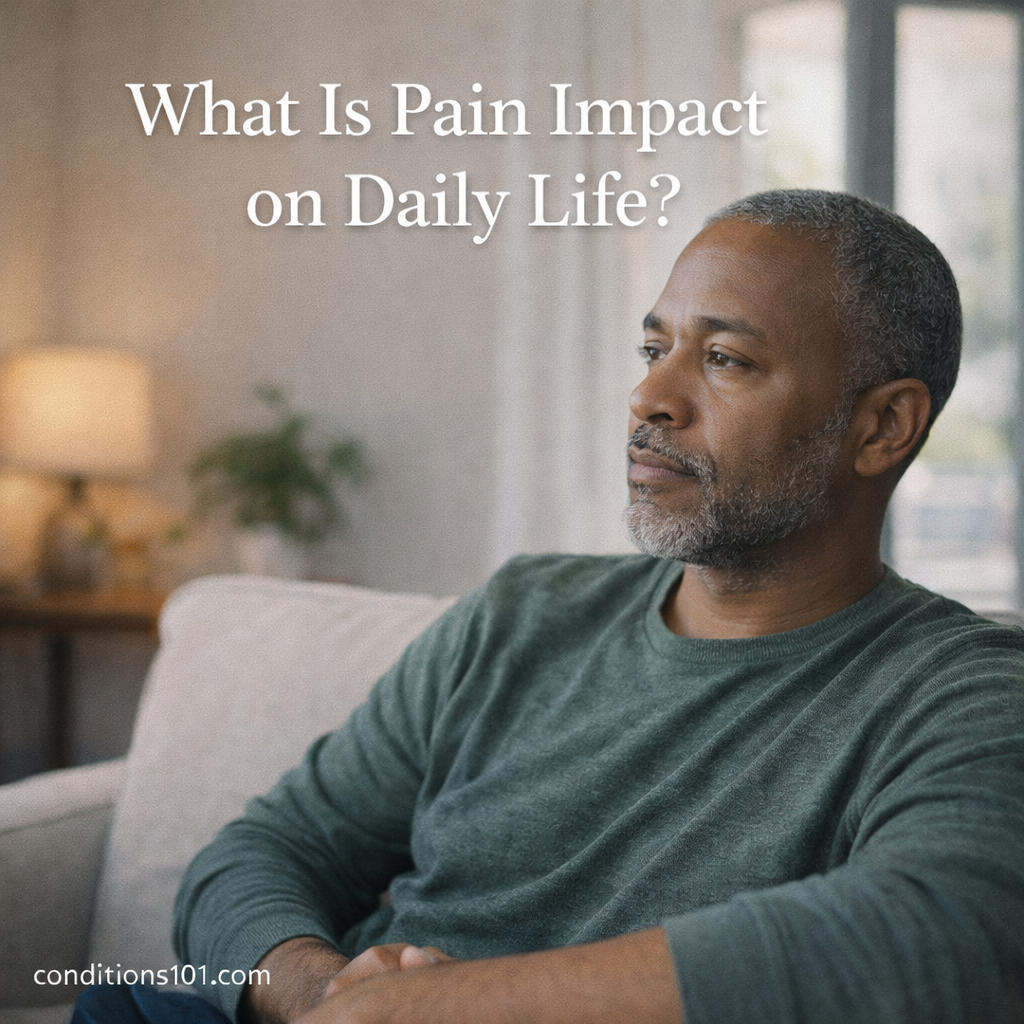
Pain impact on daily life refers to how ongoing or recurring pain can influence a person’s ability to function, participate in activities, and maintain routines. Rather than focusing on pain itself, this concept looks at how pain affects everyday experiences such as movement, work, sleep, relationships, and overall quality of life.
This topic is commonly discussed in health education to help explain why pain is more than a physical sensation. It is not a diagnosis and does not describe a specific condition.
Understanding Pain Beyond Sensation
Pain is often thought of as a physical signal, but its effects extend into many areas of daily living. The impact of pain depends on factors such as:
- Intensity and duration
- Frequency of episodes
- Location in the body
- Individual coping styles
- Environmental and social context
Two people with similar levels of pain may experience very different levels of daily disruption.
How Pain Can Affect Physical Activities

Pain may influence how easily a person moves or completes routine tasks.
Common examples include:
- Difficulty walking, standing, or sitting for long periods
- Reduced ability to lift, reach, or bend
- Slower pace when completing chores or errands
- Avoidance of certain movements or activities
Over time, these limitations can change how a person plans their day or prioritizes tasks.
Pain and Work or Productivity
Pain impact is often discussed in relation to work and productivity, whether in paid employment, household responsibilities, or caregiving roles.
Possible effects include:
- Trouble concentrating or staying focused
- Reduced stamina throughout the day
- Needing more frequent breaks
- Adjusting schedules or workloads
- Increased effort required for routine tasks
These challenges can affect both physical and mentally demanding roles.
Effects on Sleep and Rest
Pain can interfere with rest, which may then influence daytime functioning.
Pain-related sleep disruptions may include:
- Difficulty falling asleep
- Waking during the night
- Restless or non-restorative sleep
- Feeling fatigued during the day
Poor sleep can intensify the perception of pain, creating a cycle that affects daily energy levels.
Emotional and Mental Well-Being
Living with persistent pain can influence emotional and mental experiences, even when pain levels fluctuate.
Commonly discussed effects include:
- Frustration or irritability
- Reduced motivation
- Feeling overwhelmed by daily demands
- Increased stress related to planning or uncertainty
These responses are often part of how people adapt to ongoing discomfort and lifestyle changes.
Social and Relationship Impact
Pain can also shape how people interact with others.
Possible social effects include:
- Cancelling or avoiding social plans
- Difficulty participating in shared activities
- Feeling misunderstood by others
- Changes in family or household roles
Over time, these changes can affect relationships and social engagement.
Pain Impact as a Functional Concept
Pain impact on daily life is considered a functional concept. It focuses on what a person can or cannot do, rather than on pain measurements alone.
In educational contexts, this concept is used to:
- Describe real-world effects of pain
- Highlight differences in individual experiences
- Explain why pain can be disruptive even when not severe
- Support broader discussions about quality of life
Variability in Pain Impact
Pain impact is not constant and may change from day to day.
Factors that can influence daily impact include:
- Activity level
- Stress or emotional state
- Environment and support systems
- Time of day
- Cumulative fatigue
This variability explains why some days feel manageable while others feel more challenging.
Why Pain Impact Is Studied
Researchers and educators study pain impact on daily life to better understand:
- How pain affects function and independence
- The relationship between physical discomfort and daily routines
- Differences between pain intensity and real-world limitations
- Ways people adapt to ongoing discomfort
This knowledge supports clearer communication about pain experiences without focusing on diagnosis or treatment.
Key Takeaways
- Pain impact on daily life describes how pain affects everyday functioning
- It goes beyond physical sensation to include activity, sleep, work, and social life
- Impact varies widely between individuals and situations
- The concept is descriptive and educational, not diagnostic
- Understanding pain impact helps explain how pain influences quality of life