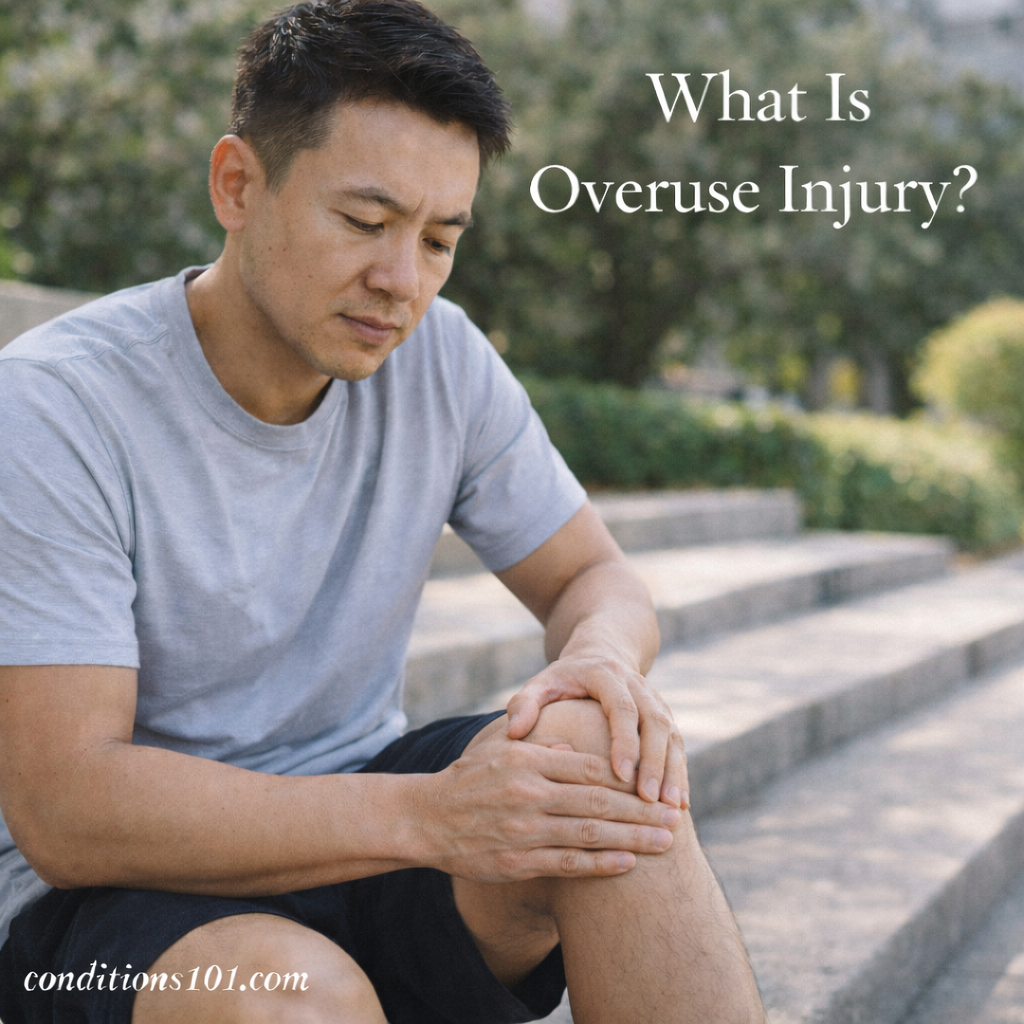
An overuse injury is a general term used to describe physical discomfort, pain, or tissue strain that develops gradually due to repetitive movement, repeated stress, or prolonged physical activity without enough recovery time. Instead of resulting from a single accident or sudden impact, overuse injuries tend to build up over time.
Overuse injury is not a specific medical diagnosis. It is a descriptive concept commonly used in educational, fitness, and physical health contexts to explain how repeated physical stress can affect the body.
This article is for general informational purposes only and does not provide medical advice, diagnosis, or treatment.
Understanding Overuse Injuries in Simple Terms
The body is designed to handle movement and physical effort, but it also needs time to recover. When the same muscles, joints, or tissues are used repeatedly without adequate rest, small stresses can accumulate.
Overuse injuries generally develop when:
- The same movement is repeated frequently
- Physical intensity increases too quickly
- Recovery time is limited or inconsistent
- The body is exposed to ongoing strain
Rather than appearing suddenly, discomfort often starts mildly and becomes more noticeable over time.
How Overuse Injuries Are Different From Acute Injuries
Overuse injuries are often contrasted with acute injuries, which happen suddenly.
Overuse Injuries
- Develop gradually
- Are linked to repetitive motion or ongoing stress
- May start as mild discomfort and worsen slowly
Acute Injuries
- Occur suddenly
- Are often caused by falls, impacts, or sudden movements
- Are usually noticeable right away
Understanding this difference helps explain why overuse injuries can sometimes be overlooked in their early stages.
Common Activities Associated With Overuse Injuries

Overuse injuries can occur in many settings, not just athletics.
Examples include:
- Repetitive work tasks (typing, lifting, assembly work)
- Sports or exercise routines with repeated motions
- Hobbies involving prolonged physical effort
- Daily activities that strain the same joints or muscles
Any activity that places repeated stress on the same body areas may contribute over time.
What Overuse Injury Can Feel Like
People often describe overuse-related discomfort in subtle ways at first.
Common experiences may include:
- Persistent soreness or stiffness
- Aching that worsens with activity
- Reduced range of motion
- Discomfort that improves with rest but returns with use
- Gradual decline in performance or endurance
These sensations often develop slowly, making them easy to ignore early on.
Factors That Can Contribute to Overuse Injuries
Overuse injuries typically result from a combination of influences rather than one single cause.
Repetitive Motion
- Performing the same movement repeatedly
- Limited variation in movement patterns
Sudden Changes in Activity
- Rapid increases in intensity or duration
- New activities without gradual adaptation
Limited Recovery
- Insufficient rest between activities
- Ongoing physical demands without breaks
Technique and Environment
- Poor movement mechanics
- Unsupportive equipment or work setups
- Hard or uneven surfaces
These factors can interact and increase strain on specific areas of the body.
Situational vs. Ongoing Overuse Injury Patterns
Situational Overuse Discomfort
This may occur temporarily after:
- A short period of increased activity
- Trying a new physical routine
- Unusual physical demands
Situational discomfort may ease when activity levels return to normal.
Ongoing Overuse Injury Patterns
Ongoing patterns may:
- Persist across weeks or months
- Affect daily activities or routines
- Gradually limit physical comfort or performance
These patterns often reflect long-term habits or repeated physical stress.
Common Misconceptions About Overuse Injuries
“Only athletes get overuse injuries”
Overuse injuries can affect anyone, including people with physically repetitive jobs or daily routines.
“Pain must be severe to matter”
Early overuse discomfort is often mild and gradual rather than intense.
“Overuse injuries happen overnight”
Most develop slowly and become noticeable over time.
Why Understanding Overuse Injuries Matters
Learning about overuse injuries can help:
- Increase awareness of repetitive stress
- Encourage attention to recovery and balance
- Reduce confusion about gradual physical discomfort
- Support informed decisions about physical activity
Education focuses on understanding how repeated strain affects the body rather than labeling or diagnosing conditions.
Overuse Injury as a Physical Stress Pattern
Overuse injury is best understood as a pattern of physical stress rather than a single event. It reflects how tissues respond to repeated demands over time.
Recognizing this pattern can help explain why discomfort may appear gradually and vary depending on activity levels and recovery.
Key Takeaways
- Overuse injury describes gradual physical discomfort from repetitive stress
- It differs from sudden or acute injuries
- Overuse injuries can affect anyone, not just athletes
- Repetition, limited recovery, and sudden activity changes often contribute
- Awareness of patterns helps explain gradual physical discomfort
Understanding overuse injuries provides a useful framework for learning about physical strain in an educational, non-medical way.