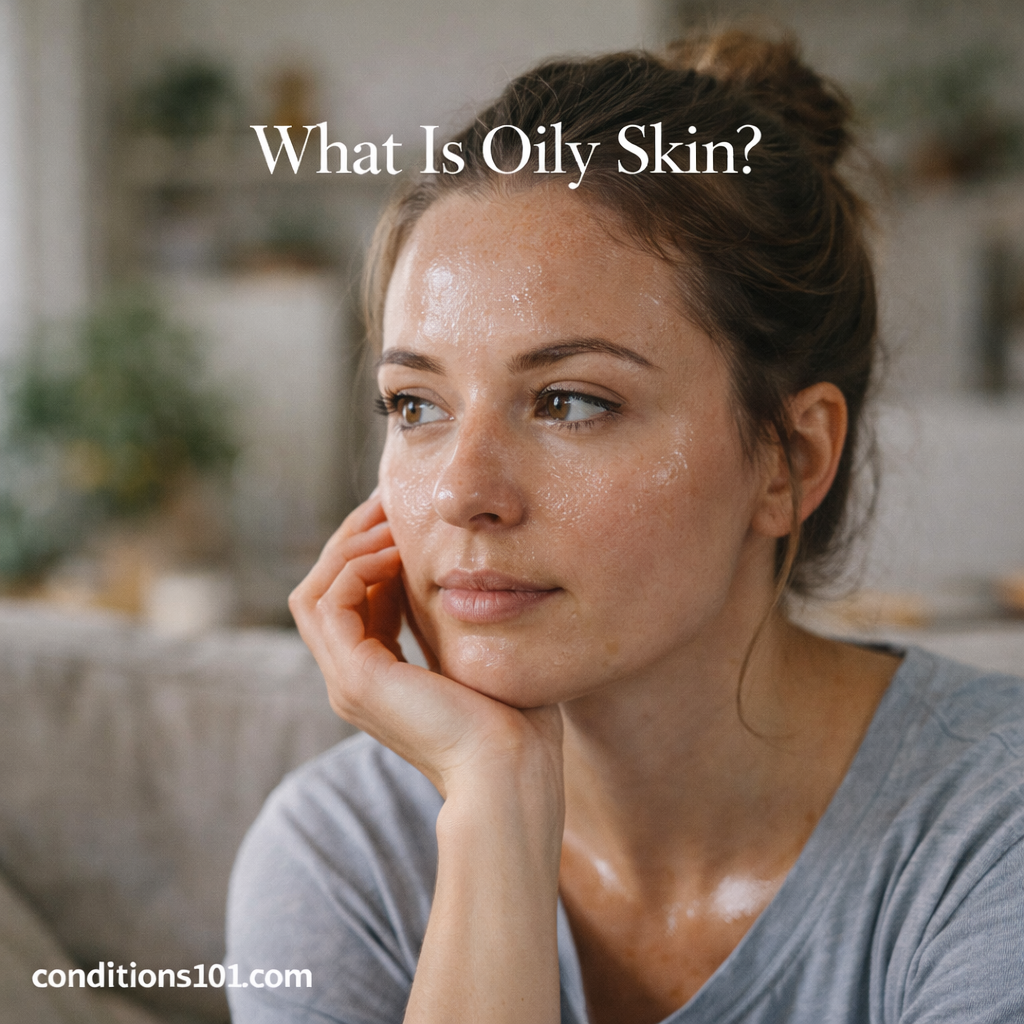
Oily skin is a skin type characterized by excess production of sebum, the natural oil produced by the skin’s sebaceous glands. Sebum plays an important role in keeping skin moisturized and protected, but when it is produced in higher-than-needed amounts, the skin may appear shiny or greasy, particularly in certain areas of the face.
This article provides an educational overview of oily skin, what causes it, how it commonly presents, and how it differs from other skin types. It does not provide medical advice, diagnosis, or treatment.
Understanding Sebum and Skin Oils
Sebum is a waxy, oily substance produced naturally by the skin. Its primary functions include:
- Helping maintain skin moisture
- Supporting the skin’s protective barrier
- Reducing water loss from the skin’s surface
Sebum production varies from person to person and can change over time due to internal and external factors.
What Defines Oily Skin?

Oily skin is generally identified by consistent oiliness, especially in areas with a higher concentration of sebaceous glands.
Common characteristics include:
- A shiny or glossy appearance
- Skin that feels greasy to the touch
- Enlarged or more visible pores
- Oil buildup later in the day, even after cleansing
Oily skin can affect the face, scalp, chest, and back, though it is most noticeable on the face.
Common Areas Affected by Oily Skin
Oily skin tends to be more noticeable in specific zones.
The T-Zone
The T-zone includes:
- Forehead
- Nose
- Chin
This area often produces more oil than the rest of the face.
Other Areas
Some people experience oiliness on:
- Cheeks
- Jawline
- Upper back or shoulders
Patterns vary depending on individual skin biology.
What Causes Oily Skin?
Oily skin can be influenced by a combination of factors.
Genetic Factors
Skin type is often inherited. If oily skin runs in families, individuals may be more likely to experience higher oil production.
Hormonal Influences
Hormonal changes can affect sebum production, including shifts related to:
- Age
- Natural life stages
- Internal hormonal fluctuations
Environmental Factors
External conditions may also play a role, such as:
- Warm or humid climates
- Seasonal changes
- Exposure to pollution
Skincare and Lifestyle Factors
Certain habits may influence how oily the skin appears, including:
- Over-cleansing or harsh products
- Use of heavy or occlusive products
- Frequent touching of the face
These factors do not cause oily skin but may affect how noticeable it becomes.
Oily Skin vs. Other Skin Types
Skin types are often grouped based on oil production patterns.
Oily Skin
- Produces excess oil
- Appears shiny for much of the day
Dry Skin
- Produces less natural oil
- May feel tight or rough
Combination Skin
- Oily in some areas and dry in others
- Commonly oily in the T-zone and drier on the cheeks
Normal Skin
- Balanced oil production
- Neither overly oily nor overly dry
Understanding these distinctions helps explain why skincare experiences differ between individuals.
How Oily Skin Is Commonly Experienced
People with oily skin may notice:
- Makeup wearing off more quickly
- Skin looking shiny shortly after washing
- Oil buildup increasing throughout the day
These experiences are common and vary in intensity from person to person.
Is Oily Skin Permanent?
Oily skin is not always permanent. Oil production can change over time due to:
- Aging
- Environmental shifts
- Lifestyle changes
Some individuals experience less oiliness as they get older, while others continue to have oily skin long-term.
Key Takeaways
- Oily skin is caused by excess sebum production
- Sebum is a natural and necessary skin substance
- Genetics, hormones, and environment all play a role
- Oiliness commonly appears in the T-zone
- Skin type can change over time
Oily skin is a common and natural skin type, and understanding how it functions supports clearer conversations about skin health and appearance.