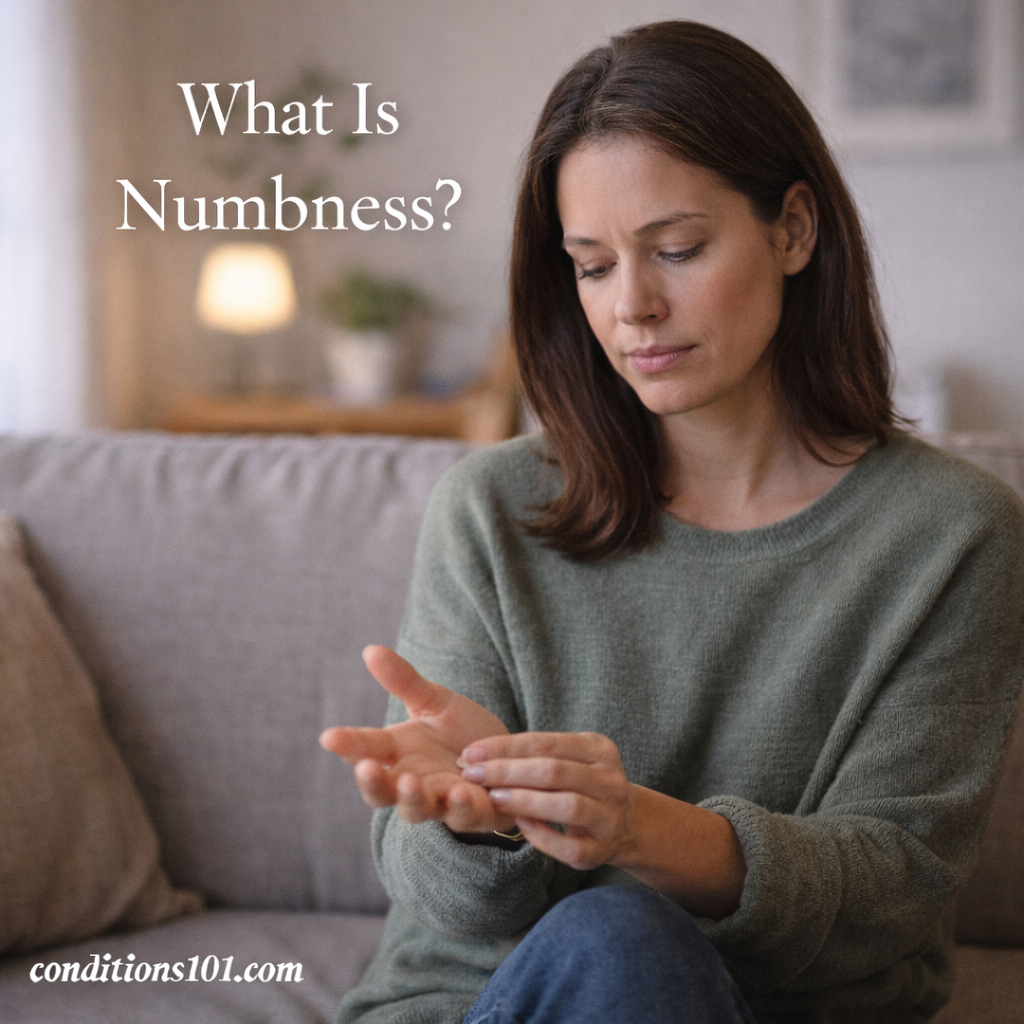
Numbness is a sensation marked by reduced or absent feeling in part of the body. It may feel like a loss of touch, tingling, heaviness, or a “pins and needles” sensation. Numbness can occur briefly or persist over time, depending on the situation.
In educational and health information contexts, numbness is described as a sensory experience, not a diagnosis. This article explains numbness clearly and neutrally, without providing medical advice, diagnosis, or treatment.
Understanding Numbness in Simple Terms
Numbness happens when sensory signals between the body and the brain are altered or interrupted. These signals normally travel through nerves, allowing the brain to interpret touch, temperature, pressure, and pain.
When signaling is reduced or disrupted, sensation may feel:
- Diminished
- Delayed
- Altered or “fuzzy”
- Completely absent
Numbness can affect small areas, such as fingertips, or larger regions like an arm or leg.
What Numbness Can Feel Like
People describe numbness in different ways, depending on the location and intensity.
Common descriptions include:
- Loss of feeling or reduced sensitivity
- Tingling or prickling sensations
- A “dead” or heavy feeling
- Reduced ability to sense temperature or touch
Numbness may occur on one side of the body or symmetrically on both sides.
Where Numbness Commonly Occurs

Numbness can affect many parts of the body, but it is most often noticed in areas with dense nerve endings.
Common locations include:
- Fingers and hands
- Toes and feet
- Arms or legs
- Face or lips
- Lower back or hips
The location can influence how numbness is discussed in educational materials, but it does not determine meaning on its own.
How Numbness Is Discussed in Neurological and Sensory Health
In neurological and sensory health education, numbness is often explored as part of how the nervous system functions.
It may be discussed alongside:
- Nerve signaling
- Sensory processing
- Circulation and blood flow
- Body position and movement
- Temporary nerve compression
The emphasis is on how sensation works, not on identifying underlying conditions.
Common Situations Associated With Numbness (Educational Overview)
Educational resources often reference numbness in connection with everyday or well-known situations. These are not diagnoses or causes, but commonly discussed contexts.
Temporary Physical Factors
- Sitting or standing in one position too long
- Pressure on a nerve
- Restricted blood flow due to posture
Environmental and Lifestyle Influences
- Repetitive movements
- Prolonged screen or device use
- Exposure to cold temperatures
Sensory and Neurological Considerations
- Changes in nerve signaling
- Sensory overload or fatigue
- Variations in nerve sensitivity
Numbness is often described as situational or transient, though it can sometimes persist.
Numbness vs. Tingling
Numbness and tingling are closely related but not identical.
- Numbness refers to reduced or absent sensation
- Tingling refers to abnormal sensations such as prickling or buzzing
They may occur together or separately, depending on how sensory signals are affected.
Numbness vs. Weakness
Numbness affects sensation, while weakness affects muscle strength.
- Numbness changes how something feels
- Weakness changes how something moves
Understanding this distinction helps clarify how numbness is discussed in sensory education.
How Numbness Can Affect Daily Life
Even mild numbness can influence everyday activities.
Possible impacts include:
- Difficulty feeling textures or temperatures
- Reduced coordination in hands or feet
- Increased attention to bodily sensations
- Temporary discomfort during daily tasks
Educational discussions focus on how numbness affects function and awareness, not outcomes.
Common Misconceptions About Numbness
“Numbness Always Means Nerve Damage”
Numbness can be temporary and does not automatically indicate damage.
“Only Older Adults Experience Numbness”
Numbness can occur at any age, depending on circumstances.
“Numbness Is Always Serious”
Many numbness experiences are brief and situational.
Why Understanding Numbness Matters
Learning about numbness helps support:
- Clearer understanding of sensory experiences
- Better communication about neurological sensations
- Accurate interpretation of health information
- Reduced confusion between different sensory terms
In educational resources, numbness is presented as a descriptive sensory experience, not a conclusion or diagnosis.
Key Takeaways
- Numbness involves reduced or absent sensation
- It occurs when sensory signals are altered or interrupted
- Numbness can be temporary or persistent
- It differs from tingling and muscle weakness
- It is discussed as a sensory experience, not a diagnosis