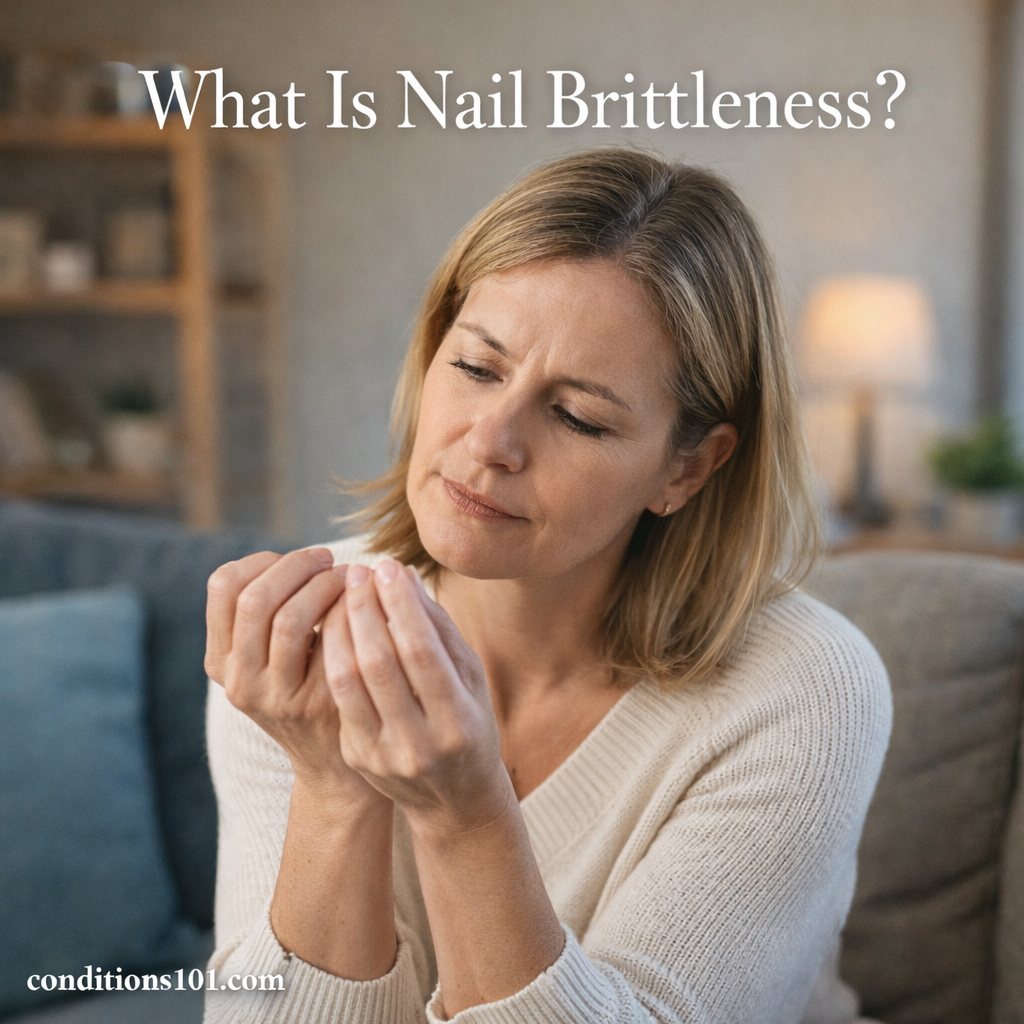
Nail brittleness refers to a condition in which fingernails or toenails become fragile, weak, or prone to splitting, peeling, or breaking. Brittle nails may chip easily, crack at the edges, or develop layers that separate over time. While nail changes are common and often harmless, persistent brittleness can be noticeable and frustrating in everyday life.
This article provides an education-only overview of nail brittleness, including what it is, common characteristics, possible contributing factors, and how it can affect appearance and daily activities. It does not provide medical advice, diagnosis, or treatment.
Understanding Healthy Nail Structure
To understand nail brittleness, it helps to know how healthy nails are structured.
Nails are made primarily of keratin, a strong protein that also forms hair and the outer layer of skin. Healthy nails are typically:
- Smooth and even in texture
- Firm but slightly flexible
- Uniform in color
- Resistant to frequent breaking
When the structure or moisture balance of the nail is disrupted, nails may become more fragile.
What Makes Nails Brittle?
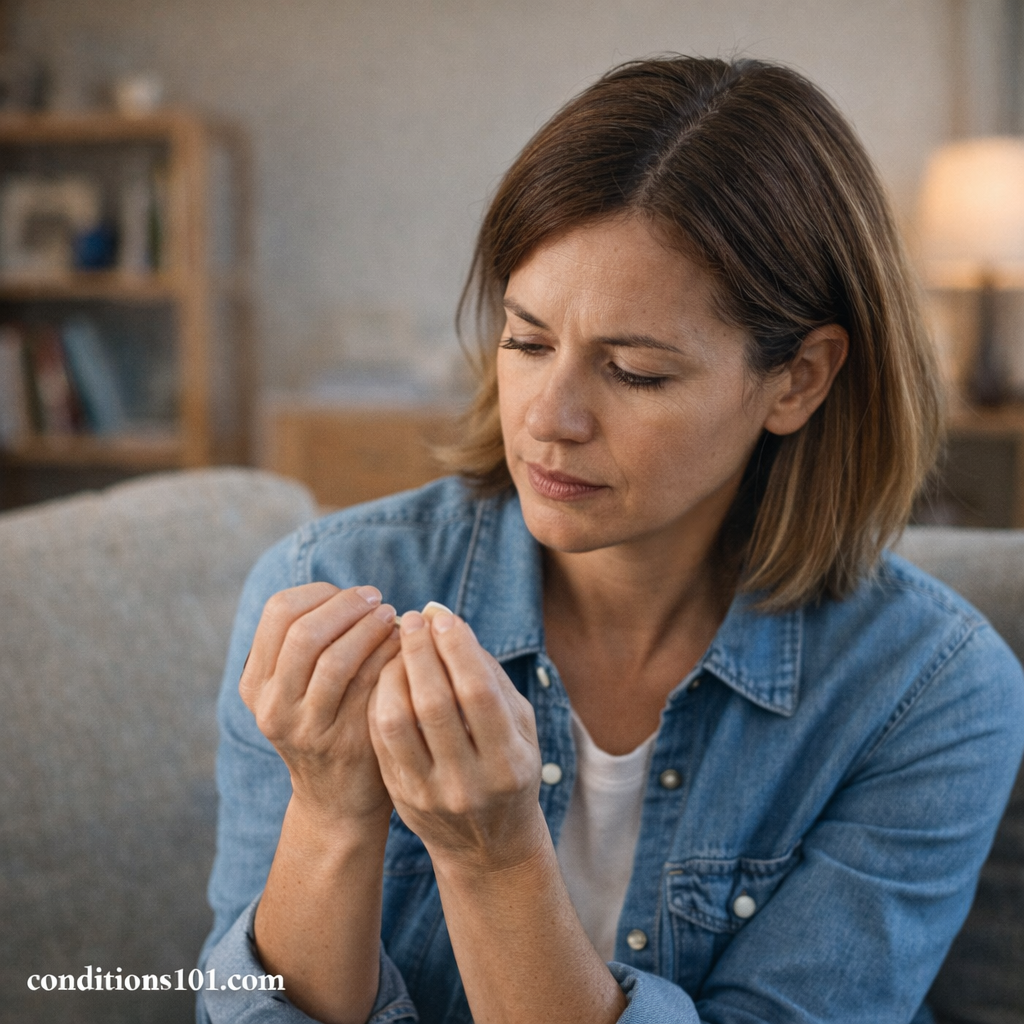
Nail brittleness is usually identified by how nails behave rather than how they look alone. Brittle nails often lack flexibility and resilience, making them more likely to break under everyday stress.
Common signs of nail brittleness include:
- Frequent splitting at the tips or sides
- Peeling or flaking into layers
- Cracking with minimal pressure
- Difficulty growing nails to a longer length
- Rough or uneven nail edges
Brittleness can affect one nail, several nails, or all nails at the same time.
Types of Nail Brittleness
Nail brittleness can present in different ways depending on how the nail structure is affected.
Splitting Nails
Some nails split vertically or horizontally, often starting at the tip and moving inward. This may cause jagged edges or cracks that catch easily.
Peeling Nails
In peeling nails, thin layers of the nail separate and flake away. This can make nails appear thin or uneven over time.
Soft or Weak Nails
In some cases, nails bend easily and tear rather than snap, indicating reduced structural strength.
Common Factors Associated With Nail Brittleness
Nail brittleness is influenced by a combination of internal and external factors. In many cases, everyday habits play a role.
Environmental and Lifestyle Factors
- Frequent handwashing or prolonged water exposure
- Regular use of soaps, detergents, or cleaning products
- Repeated exposure to dry air or cold weather
- Use of nail polish removers or solvents
- Mechanical stress from typing or manual tasks
Repeated exposure to moisture followed by drying can weaken the nail over time.
Nail Care and Cosmetic Practices
Certain grooming habits may contribute to brittle nails, including:
- Aggressive filing or buffing
- Removing artificial nails improperly
- Using hardening products excessively
- Cutting nails too short or unevenly
Over time, these practices can affect the nail’s protective layers.
How Nail Brittleness Affects Daily Life
While nail brittleness is often considered a cosmetic concern, it can influence everyday comfort and routines.
Possible impacts include:
- Difficulty maintaining nail length or shape
- Discomfort from splits or cracks
- Snagging on clothing or fabrics
- Increased time spent on nail care or grooming
- Self-consciousness about nail appearance
For some people, brittle nails may also interfere with tasks that require fine motor control.
Nail Brittleness and Aging
Changes in nail texture and strength are commonly observed with age. Nails may grow more slowly and lose moisture over time, which can contribute to increased fragility.
Age-related nail changes may include:
- Thinner nails
- Reduced flexibility
- Increased splitting or peeling
These changes vary widely and are not the same for everyone.
Nail Brittleness vs. Other Nail Changes
Not all nail changes indicate brittleness. Nails can change in color, thickness, or shape for many reasons unrelated to fragility.
Nail brittleness specifically refers to:
- Structural weakness
- Tendency to break, split, or peel
Other nail changes may involve surface ridges, discoloration, or thickening without increased breakage.
Is Nail Brittleness Common?
Yes. Nail brittleness is relatively common and can occur at any age. It may be temporary or persistent, depending on contributing factors and individual nail characteristics.
Many people experience brittle nails at some point due to seasonal changes, lifestyle habits, or normal variations in nail growth.
Why Understanding Nail Brittleness Matters
Understanding nail brittleness helps set realistic expectations about nail health and appearance. It can also encourage mindful grooming habits and awareness of how daily routines affect nails.
Educational awareness can help people:
- Recognize common nail changes
- Distinguish cosmetic concerns from structural ones
- Reduce unnecessary worry about normal variations
- Make informed decisions about nail care practices
Key Takeaways
- Nail brittleness refers to nails that break, split, or peel easily
- It is often related to nail structure, moisture balance, and daily exposure
- Brittle nails may appear thin, layered, or cracked
- Environmental factors and grooming habits commonly play a role
- Nail brittleness is common and varies widely between individuals
Final Thoughts
Nail brittleness is a frequent and often manageable concern related to how nails respond to everyday stress and environmental exposure. While it is usually cosmetic in nature, persistent changes in nail strength can be noticeable and affect daily routines.
This article is for educational purposes only and does not provide medical advice, diagnosis, or treatment. For individual concerns about nail health or changes, a qualified professional can provide personalized guidance.