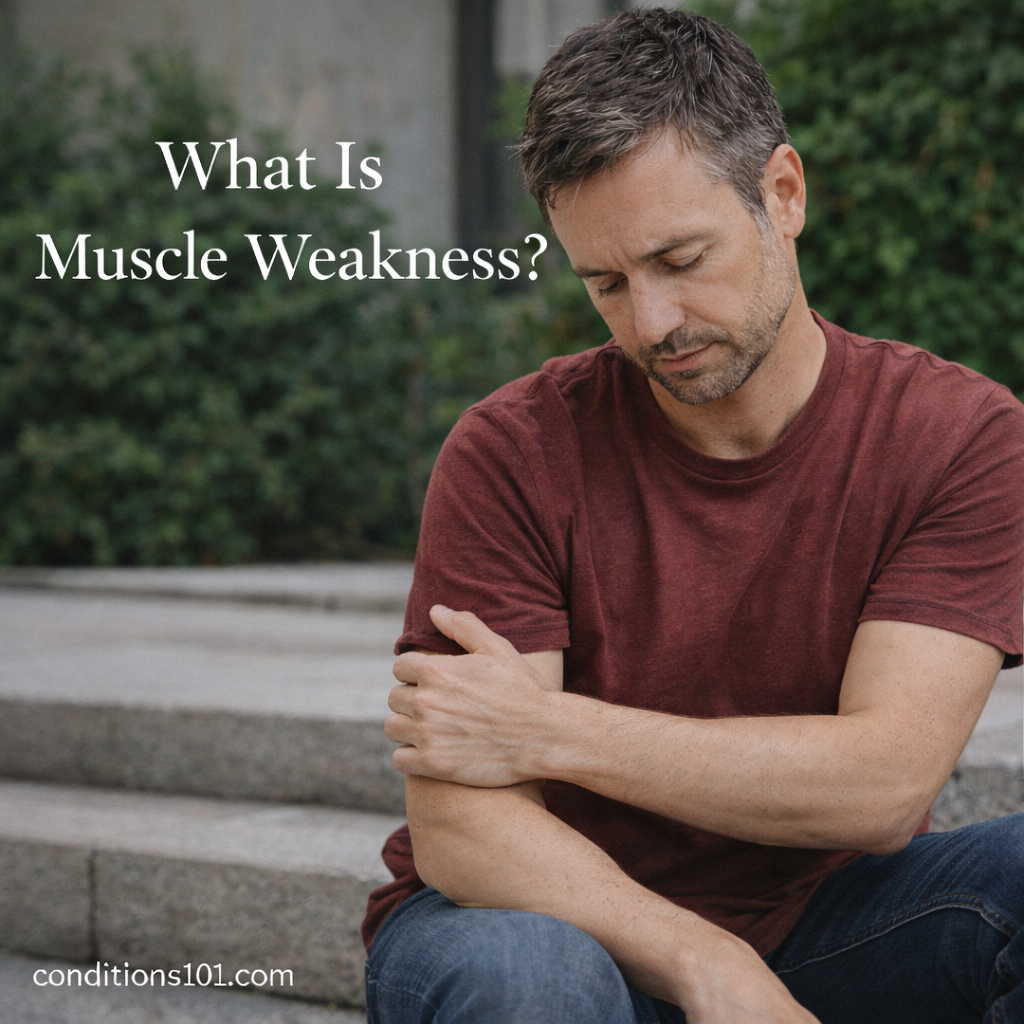
Muscle weakness is a term used to describe a reduction in muscle strength or the ability of a muscle to generate force. It may involve difficulty lifting objects, maintaining posture, or performing movements that were previously manageable. Muscle weakness can affect one muscle, a group of muscles, or the body more broadly.
This article provides an educational, non-clinical overview of what muscle weakness is, how it is commonly described, and how it is discussed in general health information. It does not provide medical advice, diagnosis, or treatment.
Understanding Muscle Strength
Muscle strength refers to the ability of muscles to contract and produce force. This process depends on coordination between muscles, nerves, and the brain, as well as adequate energy and structural integrity within muscle tissue.
When muscle strength is reduced, movements may feel harder, slower, or less controlled. Muscle weakness reflects a change in how effectively this system functions.
What Muscle Weakness Means
Muscle weakness describes a noticeable decrease in strength compared to what is typical for an individual. It does not necessarily mean complete loss of movement, but rather reduced capacity.
Muscle weakness is often described as:
- Feeling less powerful than usual
- Difficulty performing routine physical tasks
- Fatigue during activities that were previously easy
- Trouble sustaining muscle effort
These descriptions focus on functional experience rather than identifying a cause.
Key Characteristics of Muscle Weakness
Muscle weakness can vary widely in how it appears and progresses. Educational discussions often highlight several general characteristics.
Degree of Weakness
Weakness may range from mild to more pronounced, depending on the muscles involved and the situation.
Distribution
Muscle weakness may affect:
- A single muscle
- One side of the body
- Both sides equally
- Specific muscle groups, such as arms or legs
Duration
Weakness may be temporary, intermittent, or longer-lasting. The timeframe is often used to describe the experience in general terms.
Impact on Movement
Muscle weakness can influence balance, coordination, posture, and endurance during everyday activities.
Common Ways Muscle Weakness Is Described
In general health education, muscle weakness is often categorized based on how it presents rather than why it occurs.
Generalized Muscle Weakness
This term is used when weakness affects multiple areas of the body rather than a single location.
Localized Muscle Weakness
Localized weakness refers to reduced strength in a specific muscle or muscle group.
Perceived Weakness vs. True Weakness
Some educational sources distinguish between:
- Perceived weakness, where muscles feel weak due to fatigue or effort
- True weakness, where there is measurable loss of strength
These distinctions are descriptive and not diagnostic.
Why Muscle Weakness Occurs
Muscle weakness can result from many different factors. Educational materials emphasize that it is a symptom rather than a condition itself.
Commonly discussed influences include:
- Muscle fatigue or overuse
- Reduced physical activity
- Temporary changes in energy levels
- Nerve-muscle communication efficiency
- Natural changes associated with aging
Because multiple systems contribute to muscle function, muscle weakness is often discussed broadly.
Muscle Weakness in Everyday Life

From an informational perspective, muscle weakness may affect daily routines such as walking, lifting, standing, or maintaining posture.
General discussions often focus on:
- Variations in strength throughout the day
- Differences between short-term and ongoing weakness
- How activity levels influence muscle performance
- Why weakness may fluctuate over time
These explanations help normalize the experience without minimizing its impact.
Muscle Weakness vs. Muscle Fatigue
Muscle weakness and muscle fatigue are related but distinct concepts in health education.
Muscle fatigue is often described as:
- Temporary loss of strength after activity
- Improvement with rest
Muscle weakness is often described as:
- Reduced strength that may persist
- Difficulty generating normal force
Understanding this distinction helps clarify commonly used terminology.
Common Misconceptions About Muscle Weakness
“Muscle Weakness Always Means Injury”
Muscle weakness can occur without injury and may be influenced by many non-injury factors.
“Only Older Adults Experience Muscle Weakness”
While strength may change with age, muscle weakness can affect people of all ages.
“Weakness Is the Same as Pain”
Muscle weakness and muscle pain are different sensations and may occur independently.
Why Understanding Muscle Weakness Matters
Understanding what muscle weakness is helps readers:
- Interpret physical health information more accurately
- Describe physical experiences in general terms
- Distinguish between weakness, fatigue, and discomfort
- Build foundational knowledge about physical function
Clear definitions support informed discussions without replacing professional evaluation.
Summary
Muscle weakness refers to a reduction in muscle strength or the ability to generate force. It can vary in location, duration, and severity and is commonly discussed as a symptom rather than a diagnosis. Muscle weakness is influenced by many factors and is a frequent topic in general pain and physical health education.
Understanding how muscle weakness is defined and described helps readers navigate physical health information with greater clarity and confidence.
Key Takeaways
- Muscle weakness describes reduced muscle strength or force generation.
- It can affect one muscle, a group of muscles, or the whole body.
- Muscle weakness varies in severity, duration, and impact.
- It is considered a symptom, not a diagnosis.
- Muscle weakness is different from muscle fatigue or muscle pain.
- People of all ages can experience muscle weakness.
- Understanding the term improves physical health literacy.