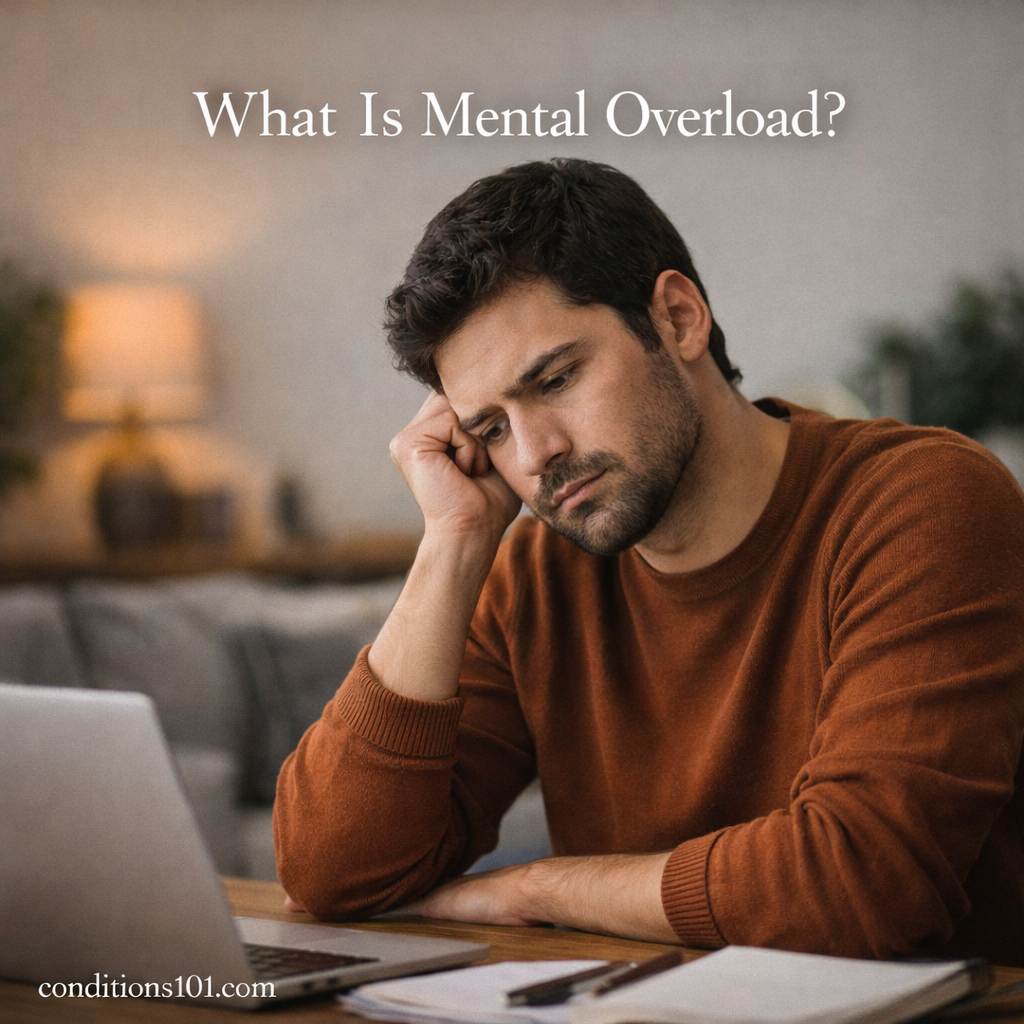
Mental overload is a state in which the mind becomes overwhelmed by too much information, too many demands, or prolonged cognitive effort without adequate rest. It occurs when the brain is asked to process more than it can comfortably manage at one time, leading to reduced focus, mental fatigue, and difficulty thinking clearly.
Mental overload is not a medical diagnosis. It is a commonly used term that describes an experience many people face during periods of high stress, constant multitasking, or ongoing mental pressure.
How Mental Overload Happens
Mental overload develops gradually as mental demands accumulate. It often results from sustained cognitive strain rather than a single event.
Common contributors include:
- Constant multitasking
- Information overload from digital devices
- Tight deadlines or high responsibility
- Prolonged decision-making
- Lack of mental rest or downtime
When the brain does not have enough time to recover, mental resources can become depleted.
Mental Overload vs. Stress and Burnout
Mental overload is related to—but different from—other commonly discussed mental states.
Mental overload
Refers to the immediate experience of having too much to think about or process at once.
Stress
A broader response to pressure that can involve emotional, physical, and mental reactions.
Burnout
A longer-term state of emotional and mental exhaustion often linked to chronic workplace or life stress.
Mental overload can be temporary and situational, whereas burnout typically develops over a longer period.
Common Signs of Mental Overload

Mental overload can affect thinking, attention, and daily functioning. Experiences vary from person to person, but common signs include:
- Difficulty concentrating
- Forgetfulness or mental “fog”
- Feeling mentally exhausted
- Trouble making decisions
- Reduced productivity
- Feeling overwhelmed by simple tasks
These experiences are often situational and may ease when mental demands are reduced.
Cognitive Load and Mental Overload
The concept of cognitive load helps explain mental overload. Cognitive load refers to the amount of mental effort being used in working memory at any given time.
When cognitive load exceeds the brain’s capacity to manage information efficiently, mental overload may occur. This is more likely when tasks are complex, unfamiliar, or require sustained attention without breaks.
Situations Where Mental Overload Is Common
Mental overload can occur in many everyday contexts, including:
- Work environments with frequent interruptions
- Academic settings with heavy information intake
- Caregiving roles with ongoing responsibilities
- Managing multiple personal obligations at once
- Periods of significant life change
These situations can strain mental resources even in people who are generally resilient.
Mental Overload and Daily Functioning
When mental overload is present, routine activities may feel more difficult than usual. Tasks that normally require little effort may take longer or feel more taxing.
Mental overload can also affect:
- Attention and focus
- Problem-solving ability
- Memory recall
- Emotional regulation
These effects are typically reversible when mental demands decrease and adequate rest is restored.
Is Mental Overload the Same for Everyone?
No. Mental overload is subjective and influenced by factors such as:
- Individual tolerance for cognitive demands
- Familiarity with tasks
- Environmental distractions
- Sleep quality
- Emotional stress levels
What feels overwhelming to one person may feel manageable to another, depending on context and circumstances.
Mental Overload in a Digital World
Modern life often increases the risk of mental overload due to constant connectivity. Notifications, emails, news updates, and social media streams can all contribute to continuous information intake.
Without intentional breaks, the brain may have limited opportunities to process and recover, increasing the likelihood of overload.
Why Mental Overload Matters
Understanding mental overload helps explain why productivity, focus, and clarity can fluctuate even without illness or injury. It highlights the importance of mental capacity as a finite resource rather than an unlimited one.
Recognizing mental overload as a temporary state—not a personal failure—can help reduce frustration and self-blame when mental performance declines.
Key Takeaways
- Mental overload occurs when cognitive demands exceed the brain’s processing capacity
- It is not a medical diagnosis, but a common experience
- Mental overload differs from stress and burnout
- Common signs include mental fatigue, poor focus, and difficulty making decisions
- Mental overload is often situational and reversible