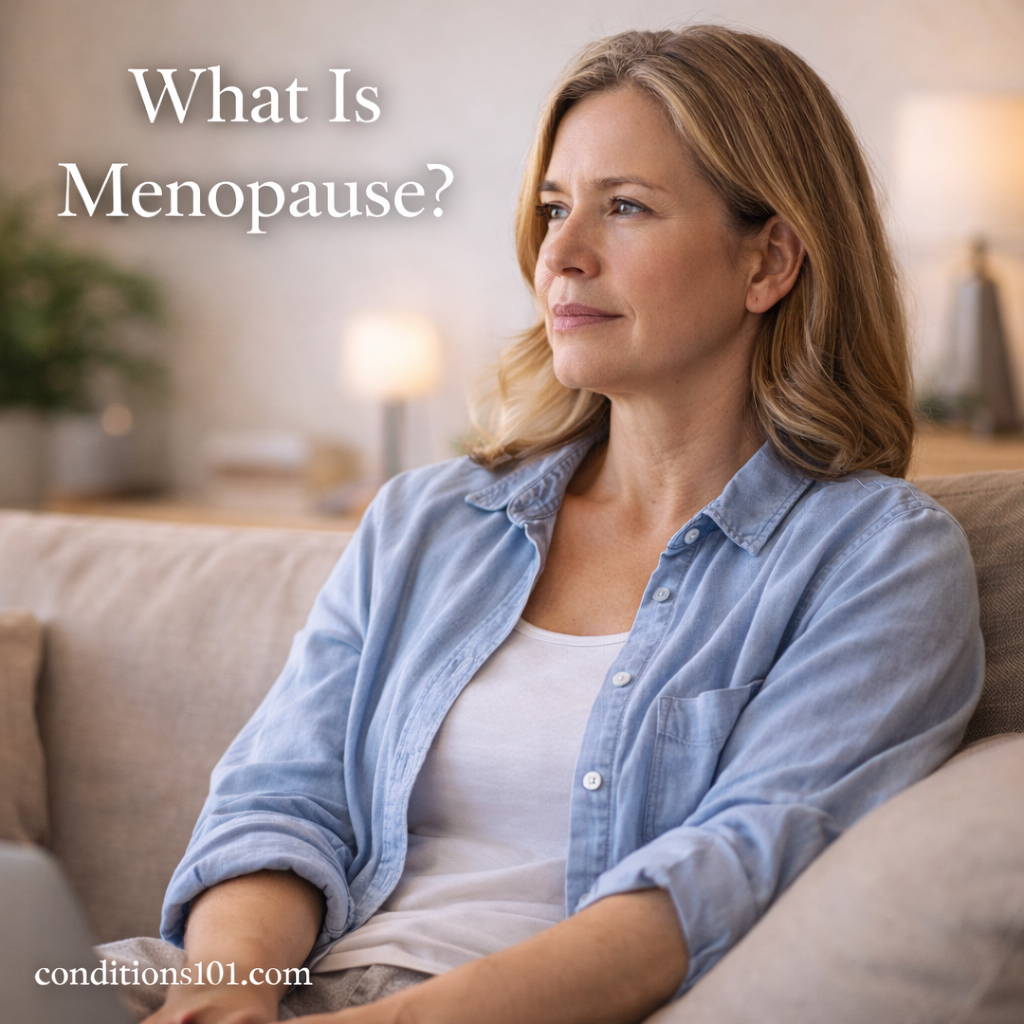
Menopause is a natural stage of life that marks the end of menstrual cycles. It is defined as the point when a person has gone 12 consecutive months without a menstrual period and is no longer ovulating. Menopause reflects a long-term change in reproductive hormone levels rather than a sudden event.
This article provides an educational, non-clinical overview of what menopause is, when it typically occurs, and how it may influence daily experiences. It does not provide medical advice, diagnosis, or treatment.
Understanding the Hormonal Changes Behind Menopause
Menopause occurs as the ovaries gradually reduce the production of certain reproductive hormones, particularly estrogen and progesterone. These hormonal changes affect the menstrual cycle and other systems in the body.
Rather than happening all at once, menopause usually develops over time as hormone levels shift and stabilize at lower levels.
When Menopause Typically Occurs
Menopause most commonly occurs during midlife, though timing can vary widely.
- Many people experience menopause between their 40s and 50s
- Some may reach menopause earlier or later than average
- The exact timing is influenced by individual biology and life factors
Menopause is considered a normal part of aging, not a condition or illness.
Menopause and the Transition Leading Up to It
The transition toward menopause happens gradually and is often referred to as the menopausal transition.
During this time, menstrual cycles may:
- Become less predictable
- Change in length or flow
- Occur more or less frequently
This transition can last several years before menopause is reached.
Common Changes Associated With Menopause
Menopause can be associated with a variety of physical and emotional changes. Experiences vary significantly from person to person.
Physical Changes
Some individuals may notice:
- Changes in body temperature regulation
- Altered sleep patterns
- Shifts in energy levels
Emotional and Cognitive Changes
Menopause may also be linked to:
- Mood changes
- Differences in concentration or memory
- Increased emotional sensitivity
Not everyone experiences the same changes, and intensity can vary.
How Menopause May Affect Daily Life
Menopause can influence everyday routines in subtle or noticeable ways.
Sleep and Energy
Changes in sleep quality or timing may affect:
- Daytime alertness
- Overall energy levels
- Daily productivity
Daily Comfort and Routine
Some people may adjust:
- Clothing choices
- Daily schedules
- Activity timing to align with comfort levels
Menopause as a Life Stage
Menopause represents a biological transition rather than a health problem. Many people continue to lead active, fulfilling lives during and after menopause.
Understanding menopause can help:
- Set realistic expectations
- Reduce confusion around bodily changes
- Support informed awareness of midlife health transitions
Key Takeaways
- Menopause marks the natural end of menstrual cycles and ovulation.
- It is defined by 12 consecutive months without a menstrual period.
- Menopause occurs due to gradual changes in reproductive hormone levels.
- Experiences of menopause vary widely between individuals.
- Understanding menopause supports informed awareness of hormonal and life-stage changes.