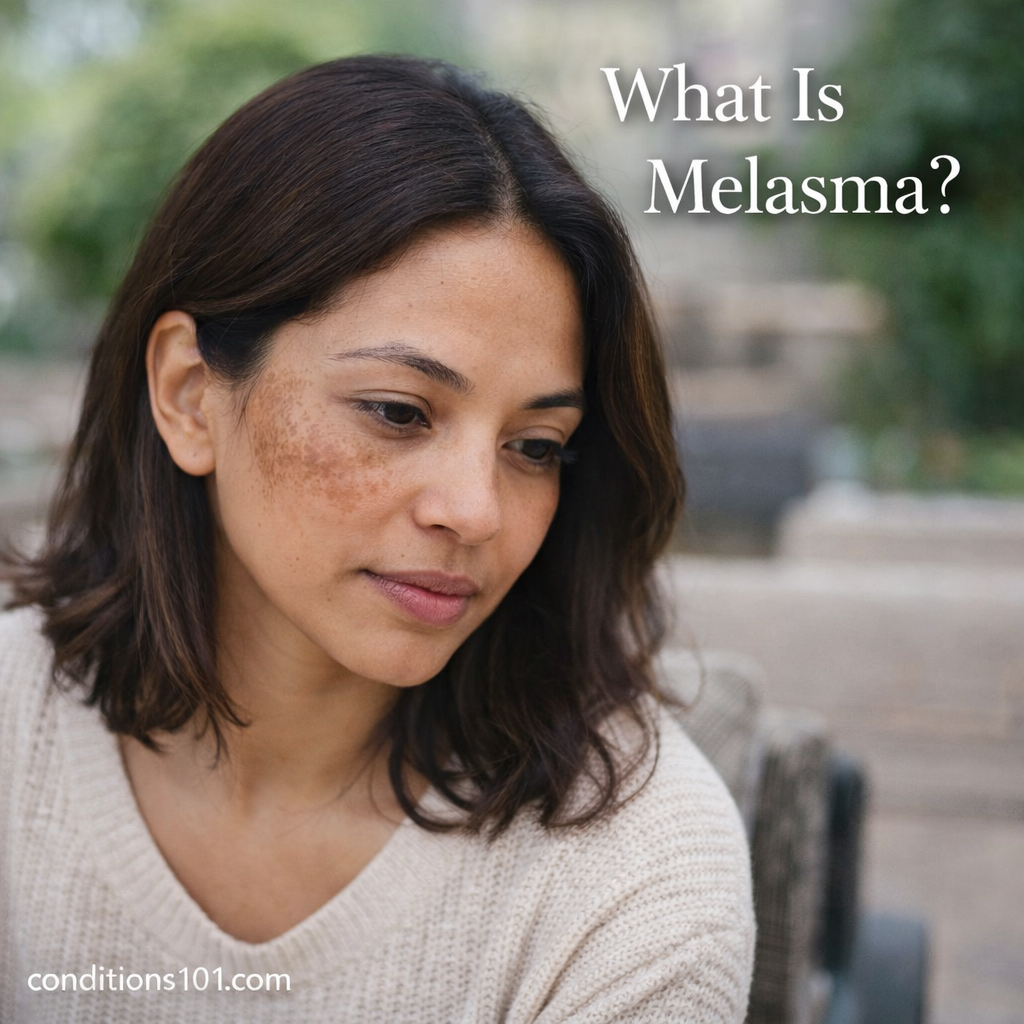
Melasma is a common skin condition that causes patches of darker pigmentation to appear on the skin, most often on the face. These patches typically develop gradually and are not harmful, but they can be noticeable and long-lasting. Melasma is considered a pigmentation condition rather than a disease and is primarily related to changes in skin color rather than skin texture.
This article provides education-only, evergreen information to help explain what melasma is, how it appears, and what factors are commonly associated with it. It does not provide medical advice, diagnosis, or treatment.
Understanding Skin Pigmentation
Skin color is determined by a natural pigment called melanin. Melanin is produced by specialized skin cells and helps protect the skin from ultraviolet (UV) radiation.
When melanin production becomes uneven or excessive in certain areas, darker patches of skin can form. Melasma is one condition in which this process occurs, leading to localized areas of increased pigmentation.
How Melasma Commonly Appears
Melasma usually presents as symmetrical patches of discoloration. The color may range from light brown to dark brown or gray-brown, depending on skin tone and depth of pigmentation.
Common characteristics include:
- Flat patches rather than raised spots
- Clearly defined or softly blended edges
- Gradual development over time
- Darkening with sun exposure
The patches themselves are not painful, itchy, or physically uncomfortable.
Areas Most Commonly Affected

Melasma most often affects areas of the skin that receive regular sun exposure.
Common locations include:
- Cheeks
- Forehead
- Bridge of the nose
- Upper lip
- Chin
In some cases, melasma may also appear on other sun-exposed areas such as the neck or forearms, though facial involvement is most typical.
Who Is More Likely to Experience Melasma?
Melasma can affect people of all backgrounds, but it is more commonly observed in certain groups.
Factors often associated with higher occurrence include:
- Medium to darker natural skin tones
- Increased sun exposure over time
- Hormonal changes
- Family history of pigmentation conditions
Melasma is more frequently reported in adults than in children and tends to develop gradually rather than suddenly.
Common Factors Associated With Melasma
Melasma does not have a single known cause. Instead, it is believed to develop due to a combination of internal and external influences.
Commonly discussed contributing factors include:
- Sun and UV exposure
- Hormonal fluctuations
- Genetic predisposition
- Heat exposure
- Certain lifestyle or environmental factors
Sun exposure is widely recognized as a key factor because UV light can stimulate melanin production, making pigmentation more noticeable.
Melasma and Hormonal Influences
Hormonal changes are often mentioned in discussions about melasma. These changes may influence how melanocytes (melanin-producing cells) behave.
Situations commonly associated with hormonal shifts include:
- Pregnancy
- Use of hormonal contraceptives
- Hormone-related life stages
Because of this connection, melasma is sometimes informally referred to as the “mask of pregnancy,” although it can occur outside of pregnancy as well.
How Melasma Differs From Other Skin Discoloration
Not all dark spots or uneven skin tone are melasma. Several other skin changes may look similar but have different underlying causes.
Melasma is often distinguished by:
- Symmetry across the face
- Larger patch-like areas rather than small spots
- Worsening with sun exposure
- Long-term persistence without texture changes
Other types of pigmentation may appear as isolated spots, marks, or post-inflammatory changes rather than broad patches.
Is Melasma Permanent?
Melasma is considered a chronic condition for many people, meaning it can persist over time. In some cases, pigmentation may fade or change in intensity, especially if contributing factors shift.
However, melasma is known for:
- Tendency to darken with sun exposure
- Recurring or fluctuating appearance
- Long-term presence rather than rapid resolution
The course of melasma can vary significantly from person to person.
Emotional and Appearance-Related Impact
Although melasma is medically harmless, it can affect how individuals feel about their appearance. Because it often appears on visible areas of the face, some people may feel self-conscious or frustrated by its persistence.
Educational awareness helps clarify that melasma is:
- Common
- Not a sign of poor health
- Not contagious
- Not caused by poor hygiene
Understanding these points can reduce misconceptions and stigma.
Common Misconceptions About Melasma
Several myths can make melasma harder to understand.
- Melasma is not caused by dirt or skin neglect
- It is not limited to one gender or age group
- It is not a skin infection
- It does not change skin texture or cause scarring
Clarifying these misconceptions supports accurate, respectful discussion of the condition.
Why Learning About Melasma Matters
Education about melasma helps normalize visible skin differences and promotes informed understanding of pigmentation conditions. Clear information allows readers to distinguish melasma from other skin changes and reduces unnecessary concern.
Key Takeaways
- Melasma is a common skin pigmentation condition
- It appears as symmetrical dark patches, usually on the face
- Sun exposure and hormonal factors are commonly associated
- It affects appearance but not physical health
- Education helps reduce confusion and stigma