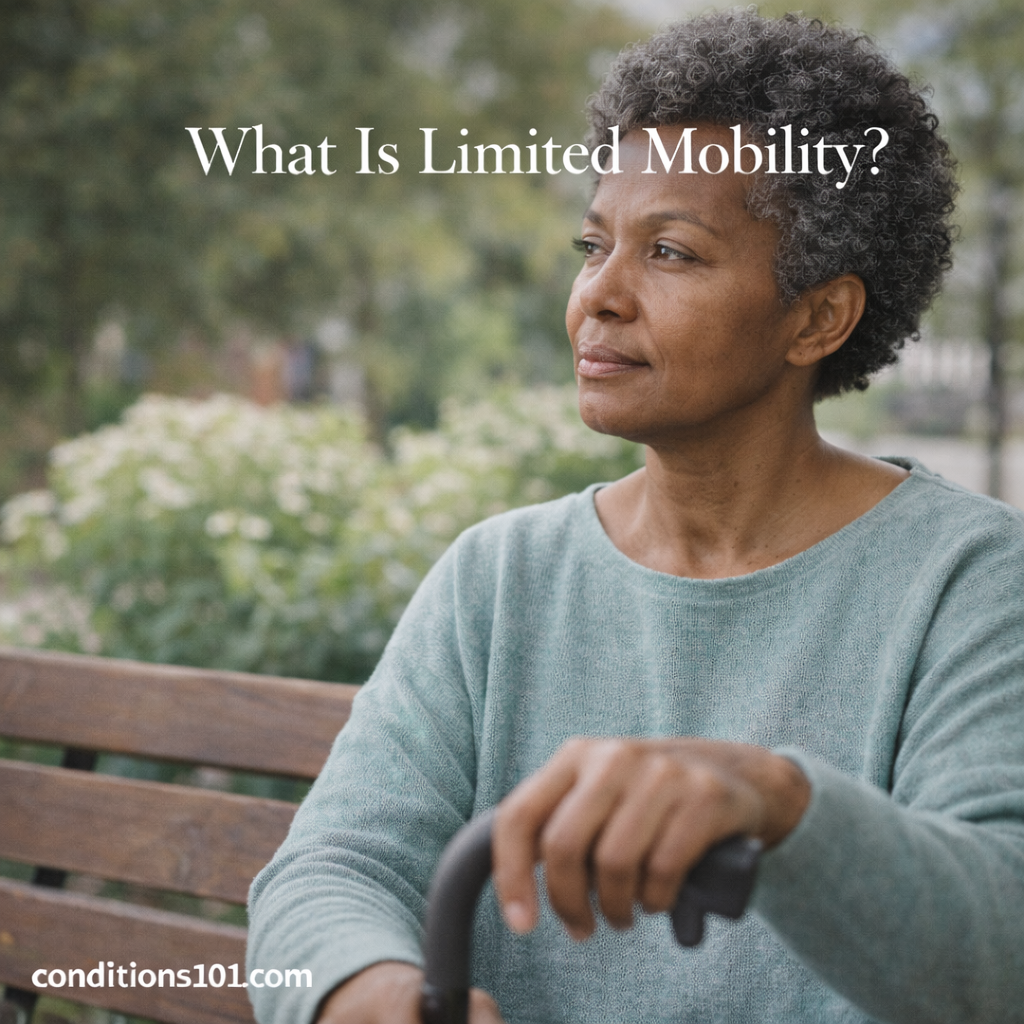
Limited mobility refers to reduced ability to move the body freely or easily. It can affect how a person walks, stands, reaches, bends, or performs everyday physical movements. Limited mobility is a descriptive term, not a diagnosis, and is commonly used in general health discussions to explain physical movement challenges.
This article provides an educational overview of what limited mobility means, how it is commonly described, and how it may affect daily life. It does not provide medical advice, diagnosis, or treatment.
Understanding Mobility
Mobility describes a person’s ability to move independently and comfortably. This includes:
- Walking or standing
- Changing positions, such as sitting or lying down
- Using arms and hands for daily tasks
- Maintaining balance and coordination
Mobility exists on a spectrum. Some people have full mobility, while others experience varying degrees of limitation.
What Does “Limited Mobility” Mean?
Limited mobility means that movement is restricted, slowed, or more difficult than usual. This limitation may be temporary, long-term, or situational depending on individual circumstances.
Limited mobility may involve:
- Reduced range of motion
- Difficulty moving certain body parts
- Slower or more effortful movement
- Increased reliance on support or assistance
The term focuses on function, not the underlying cause.
Common Types of Mobility Limitations
Mobility limitations can affect different parts of the body in different ways.
Lower Body Mobility
May involve difficulty with:
- Walking long distances
- Climbing stairs
- Standing for extended periods
Upper Body Mobility
May affect:
- Reaching overhead
- Lifting or carrying objects
- Fine motor tasks using the hands
Whole-Body Mobility
Some people experience limitations that affect overall movement, posture, or coordination.
Common Factors Associated With Limited Mobility
Limited mobility can be associated with a wide range of factors, including:
- Aging-related physical changes
- Injuries or physical strain
- Joint stiffness or reduced flexibility
- Muscle weakness or fatigue
- Balance or coordination challenges
These factors may occur alone or together and vary from person to person.
How Limited Mobility Is Commonly Experienced
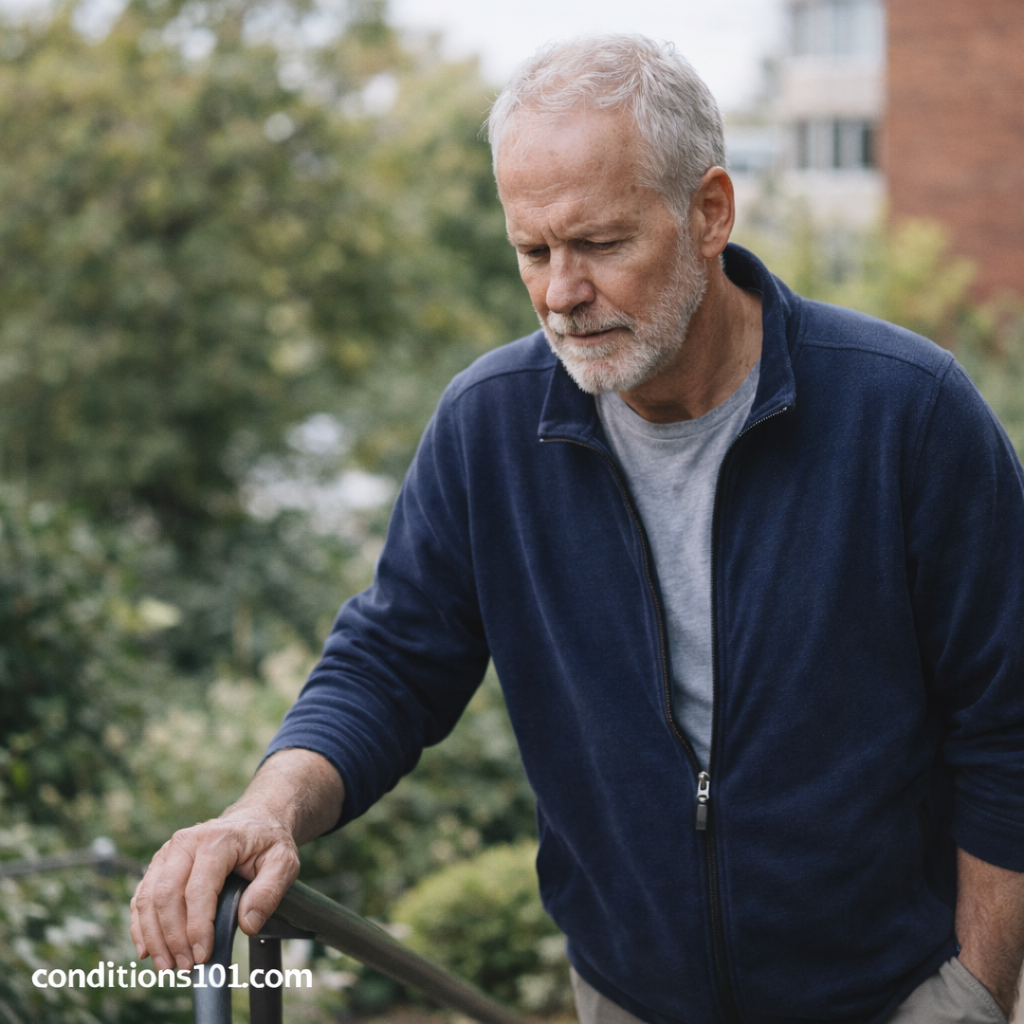
The experience of limited mobility is different for everyone. Common experiences may include:
- Needing more time to complete physical tasks
- Avoiding certain movements or activities
- Feeling physically restricted during daily routines
- Adjusting how tasks are performed
Some people experience mild limitations, while others face more significant challenges.
Temporary vs. Long-Term Limited Mobility
Limited mobility may be:
Temporary
- Related to short-term physical strain
- Influenced by recovery periods
- Situational and reversible
Long-Term
- Ongoing or persistent
- Managed through adaptations
- Integrated into daily routines over time
The duration of limited mobility depends on individual circumstances and changes over time.
Why Limited Mobility Is Discussed in Physical Health
Limited mobility is discussed to help:
- Describe functional movement challenges
- Improve understanding of physical accessibility needs
- Support inclusive conversations about physical health
It provides a neutral, practical way to talk about movement ability without assigning labels or assumptions.
Living With Limited Mobility
From an educational perspective, living with limited mobility often involves:
- Adapting daily activities
- Using strategies to conserve energy
- Adjusting environments for comfort and safety
Many people with limited mobility continue to participate fully in work, social life, and hobbies by adapting how activities are performed.
Key Takeaways
- Limited mobility means reduced or restricted movement
- It is a descriptive term, not a diagnosis
- Mobility limitations vary widely in type and severity
- Experiences may be temporary or long-term
- The focus is on function and daily movement
Understanding limited mobility helps create clearer, more respectful discussions about physical ability and everyday movement.