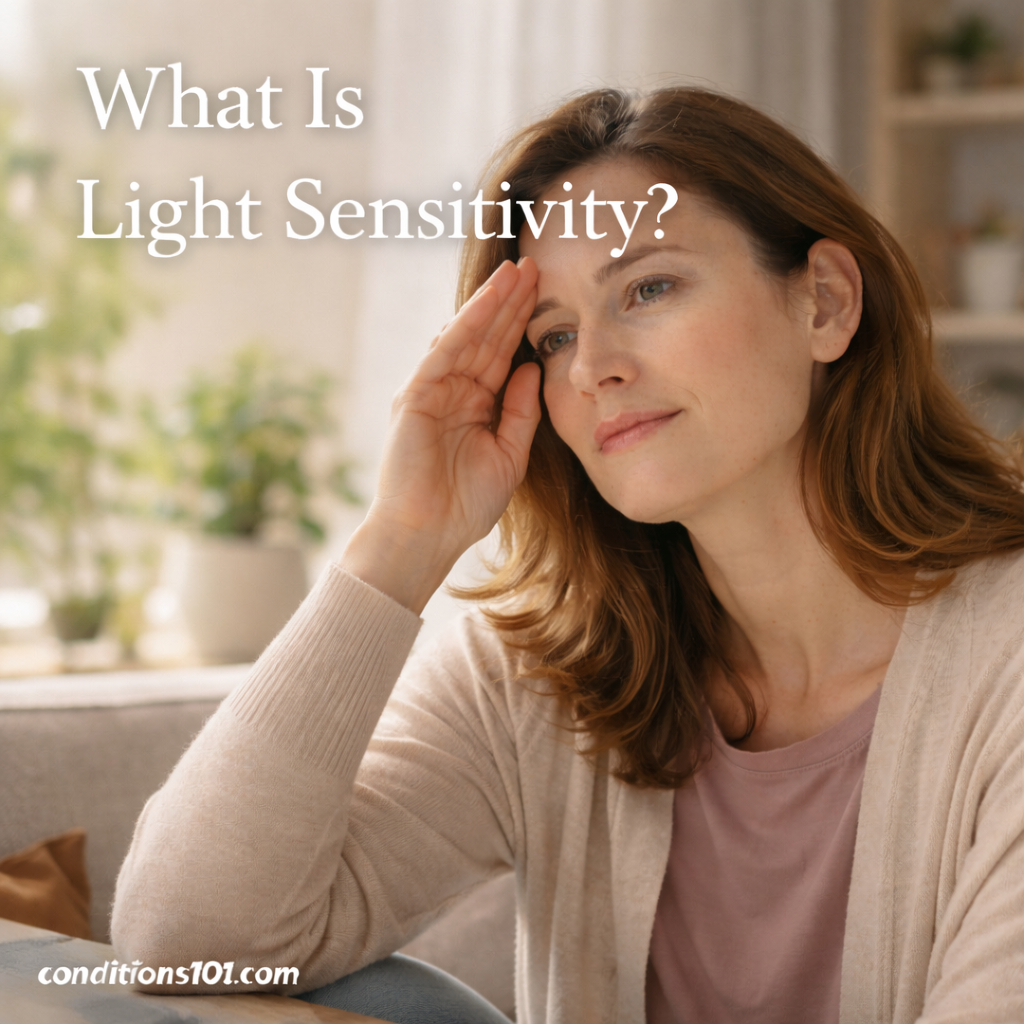
Light sensitivity, also known as photophobia, refers to discomfort or intolerance to light that feels stronger than expected for the lighting conditions. People with light sensitivity may find bright, fluorescent, or even moderate lighting uncomfortable or overwhelming, sometimes prompting them to squint, look away, or seek darker environments.
This article provides an educational overview of light sensitivity, including what it means, how it is commonly experienced, contributing factors, and how it may affect daily life. It is for general informational purposes only and does not provide medical advice, diagnosis, or treatment.
How Vision and Light Processing Work
To understand light sensitivity, it helps to know how the eyes and brain process light.
When light enters the eye:
- It passes through the cornea and lens
- The retina converts light into signals
- These signals are sent to the brain for interpretation
The brain then adjusts how bright or comfortable the light feels. Light sensitivity may occur when this process becomes more reactive or less tolerant to certain lighting conditions.
What Does “Light Sensitivity” Mean?
Light sensitivity describes how light feels to a person rather than how bright the light actually is. The same lighting may feel comfortable to one person and uncomfortable to another.
Light sensitivity may involve:
- Discomfort in bright environments
- Difficulty tolerating indoor lighting
- Preference for dimmer settings
- Increased eye strain or squinting
It can be temporary or ongoing, depending on individual circumstances.
Common Ways Light Sensitivity Is Experienced
Light sensitivity can feel different from person to person and may vary in intensity.
Commonly Reported Experiences
- Eye discomfort or strain in bright light
- Headache or pressure triggered by lighting
- Squinting or closing one eye
- Difficulty focusing in well-lit spaces
- Desire to wear sunglasses indoors or outdoors
Some people are more sensitive to specific types of light, such as fluorescent or screen-based lighting.
Situations Where Light Sensitivity Is Often Noticed
Light sensitivity may be more noticeable in certain environments or situations.
Common situations include:
- Bright sunlight
- Fluorescent lighting in offices or stores
- Computer, phone, or tablet screens
- Driving at night with oncoming headlights
- Sudden changes from dark to bright spaces
Sensitivity may fluctuate depending on time of day or fatigue levels.
Factors Commonly Associated With Light Sensitivity
Light sensitivity does not usually have a single cause. Educational discussions often describe it as linked to a combination of neurological, visual, and lifestyle factors.
Sensory and Neurological Factors
- Heightened sensory processing
- Visual system sensitivity
- Nervous system reactivity
Lifestyle and Environmental Factors
- Prolonged screen exposure
- Eye fatigue
- Lack of sleep
- Stress or mental overload
Not everyone with these factors experiences light sensitivity, but they are commonly discussed in general explanations.
Light Sensitivity and Daily Life
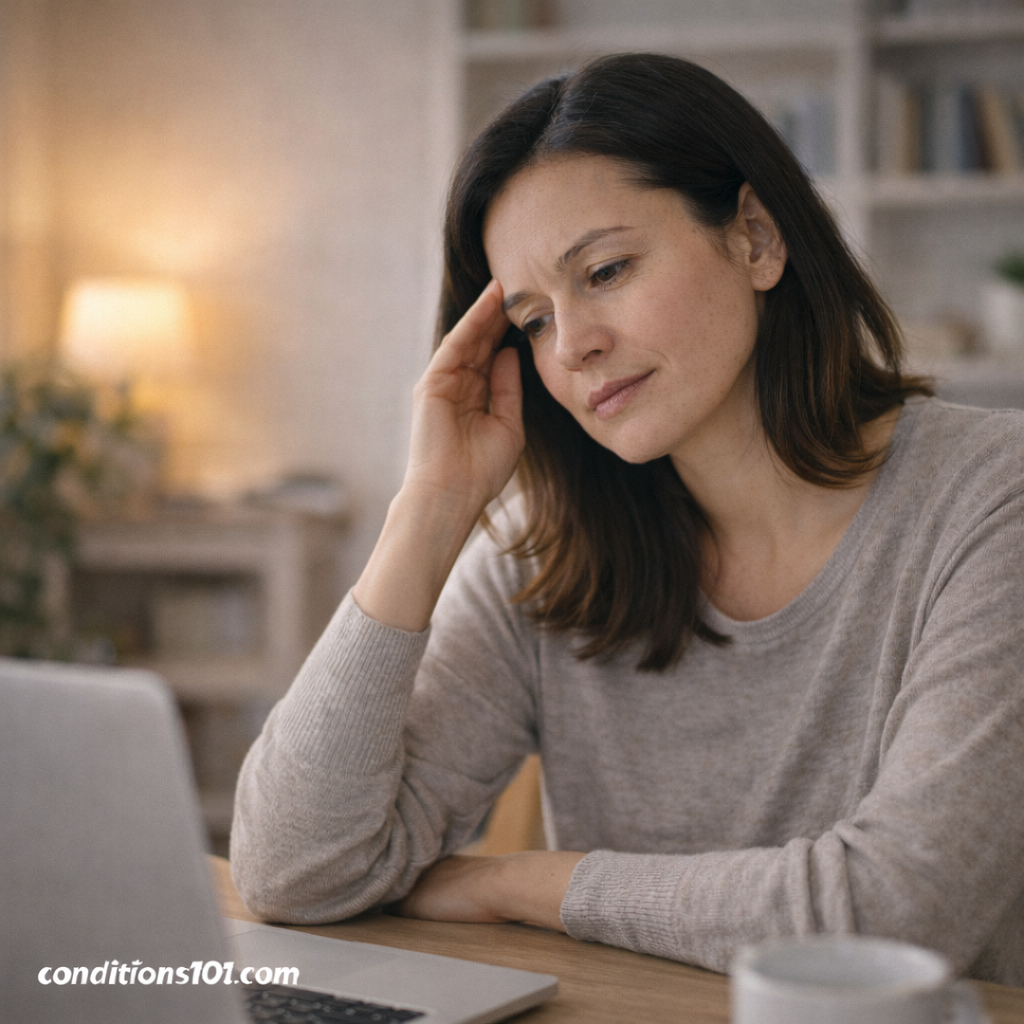
For some individuals, light sensitivity is mild and situational. For others, it may influence comfort and daily routines.
Possible Daily Impacts
- Avoidance of brightly lit environments
- Increased eye fatigue during work or screen use
- Difficulty spending time outdoors in sunlight
- Adjusting lighting at home or work
The impact on daily life depends on how frequently and intensely sensitivity occurs.
Light Sensitivity Across Different Age Groups
Light sensitivity can affect people of all ages, though experiences may differ.
Children and Teens
- May avoid bright classrooms or screens
- Sensitivity may be linked to visual strain
Adults
- Often notice sensitivity during screen-heavy work
- Fatigue and stress may influence tolerance
Older Adults
- Eyes may adjust differently to light changes
- Sensitivity may overlap with other visual changes
This article focuses on general patterns rather than individual assessment.
Light Sensitivity vs. General Eye Discomfort
Light sensitivity is sometimes confused with general eye discomfort, but they are not the same.
Light Sensitivity
- Discomfort specifically triggered by light
- Often related to brightness or glare
General Eye Discomfort
- May involve dryness, irritation, or tired eyes
- Not always linked to lighting conditions
Because experiences can overlap, persistent symptoms are often discussed with a qualified professional.
Frequently Asked Questions About Light Sensitivity
Is light sensitivity common?
Yes. Light sensitivity is widely discussed as a common sensory experience.
Can light sensitivity come and go?
Yes. Some people experience temporary sensitivity, while others notice it more regularly.
Is light sensitivity always serious?
Not necessarily. Light sensitivity can occur for many reasons, some of which are situational or temporary.
Key Takeaways
- Light sensitivity refers to discomfort or intolerance to light
- It focuses on how light feels rather than brightness level
- Experiences vary widely between individuals
- Environmental, sensory, and lifestyle factors are commonly associated
- Educational understanding supports informed health conversations