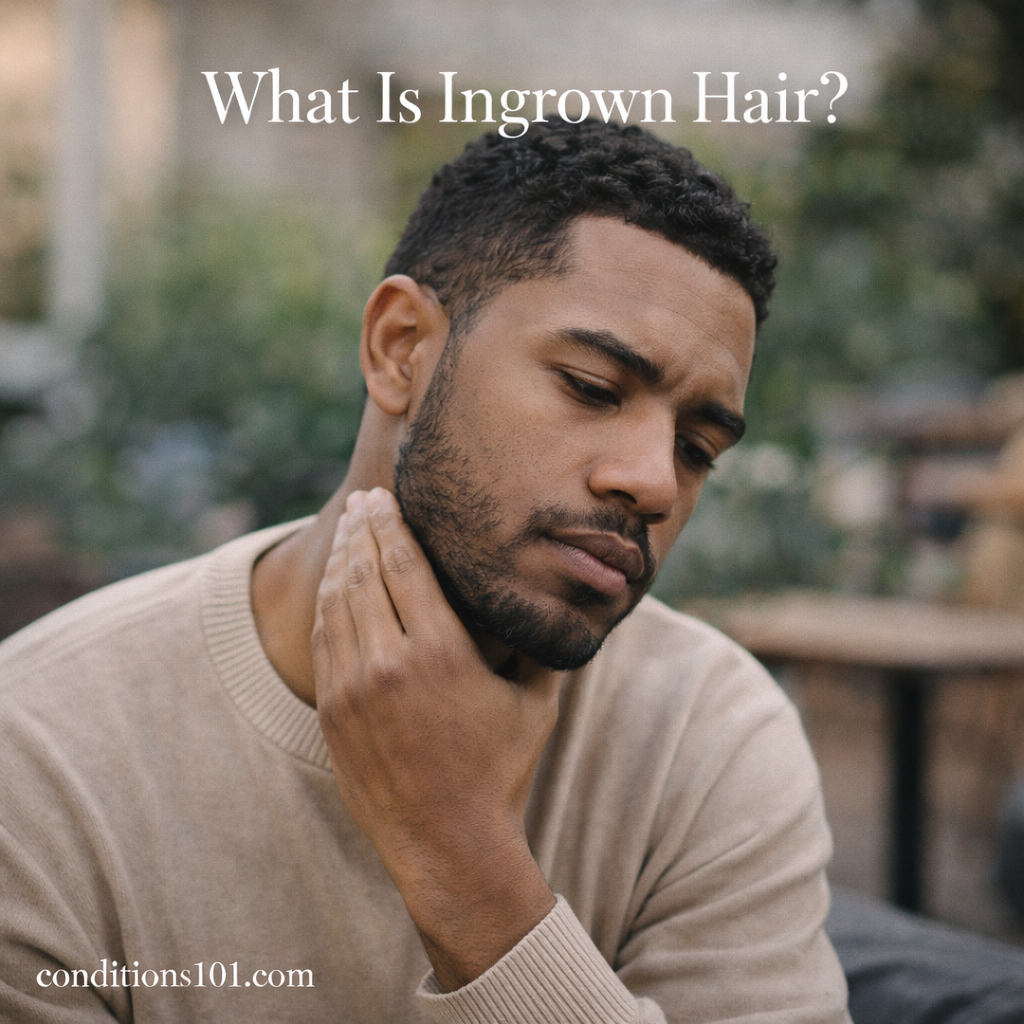
An ingrown hair occurs when a hair grows back into the skin instead of rising up and out of it. This can cause a small, raised bump and sometimes visible irritation on the skin’s surface. Ingrown hairs are common and can affect people of all ages, skin types, and hair textures.
They most often appear in areas where hair is shaved, waxed, or otherwise removed, but they can also develop naturally as hair regrows.
How Ingrown Hairs Form
Normally, hair grows straight out of the hair follicle and through the skin. An ingrown hair forms when this process is disrupted.
Common reasons this can happen include:
- Hair curling back into the skin as it grows
- Dead skin cells blocking the hair follicle opening
- Hair growing at an angle instead of straight outward
When the hair becomes trapped beneath the skin, the body may react with mild inflammation.
Common Areas Where Ingrown Hairs Occur
Ingrown hairs tend to appear in areas with frequent hair removal or friction.
These areas commonly include:
- Face and neck
- Legs
- Underarms
- Bikini or groin area
- Chest or back
They can occur anywhere hair grows, but are more noticeable in regions with coarse or curly hair.
What Ingrown Hairs Look and Feel Like

The appearance and sensation of an ingrown hair can vary.
Common characteristics include:
- Small, raised bumps
- Red or darkened spots on the skin
- A visible hair trapped beneath the surface
- Mild tenderness or itchiness
In some cases, ingrown hairs may resemble small pimples or inflamed pores.
Ingrown Hair vs. Other Skin Bumps
Ingrown hairs are sometimes confused with other skin conditions because they can look similar on the surface.
Key differences include:
- Ingrown hairs often appear after hair removal
- A trapped hair may be visible beneath the skin
- The bump is usually centered around a hair follicle
Educational content focuses on visual and situational differences rather than diagnosis.
Who Is More Likely to Get Ingrown Hairs?
Anyone can develop ingrown hairs, but certain factors may increase the likelihood.
These include:
- Curly or coarse hair texture
- Frequent shaving or waxing
- Tight clothing that creates friction
- Areas with repeated hair removal
This does not mean ingrown hairs are abnormal; they are a common skin occurrence.
Are Ingrown Hairs a Condition?
Ingrown hair is considered a skin condition, not a disease. It describes a localized skin response to how hair grows rather than a systemic issue.
In educational contexts, ingrown hair is discussed as:
- A common appearance-related condition
- A mechanical issue related to hair growth
- A usually minor and localized skin concern
Why Ingrown Hairs Are Often Misunderstood
Ingrown hairs are sometimes misunderstood because:
- They can resemble acne or other skin bumps
- They may vary in appearance across skin tones
- They are often discussed casually rather than clearly
Clear definitions help reduce confusion and promote accurate understanding.
Ingrown Hair in Educational Contexts
Health and appearance resources describe ingrown hair in neutral, non-clinical terms to:
- Support general skin awareness
- Avoid medical assumptions
- Keep information accessible and evergreen
This approach ensures information remains useful without implying treatment or diagnosis.
Key Takeaways
- An ingrown hair occurs when a hair grows back into the skin instead of outward.
- It commonly appears after shaving, waxing, or hair removal.
- Ingrown hairs often look like small bumps and may show a trapped hair beneath the skin.
- They can occur on many parts of the body and affect all hair and skin types.
- Ingrown hair is considered a skin condition, not a disease.
- Educational explanations focus on awareness, not diagnosis or treatment.