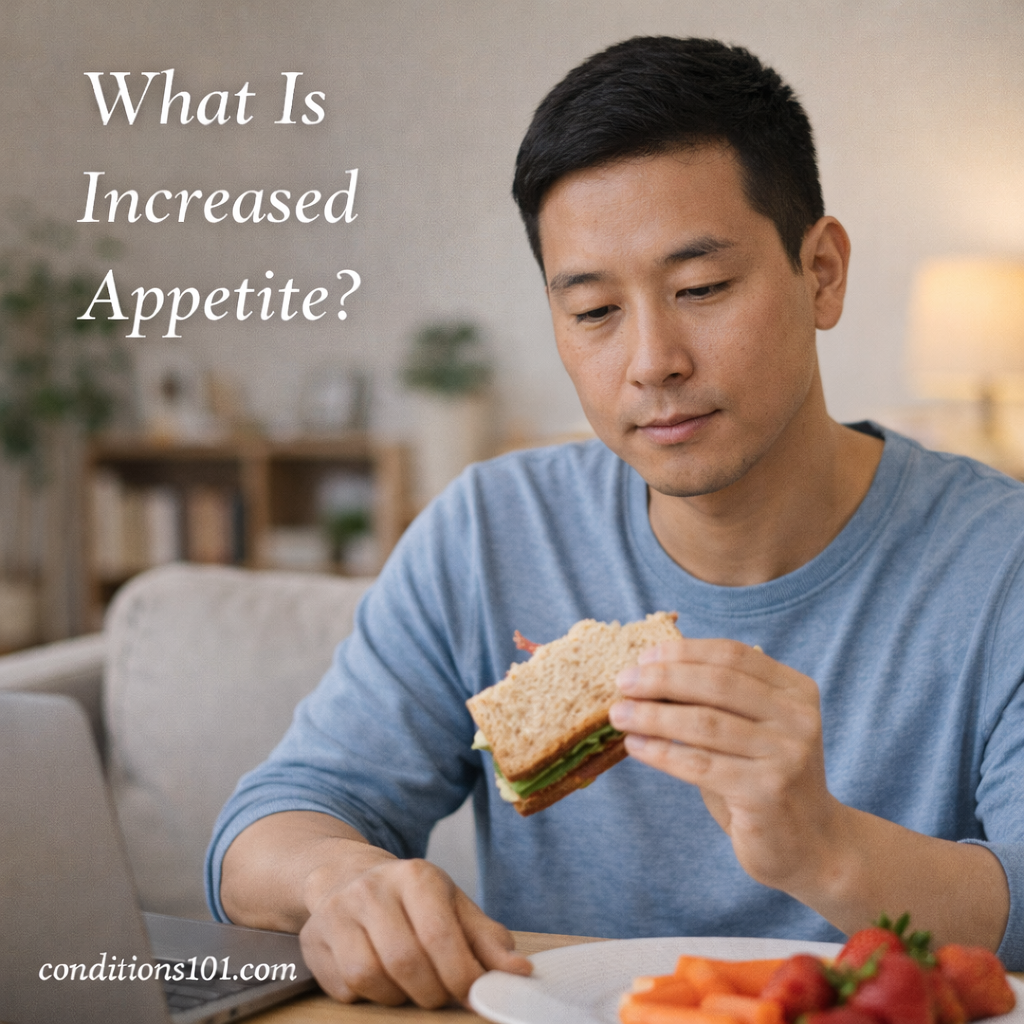
Increased appetite refers to a noticeable rise in the desire to eat, either more frequently, in larger amounts, or with stronger hunger signals than usual. It is a descriptive term, not a diagnosis, and is commonly used in educational and general health discussions related to digestion, metabolism, and overall well-being.
This article explains increased appetite in a clear, non-clinical way. It does not provide medical advice, diagnosis, or treatment.
Understanding Appetite
Appetite is the body’s natural drive to consume food. It is influenced by a combination of physical, psychological, and environmental factors that help regulate energy intake.
Appetite is different from hunger:
- Hunger refers to physical signals that the body needs energy
- Appetite reflects the desire or interest in eating, which may or may not align with physical hunger
An increase in appetite means these signals or desires become stronger or more frequent than usual.
What Increased Appetite Means
Increased appetite describes a pattern where a person may:
- Feel hungry more often
- Think about food more frequently
- Desire larger portions
- Feel less satisfied after eating
These changes can be temporary or ongoing and may vary in intensity from person to person.
Increased Appetite vs. Normal Hunger Fluctuations
Appetite naturally changes throughout the day and across different life stages. Increased appetite goes beyond routine variation.
Normal Appetite Changes
- Occur around meals
- Align with physical activity or energy use
- Adjust with sleep and routine changes
- Feel predictable over time
Increased Appetite
- May feel persistent or more intense
- Can occur outside regular meal times
- May not match recent activity levels
- Can feel harder to regulate
The distinction often depends on duration, intensity, and impact on daily habits.
Common Factors Associated With Increased Appetite

Increased appetite is often discussed alongside a range of non-diagnostic influences.
Digestive and Metabolic Factors
- Changes in digestion speed
- Energy balance shifts
- Altered nutrient absorption
- Increased energy demands
Lifestyle and Routine Factors
- Increased physical activity
- Sleep disruption
- Changes in daily schedule
- High stress or mental load
Psychological and Environmental Factors
- Emotional states
- Food availability
- Social eating patterns
- Habitual eating cues
These factors often overlap and interact rather than act independently.
Temporary vs. Ongoing Increased Appetite
Increased appetite may appear for short periods or persist longer-term.
Temporary Increased Appetite
- Often linked to routine changes
- May follow physical or mental exertion
- Can fluctuate from day to day
- Often resolves on its own
Ongoing Increased Appetite
- Persists over weeks or longer
- Becomes part of a regular eating pattern
- May feel less predictable
- Often prompts further observation or evaluation
Duration and consistency are key when describing appetite changes in educational contexts.
Increased Appetite in Digestive Health Discussions
In digestive and gut-related education, increased appetite is often mentioned alongside topics such as:
- Energy regulation
- Nutrient needs
- Digestive efficiency
- Gut–brain communication
The digestive system plays a central role in appetite signaling, but appetite itself reflects input from multiple body systems.
How Appetite Signals Work
Appetite regulation involves communication between:
- The digestive tract
- Hormonal signals
- The nervous system
- The brain’s reward and regulation centers
When these signals shift, appetite may increase even if food intake has not changed significantly.
Increased Appetite in Everyday Life
In daily life, increased appetite may look like:
- Wanting snacks more often
- Feeling hungry shortly after meals
- Paying more attention to food cues
- Noticing stronger cravings during routine activities
These experiences are common and exist on a wide spectrum.
Why Understanding Increased Appetite Matters
Understanding increased appetite can help people:
- Recognize normal appetite variation
- Interpret body signals more accurately
- Avoid unnecessary concern
- Better understand digestive and metabolic concepts
From an educational perspective, increased appetite is best viewed as a signal, not a conclusion.
Key Takeaways
- Increased appetite means a stronger or more frequent desire to eat
- It is a descriptive term, not a diagnosis
- Appetite differs from hunger, though they are related
- Many lifestyle, digestive, and environmental factors can influence appetite
- Appetite changes can be temporary or ongoing