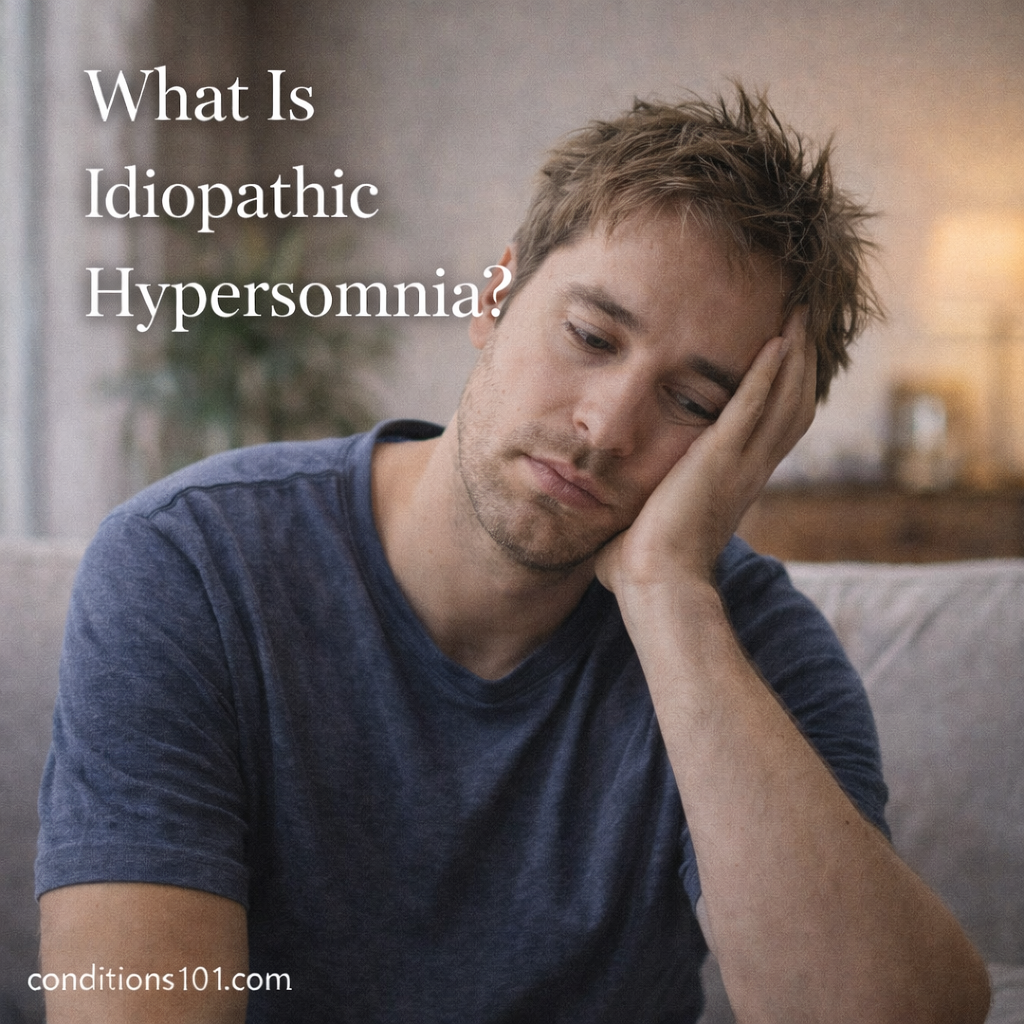
Idiopathic hypersomnia is a rare sleep-related condition characterized by excessive daytime sleepiness that is not explained by another medical, neurological, or sleep disorder. People with idiopathic hypersomnia often feel persistently sleepy despite getting what appears to be adequate or even extended amounts of nighttime sleep.
This article provides education-only, evergreen information to explain what idiopathic hypersomnia is, how it is commonly described, and how it may affect daily life. It does not provide medical advice, diagnosis, or treatment.
Understanding Excessive Daytime Sleepiness
Excessive daytime sleepiness refers to a strong, ongoing urge to sleep during the day, even in situations that typically require alertness. This is different from feeling tired after a poor night’s sleep.
In idiopathic hypersomnia, daytime sleepiness is:
- Persistent rather than occasional
- Present even after long sleep periods
- Difficult to relieve with naps or rest
The term “idiopathic” means that the underlying cause is unknown.
How Idiopathic Hypersomnia Is Commonly Described
People with idiopathic hypersomnia often describe their sleepiness as overwhelming rather than situational.
Common descriptions include:
- Feeling unrefreshed after sleeping
- Struggling to stay awake during quiet activities
- Experiencing mental fog or slowed thinking
- Feeling a constant need to sleep
These experiences tend to be long-lasting and consistent over time.
Idiopathic Hypersomnia vs. Normal Fatigue
Everyone experiences fatigue from time to time, especially after stress, illness, or lack of sleep. Idiopathic hypersomnia differs because the sleepiness is not resolved by rest.
Key differences include:
- Normal fatigue improves with sleep; idiopathic hypersomnia does not
- Sleep duration may be long, yet still unrefreshing
- Daytime sleepiness is present most days
This distinction helps clarify why idiopathic hypersomnia is considered a specific sleep condition.
Sleep Patterns Associated With Idiopathic Hypersomnia
Sleep patterns in idiopathic hypersomnia can vary, but several features are commonly discussed.
These may include:
- Long nighttime sleep duration
- Difficulty waking up in the morning
- Feeling confused or disoriented after waking
- Strong urge to return to sleep
Waking may feel especially challenging, even after many hours of rest.
The Experience of Sleep Inertia
Sleep inertia refers to prolonged grogginess and impaired alertness after waking. This feature is frequently associated with idiopathic hypersomnia.
People may notice:
- Slow thinking upon waking
- Difficulty starting tasks
- Feeling mentally “heavy” or disconnected
- Extended time needed to feel fully alert
Sleep inertia can significantly affect morning routines and schedules.
How Idiopathic Hypersomnia Can Affect Daily Life

Persistent sleepiness can influence many aspects of everyday functioning.
Potential effects include:
- Difficulty maintaining attention at work or school
- Reduced productivity
- Challenges with driving or commuting
- Limited participation in social activities
These impacts often develop gradually as sleepiness remains ongoing.
Idiopathic Hypersomnia and Napping
Unlike some other sleep conditions, naps in idiopathic hypersomnia are often described as unrefreshing.
Common observations include:
- Naps lasting long periods
- Little improvement in alertness afterward
- Feeling just as sleepy after waking
This lack of benefit from napping is a notable feature often mentioned in descriptions of the condition.
Why Idiopathic Hypersomnia Is Considered Rare
Idiopathic hypersomnia is classified as a rare condition due to its relatively low prevalence and the complexity involved in identifying it.
Contributing factors include:
- Overlap with other sleep disorders
- Lack of a single defining test
- Variation in how symptoms present
As a result, it is often discussed in specialized sleep medicine contexts.
Common Misconceptions About Idiopathic Hypersomnia
Several misunderstandings can affect how idiopathic hypersomnia is perceived.
- It is not the same as being lazy or unmotivated
- It is not caused by poor sleep habits alone
- It is not resolved by sleeping longer
- It is different from occasional daytime drowsiness
Clarifying these points helps reduce stigma and confusion.
Why Learning About Idiopathic Hypersomnia Matters
Education about idiopathic hypersomnia helps raise awareness of lesser-known sleep conditions and how excessive sleepiness can persist without a clear cause. Understanding this condition supports more informed discussions about sleep health and variability.
Key Takeaways
- Idiopathic hypersomnia involves persistent excessive daytime sleepiness
- Sleep often feels unrefreshing despite long duration
- Naps may not improve alertness
- Sleep inertia is commonly described
- The condition is considered rare and not fully understood