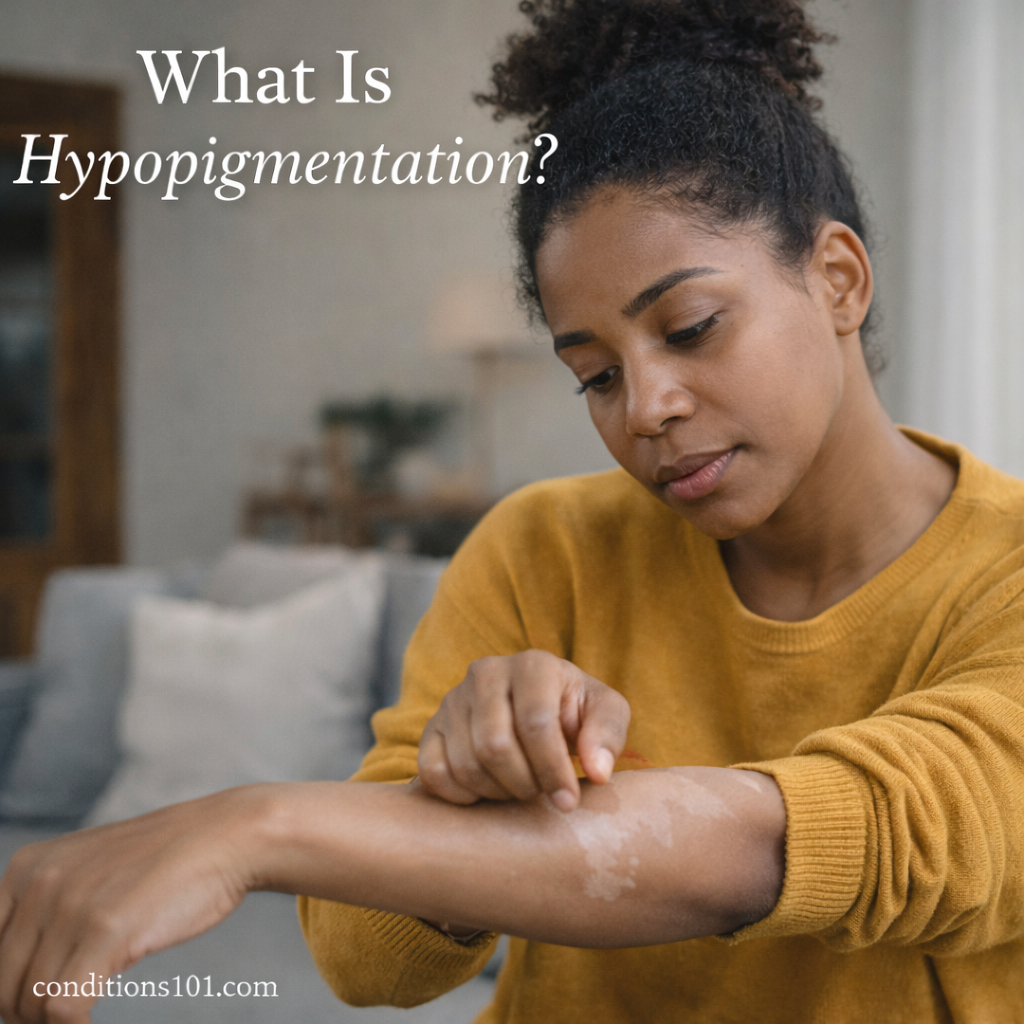
Hypopigmentation is a general term used to describe areas of skin that appear lighter than the surrounding skin. This lighter appearance happens when the skin produces less melanin, the natural pigment responsible for skin, hair, and eye color. Hypopigmentation is not a single condition, but rather a visible change that can occur for many different reasons.
This article provides an educational overview of hypopigmentation, how it is commonly described, and why it is discussed in skin and appearance-related health topics.
Understanding Skin Pigmentation
Skin color is primarily determined by melanin, a pigment produced by specialized skin cells called melanocytes. Melanin helps protect the skin from ultraviolet (UV) radiation and contributes to the natural range of skin tones seen across populations.
When melanin production is reduced or uneven in certain areas, those areas may appear lighter. This change in pigmentation is what is generally referred to as hypopigmentation.
What Hypopigmentation Looks Like

Hypopigmentation typically appears as patches or areas of skin that are lighter than the surrounding skin. These areas may:
- Be small or large
- Have well-defined or irregular borders
- Appear gradually or suddenly
- Occur anywhere on the body
The lighter areas are usually noticeable because they contrast with the person’s natural skin tone, though the degree of contrast can vary widely.
Common Types of Hypopigmentation
Hypopigmentation is a broad descriptive term and may be used in discussions about different skin changes. Some commonly referenced forms include:
- Localized light patches affecting a small area
- Widespread or multiple light areas
- Temporary changes following skin irritation or injury
The term itself does not specify a cause or pattern, only the visible difference in skin color.
Why Hypopigmentation Occurs
Hypopigmentation is associated with reduced melanin in affected areas. This reduction can be influenced by a variety of factors, which may act alone or together.
Skin Cell Activity
Changes in how melanocytes function can affect pigment production. If these cells are less active or fewer in number in a specific area, that area may appear lighter.
Skin Injury or Inflammation
Skin that has healed from inflammation, irritation, or injury may temporarily or permanently show lighter pigmentation. This is sometimes referred to as post-inflammatory color change.
Genetic and Biological Influences
Some forms of hypopigmentation are linked to inherited traits or biological differences that affect how pigment is produced or distributed in the skin.
Hypopigmentation vs. Other Skin Color Changes
It is helpful to distinguish hypopigmentation from other common pigmentation terms.
- Hypopigmentation refers to lighter-than-normal skin areas
- Hyperpigmentation refers to darker-than-normal skin areas
- Depigmentation is sometimes used to describe near-complete pigment loss in an area
These terms describe appearance rather than underlying causes.
How Hypopigmentation Is Discussed in Skin Health Education
In educational and informational contexts, hypopigmentation is often discussed to help people understand visible skin differences and how pigmentation works.
It is commonly referenced in discussions about:
- Skin tone variation
- Healing and skin recovery
- Cosmetic and appearance-related concerns
- General dermatological education
The term allows for neutral, descriptive conversation without implying severity or diagnosis.
Psychological and Social Considerations
Changes in skin appearance, including hypopigmentation, can sometimes affect how individuals feel about their appearance. The visibility of lighter patches may draw attention or raise questions, depending on skin tone and contrast.
Educational resources often include hypopigmentation to normalize skin variation and provide accurate, non-judgmental information.
Common Misconceptions About Hypopigmentation
“Hypopigmentation is always permanent”
Some hypopigmented areas may change over time, while others remain stable. The term itself does not indicate whether the change is temporary or long-lasting.
“Hypopigmentation is harmful”
Hypopigmentation describes a color difference, not a measure of skin health or overall well-being.
“Only certain skin tones experience hypopigmentation”
Hypopigmentation can occur in people of all skin tones, though it may be more or less noticeable depending on contrast.
Why the Term Hypopigmentation Is Useful
Hypopigmentation provides a clear, neutral way to describe lighter skin areas without assigning cause or meaning. It is useful in education because it focuses on what is visible rather than making assumptions.
Understanding the term can help people better interpret skin-related information and communicate clearly about appearance changes.
Key Takeaways
- Hypopigmentation refers to lighter-than-normal areas of skin
- It is a descriptive term, not a diagnosis
- It is related to reduced melanin in affected areas
- Appearance and extent can vary widely
- It is commonly discussed in skin and appearance education
Learning about hypopigmentation can help build a clearer understanding of how skin pigmentation works and why natural variations occur.