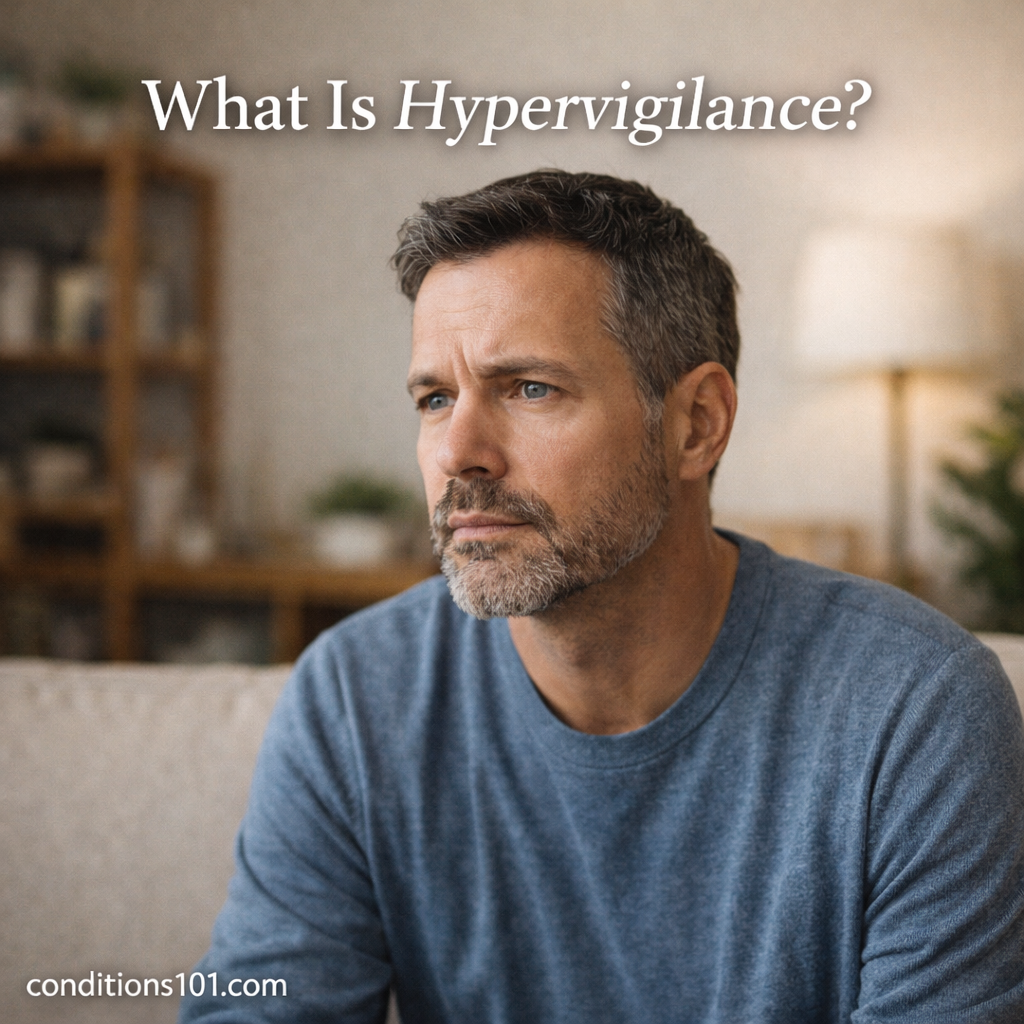
Hypervigilance is a heightened state of awareness in which a person is constantly scanning their surroundings for potential threats or dangers. In a mental and cognitive context, it refers to being unusually alert to sensory input, emotional cues, or environmental changes, even when no immediate risk is present.
This state of alertness is often automatic rather than intentional. People experiencing hypervigilance may feel as though their mind and body are always “on guard,” making it difficult to relax, focus, or feel at ease in everyday situations.
A Clear, Simple Definition
Hypervigilance can be defined as:
- Persistent and excessive alertness
- Increased sensitivity to sights, sounds, or movements
- Constant monitoring of surroundings or internal sensations
- Difficulty feeling safe or relaxed
It is important to understand hypervigilance as a response pattern, not a character trait or personal choice. It reflects how the brain processes perceived safety and threat.
Why Hypervigilance Occurs
Hypervigilance is closely linked to the brain’s natural survival systems. Humans are wired to notice danger, but in hypervigilance, this system becomes overactive.
Common underlying contributors include:
- Prolonged stress or high-pressure environments
- Past experiences that required constant alertness
- Repeated exposure to uncertainty or unpredictability
- Learned patterns of threat detection over time
In these situations, the brain may continue operating in a protective mode even when conditions have changed.
How Hypervigilance Affects Daily Life

Hypervigilance can influence many aspects of everyday functioning, particularly mental focus, emotional balance, and social interaction.
Cognitive Effects
On a cognitive level, hypervigilance may involve:
- Difficulty concentrating on tasks
- Rapid shifts of attention toward perceived threats
- Mental fatigue from constant monitoring
- Overinterpretation of neutral cues
This constant scanning can reduce mental efficiency and make sustained focus challenging.
Emotional Effects
Emotionally, hypervigilance is often associated with:
- Ongoing tension or unease
- Irritability or heightened emotional reactions
- Difficulty feeling calm or settled
- Feeling overwhelmed in busy environments
Because the body remains in a state of readiness, emotional regulation can become more difficult.
Physical Sensations
Although hypervigilance is primarily cognitive and psychological, it often includes physical sensations such as:
- Muscle tension
- Restlessness
- Increased startle response
- Difficulty sleeping or relaxing
These sensations are part of the body’s alert response rather than signs of physical injury or illness.
Hypervigilance vs. Normal Alertness
Being alert is a normal and useful human function. Hypervigilance differs in both intensity and duration.
Normal alertness typically:
- Is situational and temporary
- Decreases when a threat passes
- Allows for rest and recovery
Hypervigilance tends to:
- Persist even in safe environments
- Feel difficult to “turn off”
- Interfere with relaxation and daily activities
The distinction lies in whether the alert state matches the actual level of risk.
Situations Where Hypervigilance Is Commonly Discussed
Hypervigilance is often referenced in discussions related to mental and cognitive health, especially when exploring how people respond to prolonged stress or challenging experiences.
It may be discussed in relation to:
- Stress-related conditions
- Trauma-related responses
- Anxiety-related patterns
- High-demand or high-risk environments
In educational contexts, hypervigilance helps explain why some individuals remain on edge even after stressful circumstances have ended.
How Hypervigilance Can Shape Behavior
Over time, hypervigilance may influence behavior in subtle ways.
Examples include:
- Avoiding crowded or noisy places
- Sitting where exits are visible
- Frequently checking surroundings
- Becoming easily distracted by movement or sound
These behaviors often develop as coping strategies rather than deliberate choices.
Is Hypervigilance Always Negative?
Hypervigilance is not inherently harmful. In genuinely dangerous or unpredictable situations, heightened awareness can be protective and adaptive.
However, challenges may arise when:
- The alert state continues long after danger has passed
- It disrupts concentration, rest, or relationships
- It creates ongoing mental or emotional strain
Understanding hypervigilance as a response rather than a flaw helps reduce stigma and supports more balanced discussions about mental and cognitive health.
Common Misunderstandings About Hypervigilance
“It Means Someone Is Overreacting”
Hypervigilance is not about exaggeration. It reflects how the brain has learned to prioritize safety based on past experiences.
“It’s the Same as Being Paranoid”
Hypervigilance involves heightened awareness, not fixed false beliefs. The two concepts are different and should not be used interchangeably.
“People Can Just Relax If They Try”
Because hypervigilance operates automatically, it is not simply a matter of willpower or conscious choice.
Why Hypervigilance Is Important to Understand
Learning about hypervigilance supports:
- Greater awareness of mental and cognitive responses to stress
- More accurate conversations about alertness and safety
- Reduced judgment toward people who seem constantly on edge
- A clearer understanding of how the brain adapts to experience
In mental and cognitive health education, hypervigilance helps explain how protective mechanisms can persist beyond their original purpose.
Key Takeaways
- Hypervigilance is a state of persistent, heightened alertness
- It involves cognitive, emotional, and physical components
- It develops as a response to perceived threat or prolonged stress
- It differs from normal alertness in intensity and duration
- Understanding hypervigilance provides insight into human stress responses