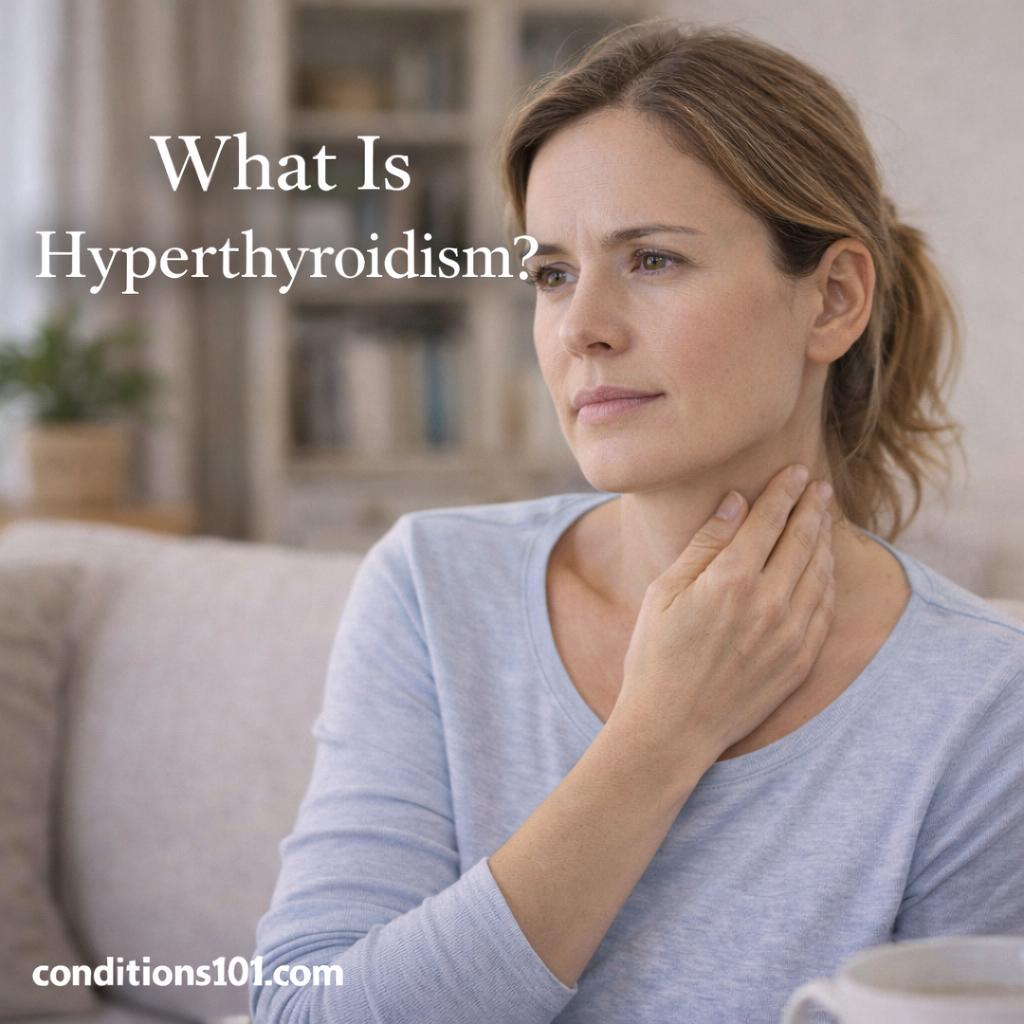
Hyperthyroidism is a condition in which the thyroid gland produces more thyroid hormones than the body needs. The thyroid is a small, butterfly-shaped gland located in the front of the neck, and it plays an important role in regulating metabolism, energy use, and many body systems.
This article provides a clear, educational explanation of hyperthyroidism for general informational purposes. It does not offer medical advice, diagnosis, or treatment.
Understanding the Thyroid Gland
The thyroid gland releases hormones that help control how the body uses energy. These hormones influence:
- Metabolism and energy levels
- Heart rate and body temperature
- Digestion and appetite
- Muscle and nerve function
- Growth and development
When thyroid hormone levels are balanced, these processes run smoothly. When levels are too high, the body’s systems may begin working faster than normal.
What Does Hyperthyroidism Mean?
Hyperthyroidism occurs when the thyroid gland is overactive and releases excessive amounts of thyroid hormones into the bloodstream. This increased hormone activity can speed up many bodily functions, sometimes noticeably.
Because thyroid hormones affect many systems at once, hyperthyroidism can influence both physical and mental experiences.
Common Signs and Experiences Associated With Hyperthyroidism
People with hyperthyroidism may notice a range of changes, though experiences vary widely.
Commonly reported features include:
- Increased energy or restlessness
- Sensitivity to heat
- Changes in heart rate
- Unintended weight changes
- Increased appetite
- Nervousness or irritability
- Difficulty sleeping
- Muscle weakness or fatigue
Not everyone experiences the same combination or intensity of these effects.
How Hyperthyroidism Differs From Normal Metabolic Changes
Metabolism naturally varies based on age, activity level, and lifestyle. Hyperthyroidism differs because metabolic changes are driven by hormone imbalance rather than normal adaptation.
- Normal metabolism adjusts gradually
- Hyperthyroidism causes sustained metabolic acceleration
- Symptoms may persist rather than resolve on their own
- Changes may feel disproportionate to daily habits
These distinctions help explain why hyperthyroidism is considered a hormonal condition.
Common Causes Associated With Hyperthyroidism
Hyperthyroidism can be associated with several underlying factors affecting thyroid function.
Common associations include:
- Autoimmune activity affecting the thyroid
- Thyroid nodules producing excess hormones
- Inflammation of the thyroid gland
- Excess iodine exposure
- Temporary changes following illness or pregnancy
In some cases, the exact cause may not be immediately clear.
How Hyperthyroidism Can Affect Daily Life

An overactive thyroid can influence daily routines, energy levels, and emotional balance.
Some people report:
- Difficulty relaxing or sitting still
- Changes in focus or concentration
- Increased fatigue despite high energy levels
- Disrupted sleep patterns
- Heightened emotional responses
The day-to-day impact varies depending on hormone levels and individual sensitivity.
Hyperthyroidism and Weight Changes
Weight changes are often associated with hyperthyroidism due to increased metabolic activity.
- Calories may be burned more quickly
- Appetite may increase
- Weight loss can occur even without changes in diet
These changes are driven by hormone effects rather than intentional weight management behaviors.
Hyperthyroidism Across Different Age Groups
Hyperthyroidism can affect people of all ages, though patterns may differ.
- Younger adults may notice restlessness or anxiety-like symptoms
- Middle-aged adults may experience changes in energy or heart rate
- Older adults may have subtler or different symptom patterns
Age can influence how hyperthyroidism presents, but the underlying hormone imbalance is similar.
Common Misconceptions About Hyperthyroidism
There are several misunderstandings surrounding hyperthyroidism.
- “Hyperthyroidism just means having more energy.”
Increased energy may occur, but it can be accompanied by discomfort or fatigue. - “Only weight loss matters.”
Hyperthyroidism affects many body systems beyond weight. - “It’s caused by lifestyle choices.”
Hyperthyroidism is related to hormone regulation, not personal habits.
Clearing up these misconceptions helps improve hormonal health literacy.
Hyperthyroidism as a Hormonal Health Concept
Hyperthyroidism is best understood as a condition involving excess thyroid hormone activity that influences the body’s metabolism and regulation systems. Its effects can be widespread, reflecting the central role of thyroid hormones in overall health.
Learning about hyperthyroidism supports awareness of how hormonal balance affects energy, metabolism, and daily functioning.
Key Takeaways
- Hyperthyroidism occurs when the thyroid produces too much hormone
- Thyroid hormones regulate metabolism and energy use
- Excess hormone activity can speed up many body processes
- Symptoms and experiences vary between individuals
- Hyperthyroidism affects multiple systems, not just metabolism