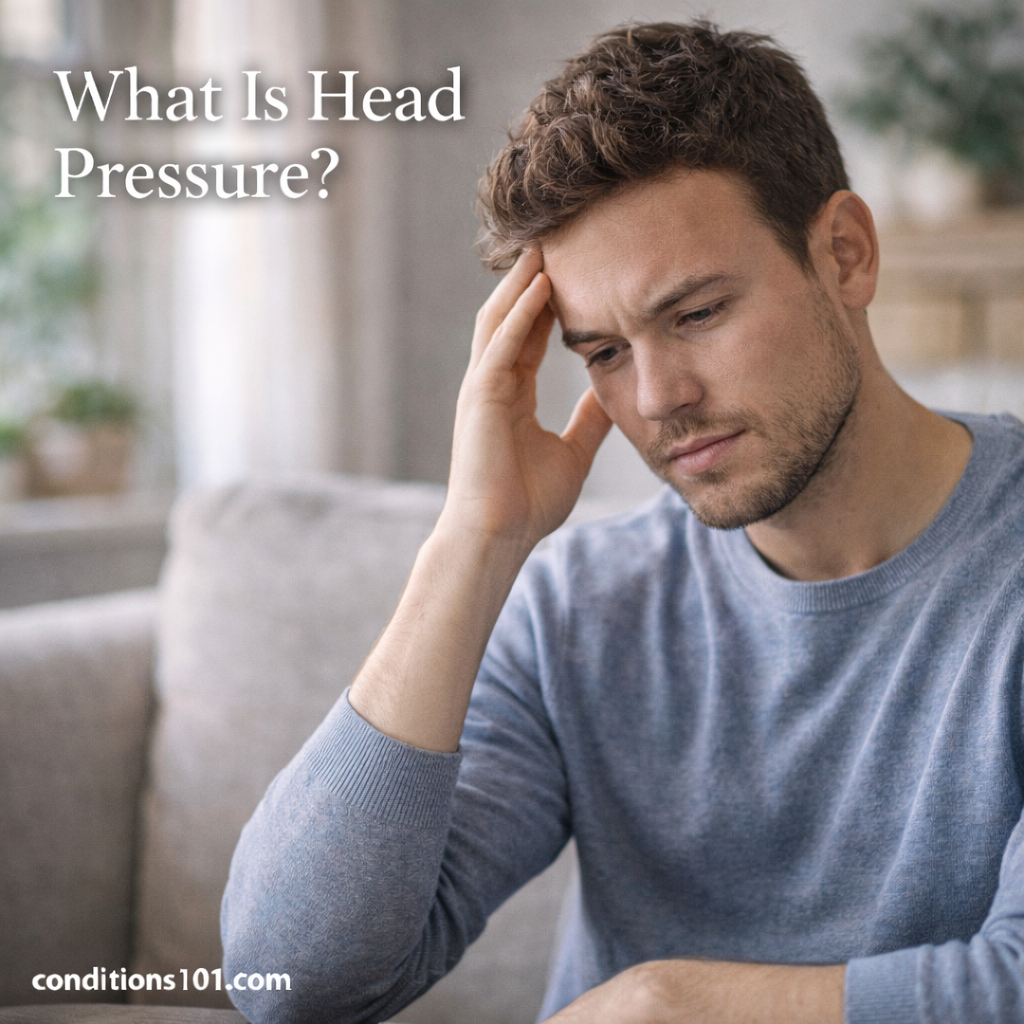
Head pressure is a non-clinical term used to describe a sensation of fullness, tightness, heaviness, or compression in the head. People often describe it as feeling like their head is being squeezed, filled, or weighed down rather than experiencing sharp or throbbing pain.
Head pressure is a symptom, not a diagnosis. It can vary widely in intensity, duration, and location and may occur on its own or alongside other sensations. This article explains head pressure for educational purposes only and does not provide medical advice, diagnosis, or treatment.
How Head Pressure Is Commonly Described
Head pressure does not feel the same for everyone. The sensation is often subjective and can be difficult to describe precisely.
Common descriptions include:
- A tight band-like feeling around the head
- Fullness or congestion-like pressure
- A heavy or weighed-down sensation
- Pressure behind the eyes or forehead
- A diffuse, non-sharp discomfort
Unlike headaches that involve pain pulses or stabbing sensations, head pressure is often described as steady and dull.
Where Head Pressure May Be Felt
Head pressure can occur in different areas of the head, depending on the individual and situation.
Common locations include:
- Forehead
- Temples
- Top of the head
- Back of the head
- Behind or around the eyes
- Across the entire head
Some people notice pressure in one consistent area, while others feel it shift locations.
Head Pressure vs Headache
Head pressure and headaches are related but not identical experiences.
Head Pressure
- Often feels dull, tight, or heavy
- May not involve sharp pain
- Can feel constant or lingering
- Often described as pressure or fullness
Headache
- Often involves pain rather than pressure
- May throb, pulse, or stab
- Can be localized or widespread
- May intensify with movement or activity
Head pressure can occur without what people would consider a traditional headache.
Common Situations Linked to Head Pressure
Head pressure is often discussed in relation to everyday physical, sensory, or environmental factors.
Commonly mentioned situations include:
- Stress or mental tension
- Prolonged screen use
- Eye strain or visual focus
- Sinus congestion or pressure sensations
- Changes in sleep patterns
- Sensory overload
- Muscle tension in the neck or shoulders
In many cases, head pressure is influenced by multiple overlapping factors.
Head Pressure and Sensory Sensitivity
Some people experience head pressure alongside heightened sensory awareness.
This may involve sensitivity to:
- Light
- Sound
- Busy or noisy environments
- Visual movement or screens
In these cases, head pressure may feel worse during sensory stimulation and ease during rest or quiet.
Head Pressure and Muscle Tension

Tension in the muscles of the neck, shoulders, jaw, or scalp is commonly associated with head pressure sensations.
Muscle-related factors may include:
- Prolonged sitting or poor posture
- Clenching the jaw
- Holding tension during stress
- Repetitive movements
Tension in surrounding muscles can contribute to a feeling of tightness or compression around the head.
Duration and Pattern of Head Pressure
Head pressure can vary in how long it lasts and how often it occurs.
Some people notice:
- Short-lived episodes
- Pressure that builds gradually
- Sensations that come and go throughout the day
- Periods of persistent pressure with fluctuations
The pattern often provides context for understanding how head pressure fits into daily routines.
Head Pressure Without Pain
One notable aspect of head pressure is that it can occur without pain. This can make the experience confusing, especially for people expecting pain to signal a problem.
Head pressure without pain may still feel uncomfortable, distracting, or concerning, even when it does not limit movement or activity.
Why Head Pressure Can Feel Concerning
Head sensations naturally draw attention because the head is closely associated with thinking, vision, and awareness.
Head pressure may feel concerning because:
- It is unfamiliar or persistent
- It affects concentration
- It creates a sense of heaviness or fog
- It lacks a clear cause
Understanding head pressure as a symptom rather than a condition can help place the experience in a calmer context.
Head Pressure in Everyday Life
Many people experience head pressure occasionally during normal daily activities.
Common examples include:
- After long work or study sessions
- During periods of stress
- In busy or overstimulating environments
- With changes in routine or sleep
- During prolonged focus
Experiencing head pressure from time to time is common and often temporary.
A Neutral Perspective on Head Pressure
Head pressure reflects how the nervous system, muscles, and sensory systems respond to internal and external demands.
Important points to remember include:
- Head pressure is a symptom, not a diagnosis
- It can have many contributing factors
- Experiences vary widely between individuals
- Sensations may change over time
A neutral understanding helps reduce unnecessary worry while encouraging awareness of patterns and triggers.
Key Takeaways
- Head pressure is a sensation of tightness, fullness, or heaviness in the head
- It is different from sharp or throbbing headache pain
- It can occur in various areas of the head
- Stress, tension, sensory input, and routine changes are commonly discussed factors
- Head pressure is common and often temporary
Head pressure is a widely experienced sensation that highlights how the body responds to mental, sensory, and physical demands.