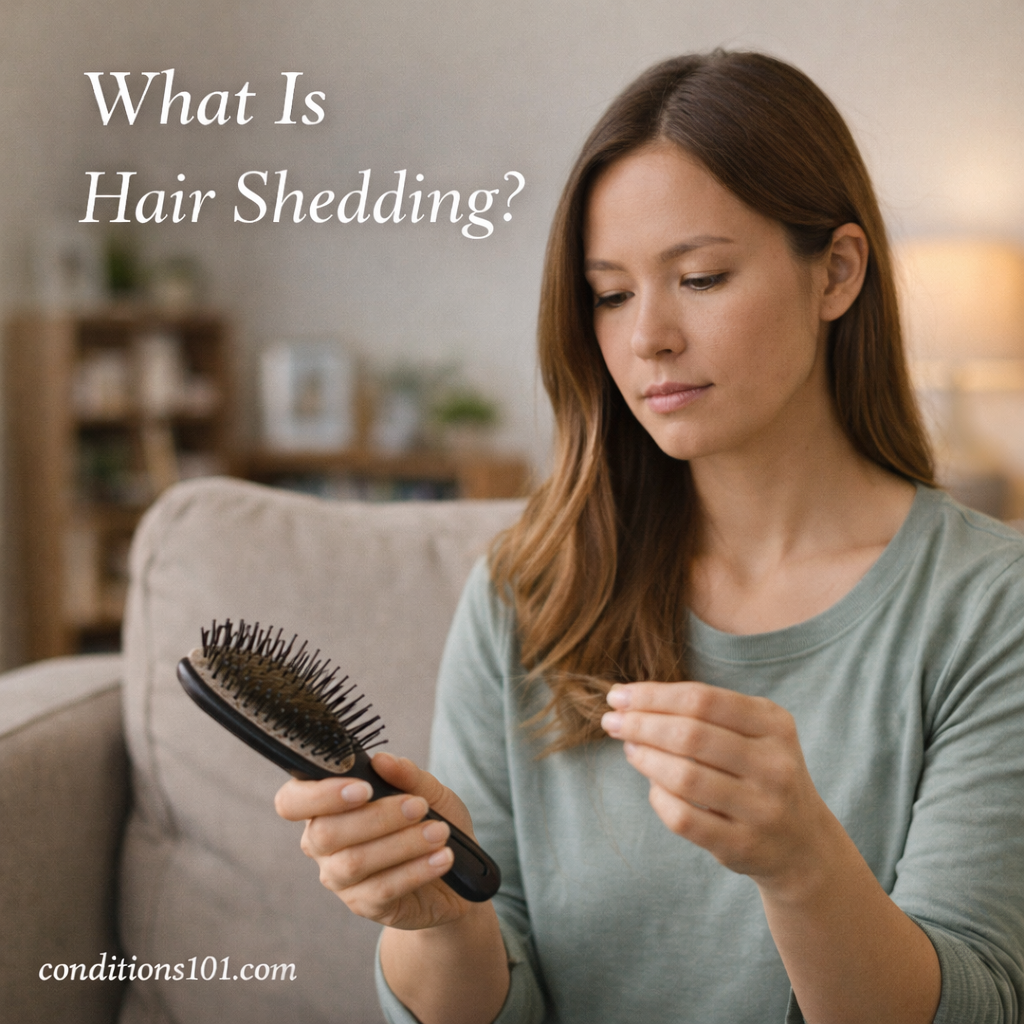
Hair shedding is a normal and ongoing biological process in which individual hair strands naturally fall out as part of the hair growth cycle. While seeing loose hair on a pillow, in the shower, or on a hairbrush can be concerning, shedding itself is usually a routine function of healthy hair renewal.
This article explains hair shedding in a clear, educational way. It does not provide medical advice, diagnosis, or treatment.
Understanding Hair Shedding
Hair shedding refers to the loss of hair strands from the scalp or body as older hairs complete their life cycle. New hairs typically grow in to replace those that are shed, allowing hair density to remain relatively stable over time.
Shedding occurs continuously, even if it is not always noticeable.
The Hair Growth Cycle
Hair shedding is closely tied to the natural hair growth cycle, which occurs in repeating stages.
Anagen Phase (Growth)
- Hair actively grows from the follicle
- This phase can last several years
- Most scalp hair is in this stage at any given time
Catagen Phase (Transition)
- Hair growth slows and stops
- The follicle begins to shrink
- This phase lasts a few weeks
Telogen Phase (Resting)
- Hair remains in place but no longer grows
- The follicle rests before producing new hair
- This phase lasts several months
Exogen Phase (Shedding)
- The old hair strand is released
- New hair begins growing in its place
- Shedding becomes noticeable during this stage
Hair shedding primarily occurs during the exogen phase, which is a normal part of the cycle.
How Much Hair Shedding Is Typical?
Most people shed hair daily, even if they do not realize it.
Common educational references often describe typical shedding as:
- Dozens of strands per day
- Hair loss that appears evenly distributed
- No obvious thinning of the scalp over time
Because new hair is usually growing as old hair sheds, overall hair volume often remains consistent.
Hair Shedding vs. Hair Loss
Hair shedding and hair loss are related but not identical concepts.
Hair Shedding
- Part of the normal hair cycle
- Individual strands fall out naturally
- Hair typically regrows
Hair Loss
- May involve reduced regrowth
- Can lead to visible thinning or bald areas
- Often discussed separately in health education
Understanding this distinction helps clarify why shedding alone does not necessarily indicate a long-term issue.
Factors That Can Influence Hair Shedding

Hair shedding patterns can change due to a variety of non-diagnostic influences.
Physical and Lifestyle Factors
- Changes in routine
- Physical stress on the body
- Sleep disruption
- Dietary changes
Hair Care Practices
- Frequent brushing or styling
- Tight hairstyles
- Heat styling
- Chemical treatments
Environmental and Seasonal Influences
- Seasonal changes
- Temperature shifts
- Sun exposure
These factors may affect how noticeable shedding feels, even when hair growth remains balanced.
Temporary Changes in Hair Shedding
Some people notice periods where hair shedding seems heavier than usual. These changes are often described as temporary shifts rather than permanent conditions.
Such changes may:
- Appear several weeks or months after a life change
- Resolve gradually over time
- Return to a typical shedding pattern
Hair growth cycles are slow, which is why changes in shedding may not align immediately with recent events.
Hair Shedding Across Different Areas of the Body
While scalp hair shedding is most noticeable, hair growth cycles also affect:
- Eyebrows
- Body hair
- Facial hair
Each area has its own growth timeline, so shedding may appear differently across the body.
Why Understanding Hair Shedding Matters
Learning about hair shedding can help people:
- Better understand normal hair behavior
- Reduce unnecessary worry
- Recognize the difference between shedding and long-term thinning
- Interpret hair-related information more accurately
From an educational perspective, hair shedding is best viewed as a natural renewal process rather than a problem by default.
Key Takeaways
- Hair shedding is a normal part of the hair growth cycle
- It occurs as older hairs are replaced by new ones
- Daily shedding is common and often unnoticed
- Shedding is different from long-term hair loss
- Temporary changes in shedding can occur for many reasons