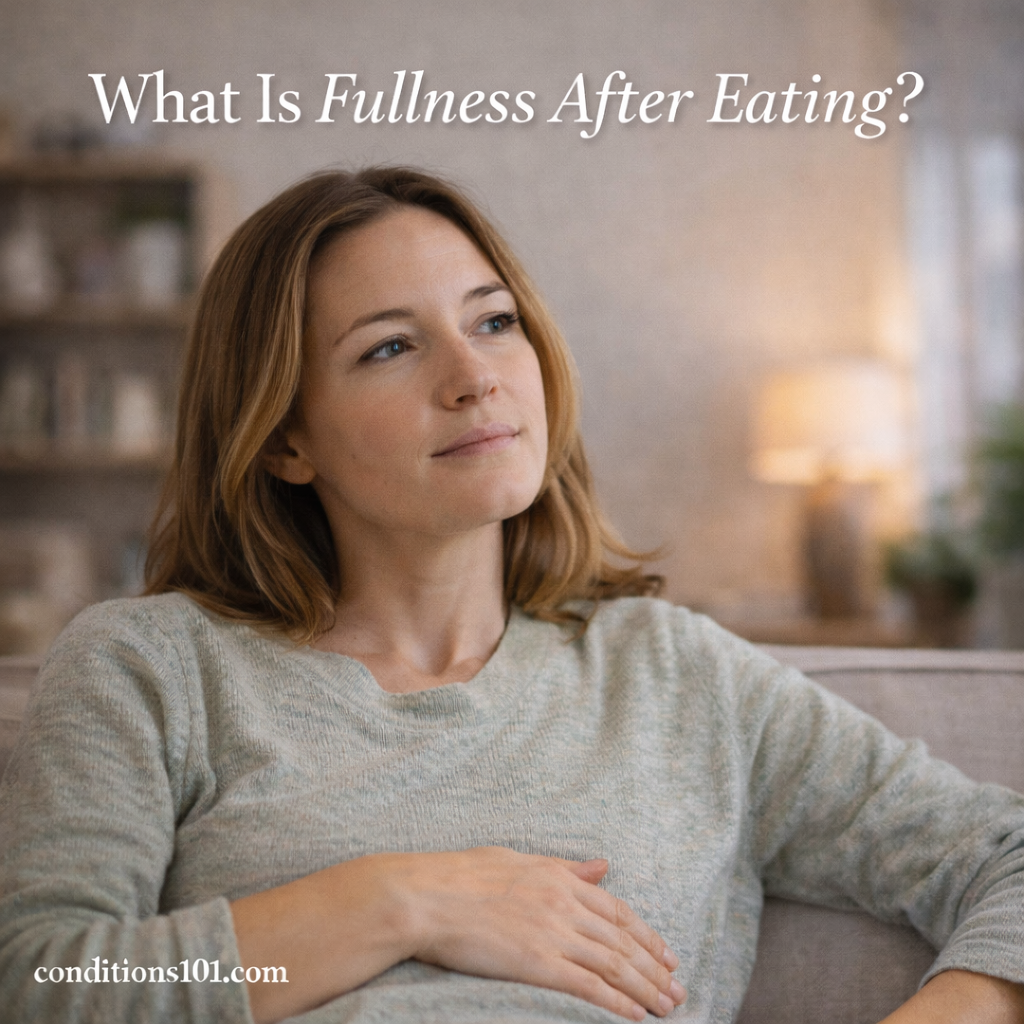
Fullness after eating is a common digestive sensation that occurs when the stomach feels satisfied, heavy, or comfortably filled following a meal. It is a normal part of digestion and signals that the body has received enough food to begin processing nutrients.
For most people, fullness develops gradually during or shortly after eating and fades as digestion continues. The intensity and duration of fullness can vary depending on what was eaten, how much was consumed, and individual digestive patterns.
How Fullness Develops During Digestion
Fullness is primarily related to how the stomach responds to food intake.
When food enters the stomach:
- The stomach stretches to accommodate the meal
- Digestive signals are sent to the brain
- Hormones involved in appetite regulation are released
These combined signals help the body recognize satiety, or the feeling of having eaten enough.
Normal Fullness vs Feeling Overfull

Not all fullness feels the same, and it exists on a spectrum.
Normal fullness
- Comfortable or mildly heavy sensation
- No significant discomfort
- Gradually decreases over time
Feeling overfull
- Pressure or tightness in the stomach
- Sluggish or bloated feeling
- Temporary discomfort after eating more than usual
Both experiences are common and often influenced by meal size, eating speed, and food composition.
Factors That Influence Fullness After Eating
Several everyday factors can affect how full someone feels after a meal.
Meal size
Larger meals naturally require more stomach expansion, which can increase the sensation of fullness.
Eating speed
Eating quickly may lead to stronger fullness because the body has less time to register satiety signals.
Food composition
Foods that are:
- High in fiber
- Rich in protein
- Higher in volume
often promote a stronger or longer-lasting sense of fullness.
Individual digestion
Digestive sensitivity, stomach capacity, and routine eating habits all play a role.
How Long Fullness Typically Lasts
The duration of fullness varies from person to person and meal to meal.
In general:
- Light meals may produce brief fullness
- Larger or heavier meals may cause fullness to last several hours
- Fullness usually fades as the stomach empties and digestion progresses
Timing depends on digestion speed and the types of foods consumed.
Fullness vs Other Digestive Sensations
Fullness is sometimes confused with other digestive feelings.
Fullness
- Related to stomach expansion
- Occurs after eating
- Usually expected and temporary
Bloating
- Often involves abdominal tightness or gas
- May occur with or without eating
- Can feel different from stomach fullness
Discomfort or pain
- Not a typical feature of normal fullness
- May suggest a different digestive experience
Understanding these distinctions can help clarify what someone is feeling after a meal.
Why Fullness Is a Normal Digestive Signal
Fullness plays an important role in appetite regulation. It helps:
- Signal when eating should slow or stop
- Support balanced energy intake
- Coordinate digestion with nutrient absorption
In most cases, fullness is simply the body responding appropriately to food intake.
When Fullness Can Vary
Not everyone experiences fullness the same way every time.
Changes in fullness may occur due to:
- Stress or emotional state
- Changes in routine or diet
- Different meal environments
- Altered eating schedules
Occasional variation is normal and usually temporary.
Key Takeaways
- Fullness after eating is a normal digestive sensation.
- It occurs as the stomach expands and digestion begins.
- Meal size, eating speed, and food type influence fullness.
- Fullness typically fades as digestion continues.
- It is distinct from bloating or digestive discomfort.