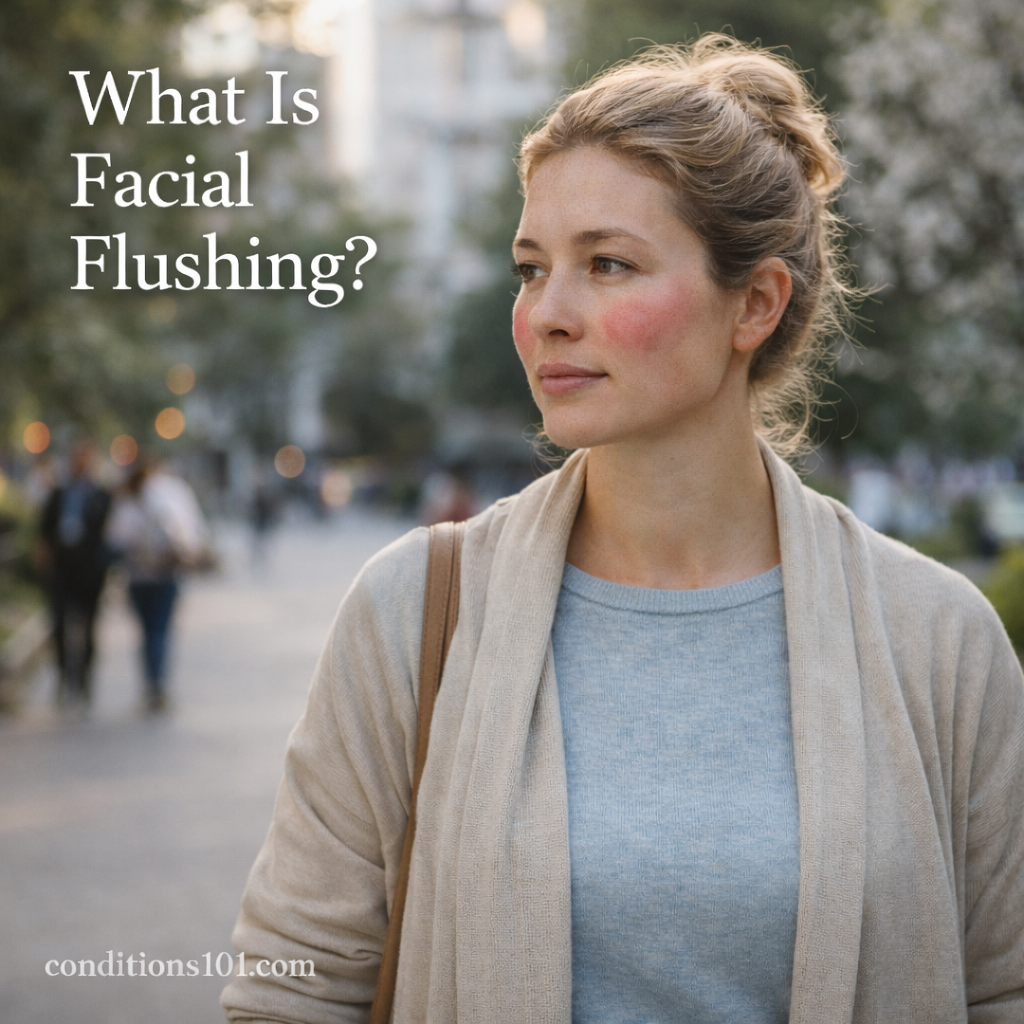
Facial flushing is a noticeable redness of the face that occurs when blood vessels near the skin’s surface widen and increase blood flow. It most commonly affects the cheeks, nose, forehead, neck, or upper chest. Facial flushing can appear suddenly or gradually and may last from a few minutes to several hours.
Facial flushing is a physical response rather than a diagnosis. It can happen occasionally or repeatedly and may vary in intensity from mild warmth and pinkness to more pronounced redness.
Understanding Facial Flushing
Facial flushing happens when small blood vessels (capillaries) expand, allowing more blood to flow close to the skin. This vascular response can be influenced by physical, emotional, environmental, or chemical factors.
Flushing is often accompanied by sensations such as:
- Warmth or heat in the face
- Tingling or mild burning
- Tightness or sensitivity of the skin
Not everyone experiences the same sensations, and some people may notice redness without discomfort.
Common Triggers of Facial Flushing
Facial flushing can be triggered by a wide range of everyday factors. Triggers vary between individuals and situations.
Common triggers include:
- Heat or sudden temperature changes
- Physical exertion
- Emotional responses such as stress or embarrassment
- Spicy foods or hot beverages
- Alcohol consumption
- Certain skincare products or cosmetics
A trigger may cause flushing in one situation but not in another, depending on context and sensitivity.
Facial Flushing vs. Blushing
Facial flushing is often confused with blushing, but they are not identical.
Blushing
- Usually linked to emotional responses
- Often brief and localized to the cheeks
- Resolves quickly once the trigger passes
Facial Flushing
- Can occur with or without emotion
- May involve larger areas of the face or neck
- Can last longer and feel physically warm
Blushing can be considered a type of facial flushing, but not all flushing is blushing.
Temporary vs. Recurrent Facial Flushing
Facial flushing can occur occasionally or follow a recurring pattern.
Temporary Flushing
- Triggered by short-term factors
- Resolves on its own
- Common and usually harmless
Recurrent Flushing
- Happens repeatedly over time
- May follow similar triggers
- Can become more noticeable or frequent
Recurrent flushing does not automatically indicate a condition, but it may prompt closer observation of patterns.
Facial Flushing and Skin Sensitivity
People who experience facial flushing often describe their skin as sensitive or reactive. Sensitive skin may respond more strongly to:
- Environmental changes
- Skincare ingredients
- Friction or pressure
- Heat or sun exposure
Sensitivity can influence how intense or frequent flushing appears, even when triggers are mild.
How Facial Flushing Can Affect Appearance

Facial flushing can temporarily change how the skin looks, which may impact confidence or self-awareness.
Common appearance-related effects include:
- Uneven or blotchy redness
- Persistent pinkness after flushing subsides
- Visible blood vessels during or after episodes
Because flushing is often visible to others, some people become more aware of social or environmental triggers.
Facial Flushing in Everyday Life
Facial flushing can occur in many routine situations, such as:
- During conversations or public speaking
- While exercising or being outdoors
- After eating or drinking certain foods
- In warm indoor environments
For many people, flushing is an occasional inconvenience. For others, it becomes a familiar part of daily life.
Observing Patterns Over Time
Understanding facial flushing often involves noticing patterns rather than focusing on isolated episodes.
People may observe:
- When flushing occurs most often
- How long redness lasts
- Whether specific situations repeat
- Differences in intensity over time
Pattern awareness can help clarify whether flushing is situational, seasonal, or recurrent.
Facial Flushing Is a Physical Response
Facial flushing is not a personal flaw or hygiene issue. It is a natural physical response related to blood flow and skin reactivity.
Key points to remember:
- Flushing is common
- It varies widely between individuals
- Visibility does not reflect severity
- It does not define overall skin health
Understanding facial flushing can reduce confusion and unnecessary concern about normal bodily responses.
Key Takeaways
- Facial flushing is redness caused by increased blood flow near the skin
- It can be triggered by physical, emotional, or environmental factors
- Facial flushing differs from blushing
- Episodes may be temporary or recurrent
- The experience and appearance vary from person to person