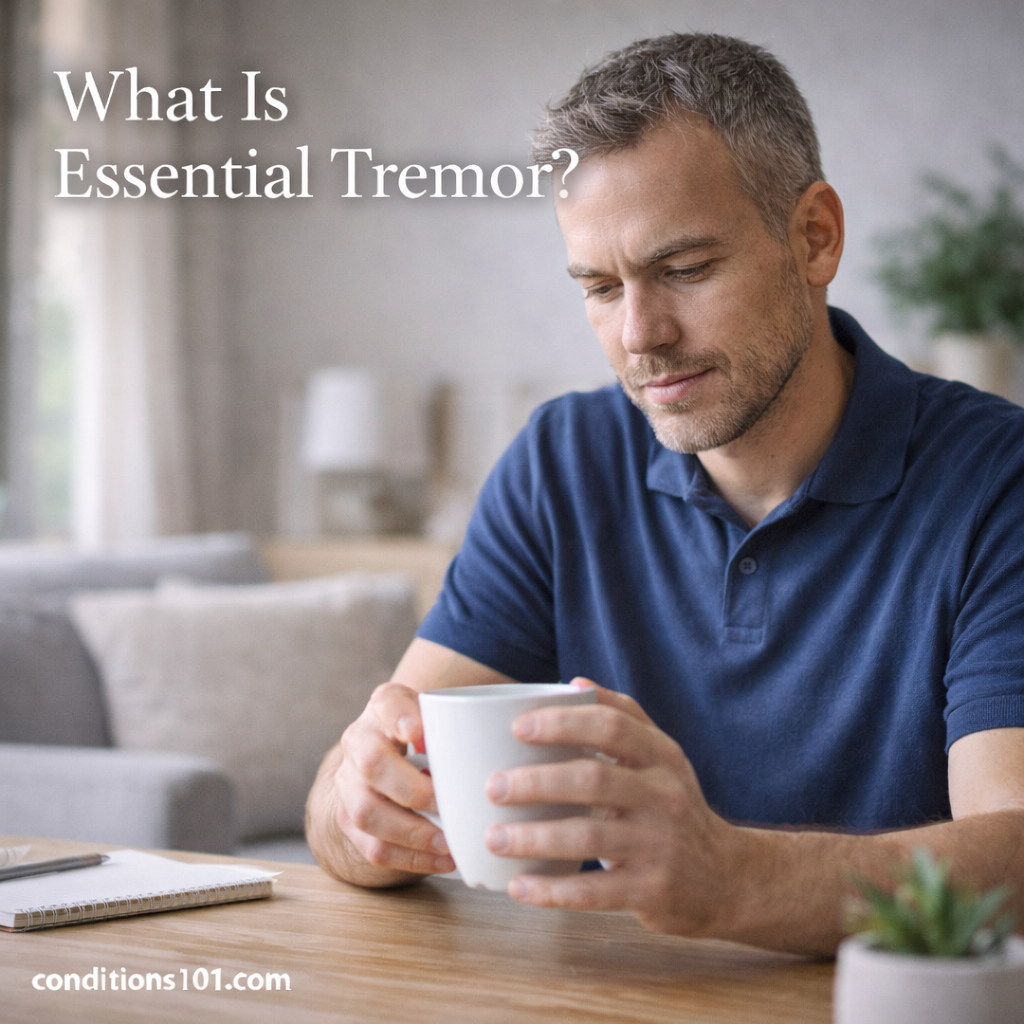
Essential tremor is a neurological condition characterized by involuntary, rhythmic shaking, most commonly affecting the hands or arms. The tremor typically occurs during movement or when maintaining a posture, such as holding an object, writing, or reaching for something.
Essential tremor is considered one of the most common movement-related neurological conditions, yet it is often misunderstood or mistaken for other causes of shaking. This article explains essential tremor for educational purposes only and does not provide medical advice, diagnosis, or treatment.
Understanding Essential Tremor
A tremor is an involuntary, repetitive movement caused by muscle activity. In essential tremor, these movements usually follow a regular rhythm and are most noticeable during purposeful actions rather than at rest.
Essential tremor is a condition, not a symptom of anxiety, weakness, or aging alone. While it often becomes more noticeable over time, its progression and impact vary widely between individuals.
How Essential Tremor Commonly Appears
Essential tremor most often affects voluntary movements.
Common characteristics include:
- Shaking during movement or posture holding
- Tremor that lessens when the limb is fully at rest
- Tremor that may affect one or both sides of the body
- Movements that are rhythmic rather than jerky
The tremor may be mild and barely noticeable or more pronounced, depending on the person and situation.
Areas of the Body Commonly Affected
While the hands and arms are most commonly involved, essential tremor can affect other parts of the body.
Commonly mentioned areas include:
- Hands and fingers
- Arms
- Head (such as nodding or shaking motions)
- Voice
- Less commonly, legs or trunk
The specific pattern differs from person to person.
Essential Tremor vs Other Types of Tremor
Essential tremor is often confused with other causes of shaking, particularly those linked to neurological conditions.
Key distinguishing features often discussed include:
- Essential tremor occurs mainly during action or posture
- Some other tremors occur primarily at rest
- Essential tremor follows a rhythmic pattern
- Muscle strength is usually preserved
Understanding these differences helps clarify why not all tremors have the same underlying cause.
When Essential Tremor Is Usually Noticed

Many people first notice essential tremor during everyday tasks that require fine motor control.
Examples include:
- Writing or drawing
- Using utensils
- Holding a cup
- Buttoning clothing
- Using a phone or keyboard
In some cases, the tremor becomes more noticeable during stress, fatigue, or focused activity.
Factors Commonly Linked to Tremor Visibility
Certain factors are often associated with increased visibility of essential tremor.
These may include:
- Stress or emotional tension
- Fatigue
- Caffeine or stimulant use
- Prolonged use of affected muscles
- Situations requiring precision
These factors may influence how noticeable the tremor feels rather than causing the condition itself.
Essential Tremor and Daily Life
The impact of essential tremor on daily life varies greatly.
Some people experience:
- Mild tremor with little disruption
- Occasional difficulty with fine motor tasks
- Adjustments in how tasks are performed
Others may notice more consistent challenges, especially in activities requiring steady hands.
Essential Tremor and Age
Essential tremor can appear at any age, including childhood or early adulthood. However, it is more commonly recognized later in life as movements become more noticeable.
The condition is not considered a normal part of aging, although its visibility may increase over time.
Essential Tremor and Genetics
Essential tremor often runs in families, suggesting a genetic component.
In educational discussions, it is frequently noted that:
- A family history is common
- Inheritance patterns can vary
- Not everyone with a family history develops tremor
Genetics influence risk but do not determine severity or progression.
How Essential Tremor Changes Over Time
Essential tremor is generally described as slowly progressive, meaning changes often occur gradually rather than suddenly.
Some people notice:
- Stable symptoms for long periods
- Gradual increase in tremor amplitude
- Changes in which activities are affected
Progression patterns differ widely and are not predictable on an individual level.
Emotional and Social Considerations
Because essential tremor affects visible movement, it can influence social and emotional experiences.
Commonly discussed impacts include:
- Self-consciousness during tasks
- Frustration with precision activities
- Increased attention to hand movements
Understanding that essential tremor is a neurological condition can help reduce stigma and misunderstanding.
A Neutral Perspective on Essential Tremor
Essential tremor represents one way the nervous system can produce movement patterns. It does not reflect intelligence, physical strength, or overall health.
Key points include:
- Essential tremor is common
- Severity varies widely
- Many people adapt their routines successfully
- The condition does not define a person’s abilities
A neutral, informed perspective supports clarity without alarm.
Key Takeaways
- Essential tremor causes involuntary, rhythmic shaking
- It most commonly affects the hands during movement
- It differs from tremors that occur at rest
- It may run in families
- Impact on daily life varies widely
Essential tremor is a lesser-known but common neurological condition that highlights how movement control can vary naturally between individuals.