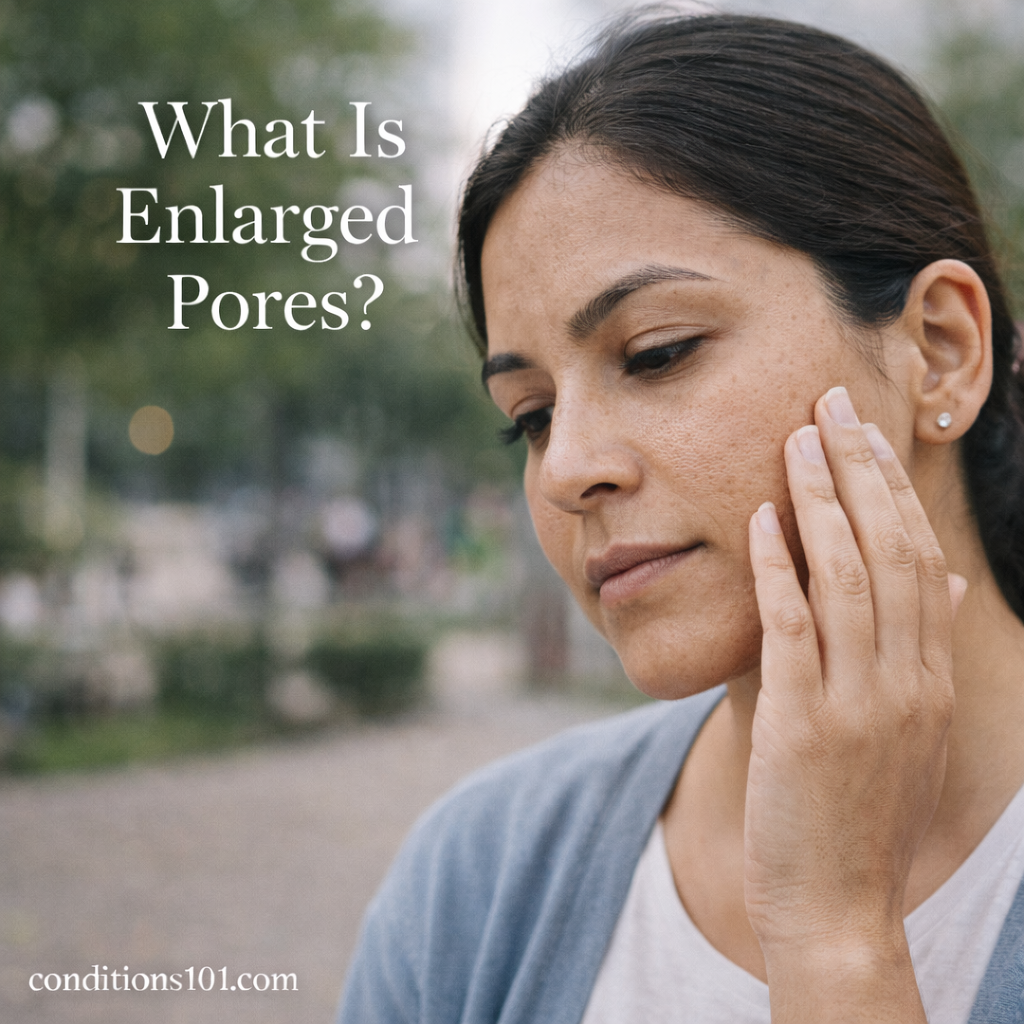
Enlarged pores refer to skin pores that appear more visible or pronounced on the surface of the skin. Pores are small openings in the skin that allow oil and sweat to reach the surface. While all skin has pores, some people notice that theirs look larger, especially on areas like the nose, forehead, and cheeks.
Enlarged pores are a common cosmetic concern and are typically discussed in skin care and appearance education rather than medical contexts. They are not a disease or diagnosis, but a visible skin characteristic influenced by multiple factors.
Understanding Skin Pores
Pores are a natural and essential part of the skin’s structure. Each pore is connected to a hair follicle and a sebaceous gland, which produces oil (sebum). Sebum helps keep the skin moisturized and protected.
Pores vary in size from person to person and even across different areas of the face and body. They may appear more noticeable depending on skin type, age, and environmental influences.
What Causes Pores to Appear Enlarged?
Pores do not physically open and close, but they can appear larger under certain conditions.
Common factors associated with enlarged pores include:
- Increased oil production
- Buildup of oil and debris
- Reduced skin elasticity
- Aging-related skin changes
- Genetics
- Sun exposure
When oil and debris collect inside a pore, the surrounding skin may stretch slightly, making the pore more visible.
Common Areas Where Enlarged Pores Are Noticed
Enlarged pores tend to be more noticeable in areas with higher oil production.
These areas commonly include:
- Nose
- Forehead
- Cheeks near the nose
- Chin
Other parts of the body may also have visible pores, but facial pores receive the most attention due to visibility.
Enlarged Pores and Skin Type
Skin type plays a role in how noticeable pores appear.
Oily Skin
People with oily skin often notice larger-looking pores because higher oil output can make pores more visible.
Combination Skin
Pores may appear enlarged in oilier zones, such as the T-zone, while remaining less visible elsewhere.
Dry Skin
Dry skin may still have visible pores, but they are often less prominent unless skin texture is uneven.
Enlarged Pores and Aging
As skin ages, it naturally loses some firmness and elasticity. This can cause pores to appear more noticeable over time.
Age-related changes that may influence pore appearance include:
- Slower skin cell turnover
- Reduced collagen support
- Thinner skin texture
These changes are gradual and vary widely between individuals.
Enlarged Pores vs. Other Skin Concerns
Enlarged pores are sometimes confused with other skin texture concerns.
- Enlarged pores are visible openings in the skin
- Acne involves inflammation or clogged follicles
- Blackheads are clogged pores with oxidized debris
- Scars are changes in skin structure
Understanding the distinction helps set realistic expectations about appearance-related changes.
Environmental and Lifestyle Factors
External factors may also affect how noticeable pores appear.
Examples include:
- Humid environments
- Pollution exposure
- Skincare habits
- Sun exposure
- Makeup use
These factors can influence skin texture and oil balance, which in turn affects pore visibility.
Why Enlarged Pores Are Common
Enlarged pores are extremely common and occur across all ages, skin tones, and genders. Because pores are a normal part of skin anatomy, some degree of visibility is expected.
Many people notice changes in pore appearance over time due to natural skin changes rather than sudden shifts.
Enlarged Pores Are Not a Medical Condition
Enlarged pores are considered a cosmetic or appearance-related concern, not a medical condition. They do not indicate poor health or skin damage on their own.
Educational discussions around enlarged pores focus on understanding skin structure and appearance rather than diagnosing or treating a condition.
Key Takeaways
- Enlarged pores are pores that appear more visible on the skin’s surface
- Pore size varies naturally between individuals and skin areas
- Oil production, aging, genetics, and environmental factors can influence appearance
- Enlarged pores are most noticeable on the nose, forehead, and cheeks
- They are a common cosmetic concern, not a medical diagnosis
- Some degree of pore visibility is normal and expected