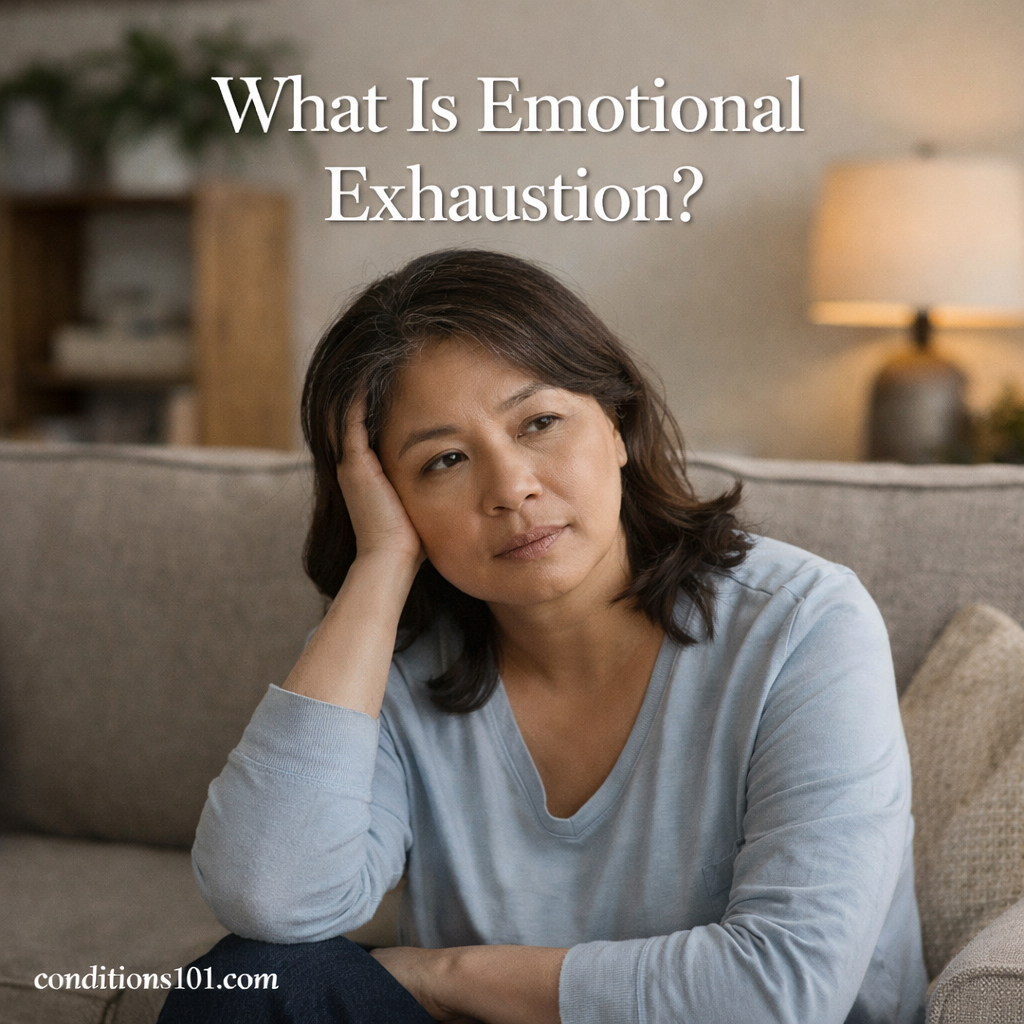
Emotional exhaustion is a state of feeling mentally and emotionally worn down after prolonged periods of stress, pressure, or emotional demands. It is commonly discussed as a component of chronic stress and burnout and reflects a sense of being depleted, overwhelmed, or unable to cope as effectively as before. This article provides an educational overview of emotional exhaustion to help explain what it is, how it develops, and how it can affect daily life, without offering medical advice, diagnosis, or treatment.
How Emotional Exhaustion Is Defined
Emotional exhaustion refers specifically to the emotional and mental strain that builds up over time, rather than physical tiredness alone. While it may occur alongside physical fatigue, it is primarily characterized by a reduced capacity to manage emotions, stress, and interpersonal demands.
It is often described as:
- Feeling drained or “used up” emotionally
- Having little emotional energy left for work, relationships, or responsibilities
- Experiencing ongoing mental fatigue rather than short-term stress
Emotional exhaustion is frequently discussed in workplace, caregiving, and mental health research, particularly in relation to burnout.
Emotional Exhaustion vs. General Fatigue
Although emotional exhaustion and general fatigue can feel similar, they are not the same.
General Fatigue
General fatigue typically involves:
- Physical tiredness
- Low energy that improves with rest or sleep
- Temporary exhaustion after exertion or lack of rest
Emotional Exhaustion
Emotional exhaustion more often involves:
- Persistent mental and emotional tiredness
- Feeling overwhelmed even after rest
- Reduced motivation or emotional engagement
Someone may feel emotionally exhausted even if they are physically rested.
Common Contributors to Emotional Exhaustion
Emotional exhaustion usually develops gradually as stress accumulates over time. It rarely has a single cause.
Prolonged Stress
Ongoing stress is one of the most common contributors. This may involve:
- High workloads or constant pressure
- Long-term uncertainty or responsibility
- Lack of time to recover emotionally
When stress does not ease, emotional resources may become depleted.
Emotional Demands
Situations that require sustained emotional effort can increase the risk of emotional exhaustion, such as:
- Caregiving roles
- Customer-facing or service-oriented work
- Managing conflict or emotional needs of others
Constant emotional engagement without adequate recovery can be draining.
Work and Life Imbalance
Limited boundaries between responsibilities and personal time may contribute, including:
- Difficulty disconnecting from work
- Feeling “always on” or reachable
- Insufficient time for rest or personal interests
Over time, this imbalance can erode emotional resilience.
Environmental and Social Factors
Additional influences may include:
- Lack of social support
- Financial or family pressures
- High expectations with limited control
These factors can compound stress and contribute to emotional fatigue.
Common Signs of Emotional Exhaustion
Emotional exhaustion can affect how a person thinks, feels, and functions day to day. Experiences vary, but commonly discussed signs include:
- Feeling emotionally numb or detached
- Increased irritability or frustration
- Difficulty concentrating or making decisions
- Reduced sense of accomplishment or purpose
- Feeling overwhelmed by small tasks
These experiences often develop gradually rather than appearing suddenly.
Emotional Exhaustion and Daily Life

Emotional exhaustion can influence multiple areas of everyday life, even outside the original source of stress.
Work and Productivity
At work, emotional exhaustion may be associated with:
- Lower motivation
- Decreased engagement or satisfaction
- Difficulty managing workload or deadlines
Tasks that once felt manageable may start to feel overwhelming.
Relationships and Social Interaction
Emotionally exhausted individuals may experience:
- Withdrawal from social activities
- Reduced patience in conversations
- Feeling disconnected from others
This can affect personal and professional relationships over time.
Personal Well-Being
In daily routines, emotional exhaustion may contribute to:
- Reduced enjoyment of activities
- Difficulty relaxing
- A general sense of mental overload
These effects can persist if underlying stressors remain unchanged.
Emotional Exhaustion and Burnout
Emotional exhaustion is often discussed as a central component of burnout, particularly in occupational settings. Burnout is commonly described as involving three broad elements:
- Emotional exhaustion
- Reduced sense of effectiveness or accomplishment
- Emotional distancing or detachment
While emotional exhaustion can occur on its own, it is frequently a key feature in broader burnout discussions.
Common Misunderstandings About Emotional Exhaustion
Misconceptions can make emotional exhaustion harder to recognize or discuss openly.
It Is Not the Same as Temporary Stress
Feeling stressed during a busy period is common. Emotional exhaustion usually reflects prolonged strain without sufficient recovery.
It Is Not a Personal Weakness
Emotional exhaustion is often linked to external demands and circumstances rather than a lack of resilience or effort.
Rest Alone May Not Fully Resolve It
While rest is important, emotional exhaustion often relates to ongoing stressors that may continue unless conditions change.
Why Understanding Emotional Exhaustion Matters
Understanding emotional exhaustion can help promote healthier conversations about stress, work demands, and emotional well-being. Clear information supports:
- Greater awareness of mental and emotional limits
- Reduced stigma around emotional fatigue
- More realistic expectations about productivity and coping
Recognizing emotional exhaustion as a common human experience can encourage more supportive environments at work and in daily life.
Key Takeaways
- Emotional exhaustion is a state of prolonged emotional and mental fatigue.
- It often develops from ongoing stress and emotional demands.
- It differs from general physical tiredness.
- Emotional exhaustion can affect work, relationships, and daily functioning.
- It is commonly discussed as a core element of burnout.