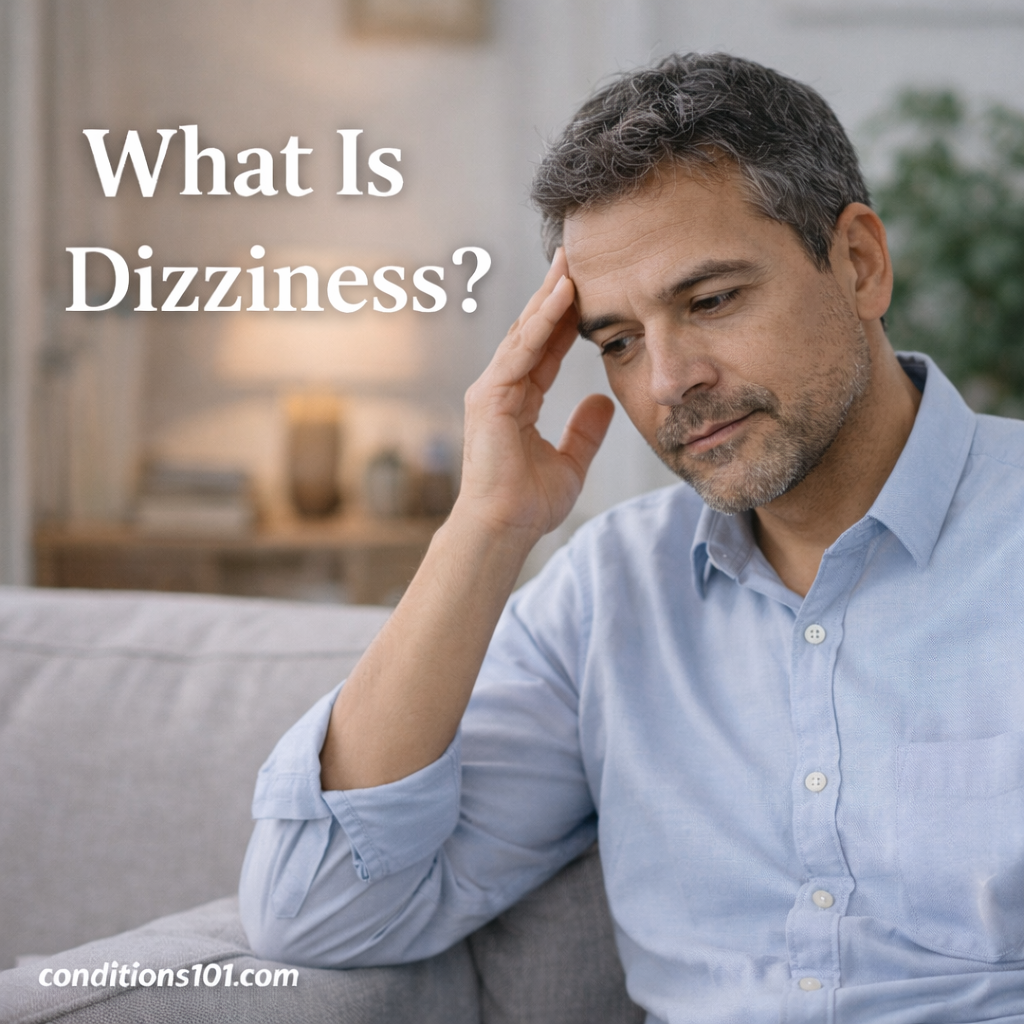
Dizziness is a general term used to describe a range of sensations related to balance, orientation, or perception of movement. People may use the word “dizzy” to describe feeling lightheaded, unsteady, off-balance, or as though their surroundings are moving. Because dizziness can feel different from person to person, it is considered a broad, descriptive symptom rather than a single condition.
This article provides an educational overview of dizziness, including what it means, how it is commonly described, typical contributing factors, and how it may affect daily life. It is for general informational purposes only and does not provide medical advice, diagnosis, or treatment.
Understanding Balance and Sensory Input
The body’s sense of balance relies on multiple systems working together. These systems help the brain understand where the body is in space.
Key systems involved in balance include:
- The inner ear, which helps detect motion and position
- Vision, which provides visual orientation
- Sensory input from muscles and joints
- The brain, which processes and integrates signals
When these systems do not work together smoothly, sensations commonly described as dizziness may occur.
How Dizziness Is Commonly Described
Dizziness can involve several different sensations. People often use the same word to describe experiences that feel quite different.
Common Descriptions of Dizziness
- Lightheadedness or feeling faint
- A sense of spinning or movement
- Feeling off-balance or unsteady
- A floating or woozy sensation
- Difficulty focusing or feeling disoriented
Some sensations may last only a few seconds, while others may persist longer.
Types of Sensations Often Labeled as Dizziness
Although dizziness is a general term, educational discussions often separate it into different experience patterns.
Lightheadedness
- Feeling faint or as though one might pass out
- Often noticed when standing up quickly
Vertigo-Like Sensations
- Feeling as if the room or body is spinning
- Often associated with movement or changes in head position
Balance-Related Unsteadiness
- Feeling wobbly or unsure while walking or standing
- May be described as loss of stability
These descriptions help clarify experiences but do not indicate a specific cause.
When Dizziness Tends to Occur
Dizziness may appear in specific situations or during certain activities.
Common situations include:
- Standing up quickly
- Turning the head suddenly
- Walking in crowded or visually busy environments
- Looking at screens for long periods
- Being dehydrated or overtired
Patterns vary widely between individuals.
Factors Commonly Associated With Dizziness
Dizziness does not usually have a single cause. Educational sources often describe it as being linked to a combination of physical, environmental, and lifestyle factors.
Physical and Sensory Factors
- Changes in inner ear function
- Visual strain or changes in vision
- Blood pressure fluctuations
- Fatigue or lack of sleep
Lifestyle and Environmental Factors
- Dehydration
- Stress or anxiety
- Skipping meals
- Prolonged screen exposure
Not everyone with these factors experiences dizziness, but they are commonly discussed in general explanations.
Dizziness and Daily Life
For some individuals, dizziness is brief and occasional. For others, it may affect comfort or confidence during daily activities.
Possible Daily Impacts
- Caution when standing or walking
- Difficulty concentrating during episodes
- Avoidance of certain movements or environments
- Reduced confidence with balance-related activities
The impact on daily life can range from minimal to more noticeable depending on frequency and intensity.
Dizziness Across Different Age Groups
Dizziness can affect people of all ages, though experiences may differ.
Younger Adults
- Often linked to dehydration, fatigue, or stress
- May be temporary and situational
Middle-Aged Adults
- May notice dizziness with busy schedules or screen use
- Balance awareness may change gradually
Older Adults
- May experience more frequent balance-related sensations
- Dizziness may overlap with other age-related changes
This article focuses on general patterns rather than individual evaluation.
Dizziness vs. Balance Disorders
Dizziness is sometimes confused with balance disorders, but they are not the same.
Dizziness
- Describes a sensation or experience
- Can have many possible contributing factors
Balance Disorders
- Involve ongoing difficulty maintaining balance
- Often require professional evaluation to define
Because experiences can overlap, clear distinction often involves medical assessment.
Frequently Asked Questions About Dizziness
Is dizziness common?
Yes. Dizziness is widely discussed as a common sensory experience across many age groups.
Can dizziness come and go?
Yes. Some people experience brief, occasional episodes, while others notice recurring sensations.
Is dizziness always serious?
Not necessarily. Dizziness can occur for many reasons, some of which are temporary or situational.
Key Takeaways
- Dizziness is a broad term describing balance or orientation-related sensations
- Experiences vary widely between individuals
- Multiple body systems contribute to balance
- Lifestyle and environmental factors are commonly associated
- Educational understanding supports informed conversations with professionals