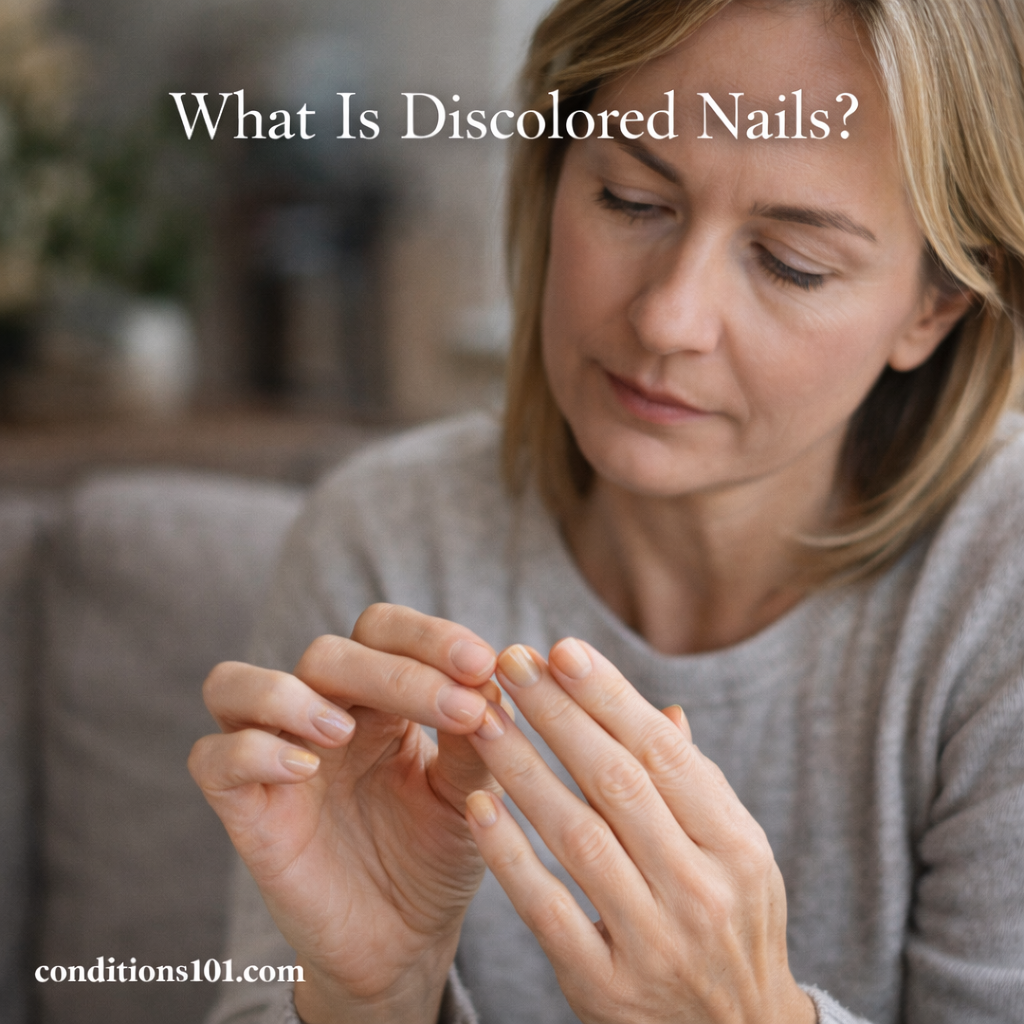
Discolored nails refers to a change in the natural color of fingernails or toenails. Instead of appearing clear, pinkish, or evenly toned, nails may look yellow, white, brown, green, blue, or have darker or lighter patches. Nail discoloration is a descriptive term, not a diagnosis, and it is commonly used in general health and appearance education.
This article explains what discolored nails are, how they are commonly described, the different types of nail color changes, and why nail color can vary. It is for informational purposes only and does not provide medical advice, diagnosis, or treatment.
Understanding Nail Color
Healthy nails are usually:
- Pale pink or translucent
- Even in color
- Free from unusual spots or streaks
However, nail color can change over time. These changes may be temporary or longer-lasting and can affect one nail or multiple nails.
Discolored nails simply means that the nail’s appearance differs from what is considered typical for that individual.
Common Types of Nail Discoloration
Nail discoloration can appear in different shades and patterns. Each type describes appearance only, not cause.
Yellow Nails
Yellowing is one of the most commonly noticed nail color changes. Nails may appear pale yellow or deeper golden in tone and may affect part or all of the nail.
White Discoloration
White changes may show up as:
- Small white spots
- Lines or streaks
- A more widespread whitening of the nail surface
These changes can be localized or cover most of the nail.
Brown or Black Discoloration
Brown or darker discoloration may appear as:
- Vertical or horizontal bands
- Spots or patches
- Darkened areas under the nail
The color intensity can range from light brown to nearly black.
Green or Blue Tones
Greenish or bluish shades are less common but may be noticed under certain conditions or exposures. These colors often appear uneven or patchy.
Discolored Nails vs. Natural Nail Variation
Not all nail color differences are considered discoloration.
Natural Variations
Normal nail appearance can vary due to:
- Skin tone
- Age
- Nail thickness
- Lighting conditions
Some people naturally have nails that appear lighter or darker without it being considered abnormal.
Discoloration
Discolored nails usually refer to a noticeable change from a person’s usual nail color, rather than a lifelong or consistent trait.
How Nail Discoloration May Appear

Discoloration can present in different ways, such as:
- Affecting one nail or many nails
- Appearing gradually or suddenly
- Staying consistent or changing over time
The pattern and extent of discoloration are often what people notice first.
External Factors That Can Affect Nail Color
Nails are exposed to the environment and may change color due to external influences.
Examples include:
- Nail polish or nail treatments
- Household chemicals or cleaning products
- Frequent exposure to water
- Dyes or pigments
In some cases, discoloration fades once the external factor is removed.
Nail Growth and Color Changes
Nails grow slowly, especially toenails. Because of this:
- Color changes may take time to fully appear
- Improvements in color may also take months
- Discoloration can seem persistent even after the cause has changed
Understanding nail growth helps explain why discoloration often does not resolve quickly.
Discolored Nails and Overall Appearance
Nail appearance is often associated with grooming and personal care. Changes in nail color may affect how someone feels about the look of their hands or feet, even when there is no discomfort or functional issue.
In appearance-focused discussions, discolored nails are commonly addressed as a cosmetic concern rather than a medical one.
How the Term “Discolored Nails” Is Used
The phrase “discolored nails” is used because it is:
- Simple and descriptive
- Easy to understand
- Neutral in tone
It helps describe what is visible without assuming an underlying cause or condition.
When Nail Discoloration Is Discussed
In educational content, nail discoloration is often mentioned in discussions about:
- Nail care and hygiene
- Cosmetic appearance
- Changes noticed during daily routines
The term allows people to describe what they see before exploring possible explanations.
Key Takeaways
- Discolored nails refer to changes in nail color or tone
- Common colors include yellow, white, brown, green, or blue
- The term describes appearance, not diagnosis
- Discoloration may affect one or multiple nails
- Nail color changes can be temporary or longer-lasting
Final Thoughts
Discolored nails are a common and noticeable change in nail appearance. The term simply describes a difference in color from what is typical and does not explain why the change occurs. Understanding how nail discoloration is described can help make discussions about nail health and appearance clearer and more approachable.
This article is intended for general educational purposes only and does not provide medical advice, diagnosis, or treatment.