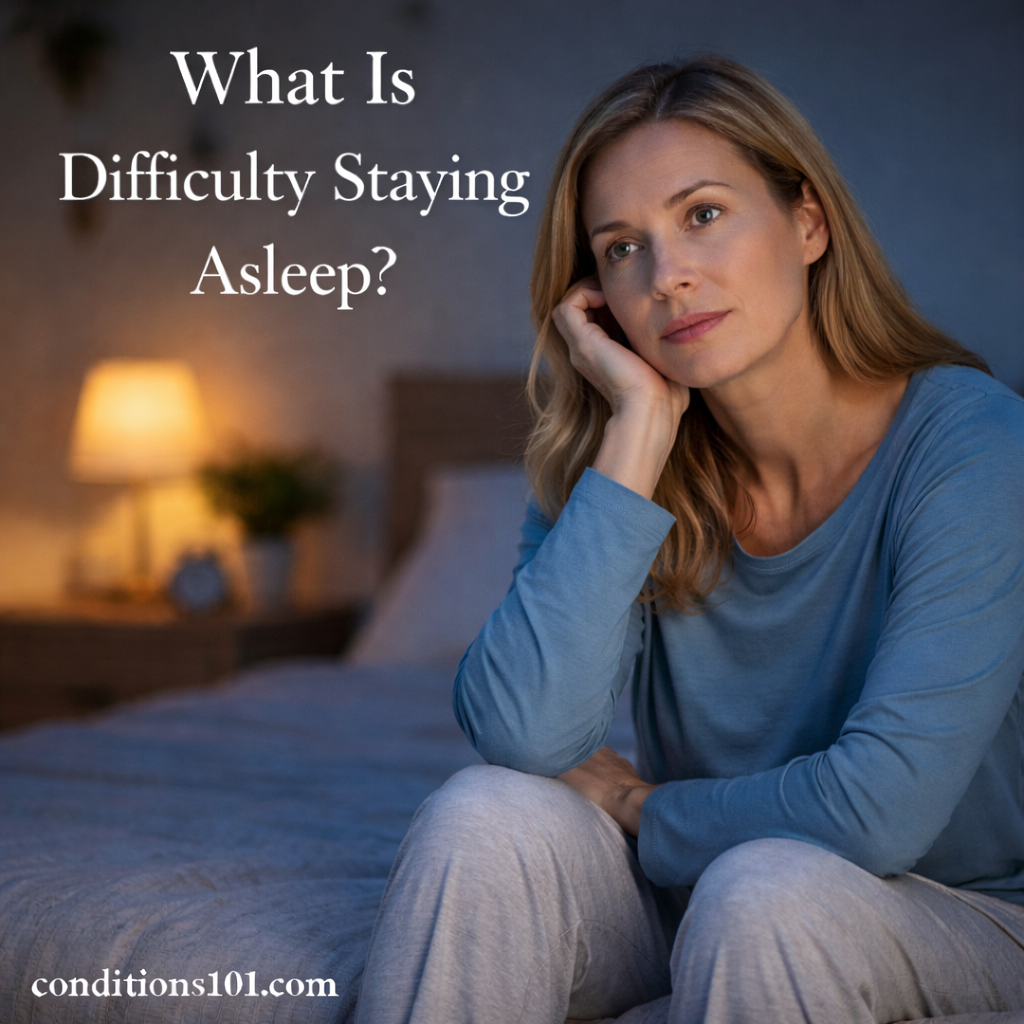
Difficulty staying asleep refers to trouble remaining asleep throughout the night after initially falling asleep. People with this experience may wake up frequently, wake up too early, or have difficulty returning to sleep once awakened. As a result, sleep may feel fragmented or unrefreshing, even if total time in bed seems adequate.
This article provides a clear, educational overview of what difficulty staying asleep is. It is intended for general information only and does not offer medical advice, diagnosis, or treatment.
Understanding Difficulty Staying Asleep
Sleep naturally occurs in cycles that repeat several times during the night. Brief awakenings between cycles are normal and often not remembered. Difficulty staying asleep becomes noticeable when awakenings are frequent, prolonged, or disruptive enough to affect overall rest.
Unlike difficulty falling asleep, which affects the beginning of the night, difficulty staying asleep focuses on interruptions during sleep.
How Difficulty Staying Asleep Is Commonly Described
People who struggle to stay asleep often describe similar nighttime patterns.
Common descriptions include:
- Waking up multiple times during the night
- Waking too early and being unable to fall back asleep
- Feeling alert or restless after nighttime awakenings
- Light or easily disrupted sleep
- Sleep that feels shallow or fragmented
These experiences may occur occasionally or repeatedly over time.
Common Factors Associated With Difficulty Staying Asleep
Difficulty staying asleep does not have a single cause. It is often influenced by a combination of physical, environmental, and lifestyle-related factors.
Stress and Mental Activity
Ongoing stress or racing thoughts can make it harder to relax after waking during the night, leading to longer periods of wakefulness.
Sleep Environment Disruptions
Environmental factors that may interrupt sleep include:
- Noise
- Light exposure
- Temperature changes
- An uncomfortable mattress or bedding
Even small disruptions can lead to repeated awakenings for some individuals.
Body Sensations or Discomfort
Physical sensations such as restlessness, discomfort, or the need to change positions may contribute to nighttime awakenings.
Changes in Sleep Schedule
Irregular bedtimes, shift work, or changes in routine can disrupt the body’s internal sleep rhythm, increasing the likelihood of fragmented sleep.
Difficulty Staying Asleep vs. Difficulty Falling Asleep
Although these sleep challenges are related, they describe different experiences.
Key differences include:
- Difficulty falling asleep involves delayed sleep onset
- Difficulty staying asleep involves repeated awakenings
- A person may experience one, the other, or both
- The causes and patterns may differ
Understanding the distinction helps clarify how sleep is being disrupted.
How Difficulty Staying Asleep Feels the Next Day

Fragmented sleep often affects how a person feels during waking hours.
Common daytime effects include:
- Feeling tired despite spending enough time in bed
- Reduced concentration or mental clarity
- Low energy levels
- Irritability or mood changes
- A sense of not feeling fully rested
The impact varies depending on how often sleep is disrupted and how long awakenings last.
Who Commonly Experiences Difficulty Staying Asleep?
Difficulty staying asleep can affect people of all ages. It is commonly reported among:
- Adults experiencing ongoing stress
- Individuals with irregular schedules
- Older adults, who may experience lighter sleep
- People whose sleep is easily disturbed by their environment
It is a widespread experience and not limited to a specific group.
Can Difficulty Staying Asleep Be Temporary?
Yes. Difficulty staying asleep may be temporary and linked to short-term stress, environmental changes, or routine disruptions. In other cases, it may occur more frequently and follow a recurring pattern.
Key Takeaways About Difficulty Staying Asleep
- Difficulty staying asleep involves repeated or prolonged nighttime awakenings
- Sleep may feel fragmented or unrefreshing
- Environmental, mental, and routine factors often play a role
- It differs from difficulty falling asleep
- Experiences and impact vary widely between individuals