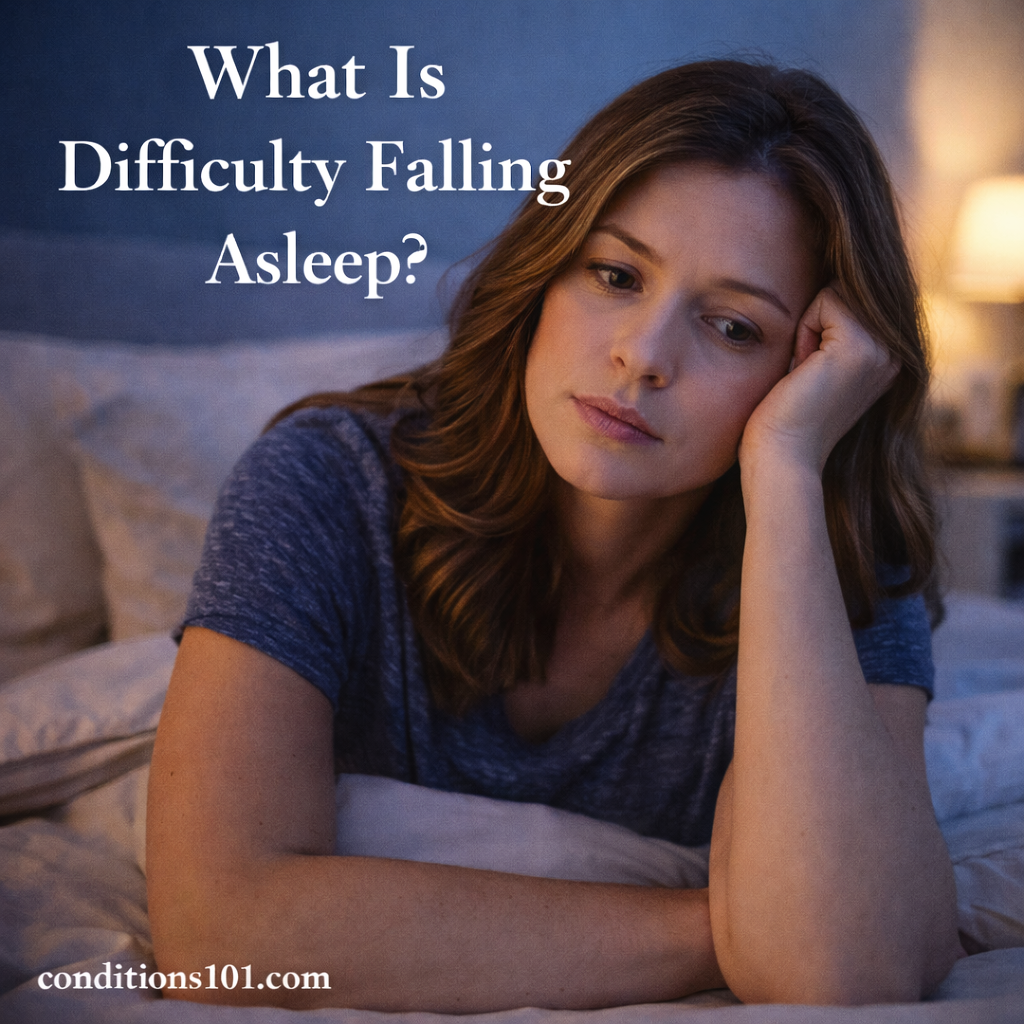
Difficulty falling asleep refers to persistent trouble starting sleep at night, even when a person feels tired and has the opportunity to rest. It commonly involves lying awake for long periods, racing thoughts, or an inability to relax enough to drift into sleep. This experience can happen occasionally or occur regularly over time.
This article provides a clear, educational overview of what difficulty falling asleep is. It is intended for general information only and does not offer medical advice, diagnosis, or treatment.
Understanding Difficulty Falling Asleep
Falling asleep is a process that involves both physical relaxation and mental calm. When this process is disrupted, it can take longer than expected to transition from wakefulness to sleep.
While everyone has occasional nights of delayed sleep, difficulty falling asleep becomes more notable when it happens frequently and affects overall rest, energy levels, or daily functioning.
How Difficulty Falling Asleep Is Described
Difficulty falling asleep is typically described by how long it takes to fall asleep after going to bed.
Common descriptions include:
- Taking more than 30 minutes to fall asleep on a regular basis
- Feeling physically tired but mentally alert at bedtime
- Lying awake with an active or restless mind
- Repeatedly checking the clock while trying to sleep
Experiences vary, and not all individuals describe the same patterns.
Common Causes and Contributing Factors
Difficulty falling asleep does not have a single cause. It is often influenced by a combination of lifestyle, environmental, and mental factors.
Mental Activity and Stress
An active mind at bedtime is one of the most common contributors. Ongoing stress, worry, or overthinking can make it hard for the body to shift into a relaxed state.
Sleep Environment
Environmental factors may affect how easily sleep begins, such as:
- Excessive noise
- Bright or artificial lighting
- Uncomfortable bedding or room temperature
Daily Habits and Routines
Certain habits may interfere with falling asleep, including:
- Irregular sleep schedules
- Late-night screen use
- Stimulating activities close to bedtime
- Consuming caffeine late in the day
Body Rhythm Changes
The body follows an internal clock that regulates sleep and wake cycles. Disruptions to this rhythm, such as travel, shift work, or inconsistent bedtimes, may make it harder to fall asleep.
Difficulty Falling Asleep vs. Poor Sleep Quality
Difficulty falling asleep specifically refers to the start of sleep, while poor sleep quality relates to how restful sleep feels overall.
Key differences include:
- Difficulty falling asleep focuses on delayed sleep onset
- Poor sleep quality may involve frequent waking or unrefreshing sleep
- A person may fall asleep quickly but still experience poor sleep quality
Both experiences can occur together or separately.
Common Signs and Experiences
People who have difficulty falling asleep often report similar nighttime experiences.
These may include:
- Tossing and turning in bed
- Feeling tense or restless
- Frustration about not being able to fall asleep
- Feeling alert despite physical tiredness
Over time, these experiences may influence mood, focus, or daytime energy.
How Difficulty Falling Asleep Affects Daily Life
When falling asleep takes longer than expected on a regular basis, it can affect daily routines and overall well-being.
Possible effects include:
- Feeling tired or groggy during the day
- Reduced concentration or focus
- Lower energy levels
- Increased reliance on naps or caffeine
The impact varies depending on how often and how long sleep delays occur.
Who Commonly Experiences Difficulty Falling Asleep?
Difficulty falling asleep can affect people of all ages and backgrounds. It is commonly reported among:
- Individuals experiencing ongoing stress
- People with irregular schedules
- Students and working adults
- Those who use electronic devices late at night
It is a widespread experience and not limited to a specific group.
Can Difficulty Falling Asleep Be Temporary?
Yes. Difficulty falling asleep may be temporary and linked to short-term changes such as stress, travel, or routine disruptions. For others, it may occur more frequently and follow a recurring pattern.
Key Takeaways About Difficulty Falling Asleep
- Difficulty falling asleep involves trouble starting sleep at bedtime
- It often includes lying awake despite feeling tired
- Multiple lifestyle and environmental factors may contribute
- It differs from other sleep issues such as frequent waking
- Experiences and severity vary from person to person