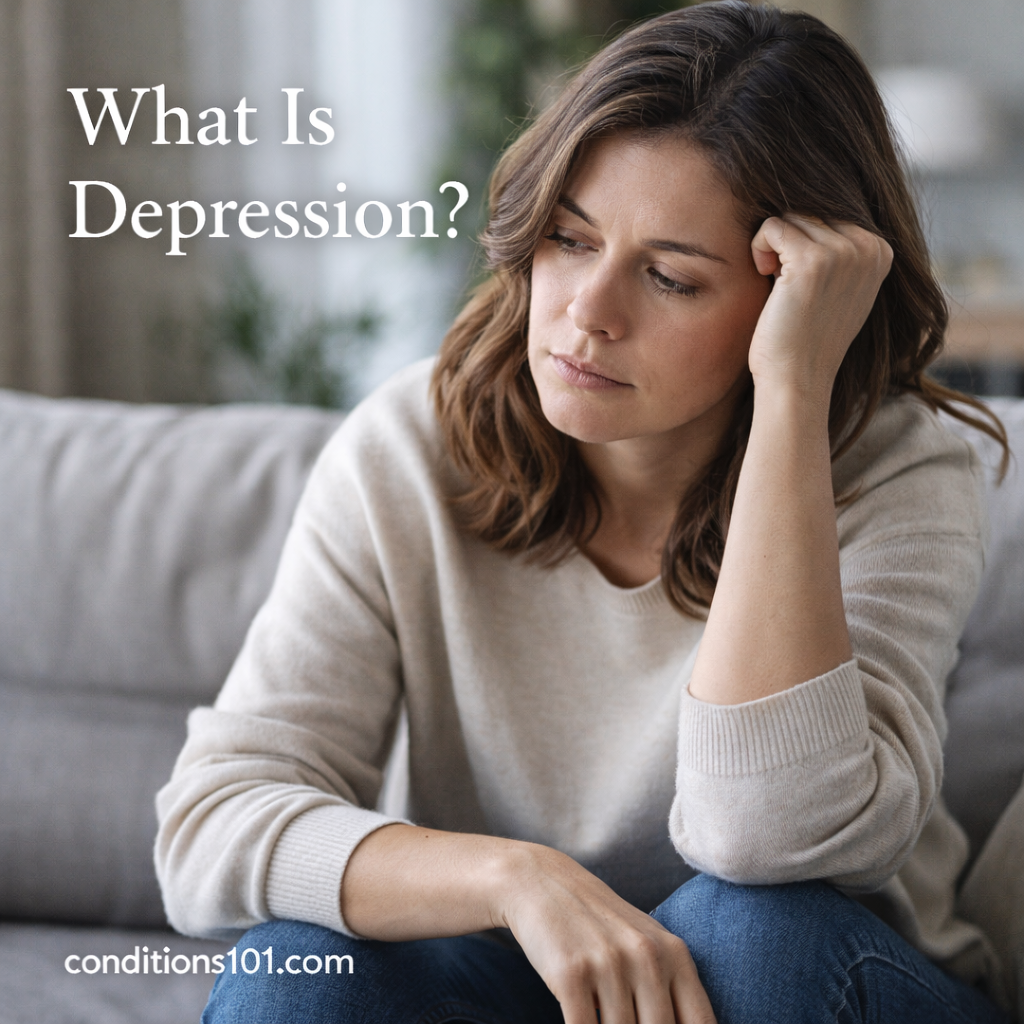
Depression is a mental health condition that affects how a person feels, thinks, and experiences daily life. It is often described as a persistent low mood or loss of interest in activities that were once enjoyable. Unlike temporary sadness or emotional reactions to specific events, depression tends to last longer and can influence many areas of life.
Depression exists on a wide spectrum. Some people experience mild but ongoing symptoms, while others may notice more intense or disruptive changes. This article provides an educational overview of depression for general informational purposes only.
Understanding Mood and Emotional Health
Mood is influenced by a combination of biological, psychological, and environmental factors. Everyone experiences emotional ups and downs, but depression involves patterns that go beyond typical mood changes.
Emotional health generally includes:
- The ability to experience a range of emotions
- Emotional responses that align with life events
- Recovery from stress or disappointment over time
In depression, emotional balance may be disrupted in ways that persist even when circumstances improve.
What Happens in Depression?
Depression can involve changes in brain chemistry, emotional processing, and thought patterns. These changes may affect motivation, energy, and outlook.
Common underlying features often discussed include:
- Reduced activity in areas of the brain related to reward and motivation
- Changes in how emotions are processed
- Persistent negative or self-critical thought patterns
These changes help explain why depression is more than simply “feeling sad.”
Common Signs and Experiences Associated With Depression
Depression can affect emotions, thoughts, physical sensations, and behavior. Not everyone experiences the same symptoms or intensity.
Emotional and Cognitive Experiences
- Ongoing sadness or emptiness
- Loss of interest or pleasure
- Feelings of hopelessness or pessimism
- Difficulty concentrating or making decisions
Physical and Behavioral Experiences
- Low energy or fatigue
- Changes in sleep patterns
- Changes in appetite or weight
- Slower movement or speech
Symptoms may develop gradually or appear more noticeably, depending on the individual.
Types of Depression
Depression is an umbrella term that includes several recognized patterns.
Major Depressive Episodes
These involve persistent symptoms that interfere with daily functioning for an extended period.
Persistent Depressive Patterns
Some people experience long-lasting, lower-level symptoms that continue for years.
Situational or Reactive Depression
Depressive symptoms may arise following significant life events or ongoing stressors.
Each type varies in duration, intensity, and impact.
Who Can Experience Depression?
Depression can affect people of all ages, backgrounds, and life circumstances.
Factors often associated with depression include:
- Family history of mood conditions
- Major life changes or ongoing stress
- Social isolation
- Biological or environmental influences
Having risk factors does not guarantee depression, and depression can occur without a clear cause.
How Depression Can Affect Daily Life

Depression may influence daily routines, relationships, and productivity.
Possible effects include:
- Difficulty maintaining work or school responsibilities
- Reduced social interaction
- Loss of motivation for daily tasks
- Feeling overwhelmed by routine decisions
The impact varies widely, and some people may continue daily activities while feeling internally distressed.
Depression Over Time
Depression may be temporary, recurring, or long-lasting. Some individuals experience episodes with periods of improvement, while others notice more persistent symptoms.
Changes over time may be influenced by:
- Life events and stress levels
- Support systems
- Individual coping patterns
- Natural emotional fluctuations
Because experiences differ, depression does not follow a single predictable path.
Common Misconceptions About Depression
There are several misunderstandings surrounding depression.
Depression Is Just Feeling Sad
Depression involves emotional, cognitive, and physical changes, not just sadness.
Depression Can Be Fixed by Willpower Alone
Motivation and effort alone are often not enough to resolve depression.
Depression Always Has an Obvious Cause
Some people experience depression without a clear external trigger.
Key Takeaways
- Depression is a condition that affects mood, thoughts, and daily functioning
- It involves more than temporary sadness
- Symptoms can be emotional, cognitive, physical, or behavioral
- People of all ages can experience depression
- Depression experiences vary widely