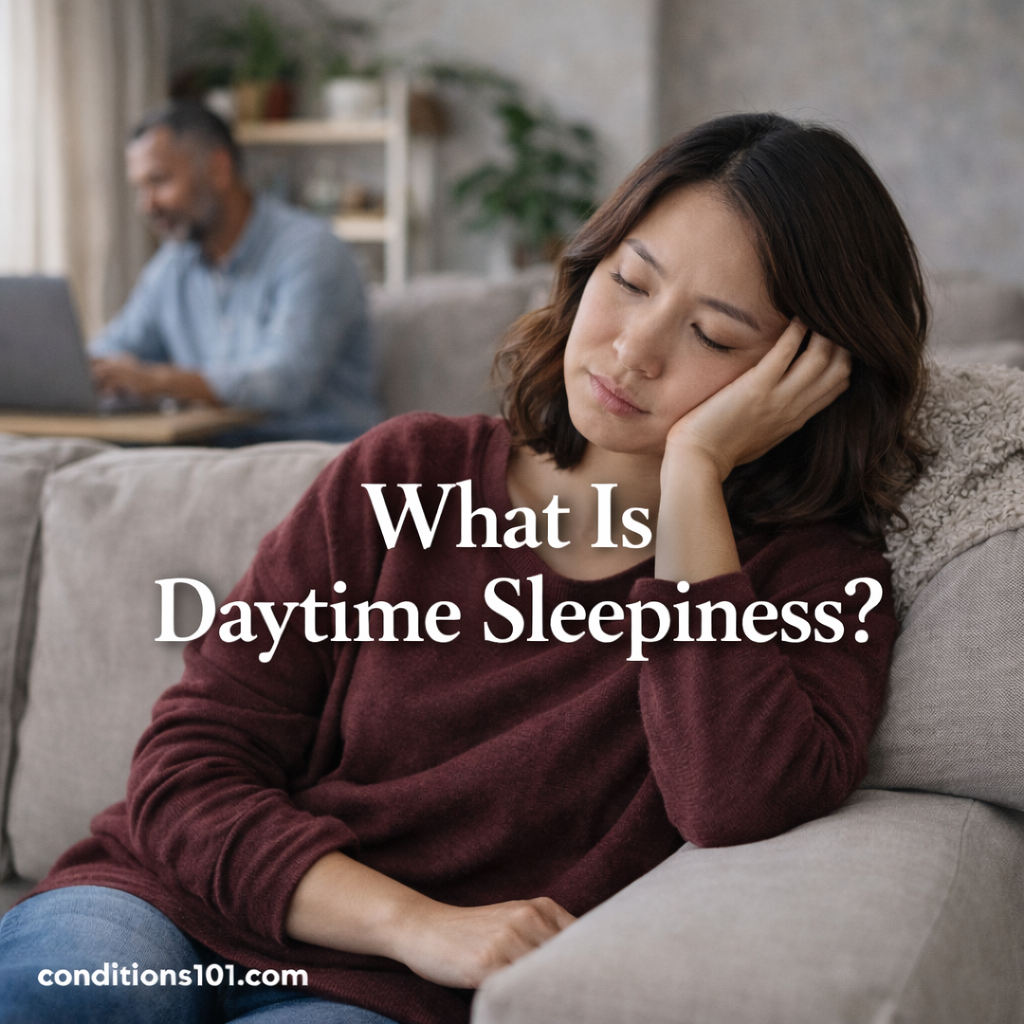
Daytime sleepiness refers to a persistent feeling of tiredness or an increased urge to fall asleep during waking hours, especially when a person is expected to be alert. It goes beyond feeling mildly tired after a late night and can interfere with daily activities, concentration, and overall quality of life.
This article provides an educational overview of what daytime sleepiness is, how it commonly presents, possible contributing factors, and how it may affect everyday functioning. The information is for general education only and does not provide medical advice, diagnosis, or treatment.
Understanding Daytime Sleepiness
Feeling sleepy during the day is not always abnormal. Short-term fatigue can occur due to temporary factors like a poor night’s sleep or increased activity.
Daytime sleepiness becomes more notable when it:
- Occurs regularly or daily
- Appears despite spending adequate time in bed
- Interferes with normal daytime activities
- Makes it difficult to stay awake in quiet or low-stimulation situations
How Daytime Sleepiness Feels
Daytime sleepiness can vary in intensity and presentation from person to person.
Common experiences include:
- Strong urges to nap during the day
- Difficulty staying awake while reading, watching TV, or sitting quietly
- Reduced alertness or slower reaction times
- Trouble concentrating or staying focused
- Feeling mentally foggy or drained
Some people may not feel physically exhausted but still struggle to maintain alertness.
Common Situations Where Daytime Sleepiness Appears
Daytime sleepiness often becomes more noticeable during activities that require sustained attention or minimal movement.
Examples include:
- Sitting at a desk or working on a computer
- Attending meetings or classes
- Driving for long periods
- Watching television or reading
- Riding as a passenger in a vehicle
These situations can highlight underlying issues with alertness.
Possible Contributors to Daytime Sleepiness
Daytime sleepiness can be influenced by many factors, sometimes occurring together.
Common contributors include:
- Insufficient or irregular sleep
- Poor sleep quality
- Disruptions to normal sleep schedules
- Extended mental or physical demands
- Lifestyle factors such as stress or inconsistent routines
In some cases, sleepiness may persist even when sleep duration seems adequate.
Daytime Sleepiness vs. General Fatigue
Although often used interchangeably, daytime sleepiness and fatigue are not exactly the same.
General distinctions include:
- Daytime sleepiness involves a strong urge to fall asleep
- Fatigue often refers to low energy without necessarily feeling sleepy
- Sleepiness improves with sleep, while fatigue may not
- Both can affect focus, mood, and performance
Understanding this difference helps clarify how symptoms are experienced.
How Daytime Sleepiness Can Affect Daily Life

Persistent daytime sleepiness can influence many areas of everyday functioning.
Possible effects include:
- Reduced productivity or performance
- Difficulty concentrating or remembering information
- Increased risk of errors or accidents
- Irritability or mood changes
- Reduced motivation for social or physical activities
The impact varies depending on severity and individual circumstances.
Is Daytime Sleepiness Common?
Daytime sleepiness is relatively common and can affect people of all ages. Occasional sleepiness is often part of normal life, especially during busy or stressful periods.
When sleepiness is frequent or ongoing, it may signal an underlying issue that deserves attention.
When Professional Evaluation Matters
This article is for educational purposes only. Persistent or excessive daytime sleepiness that interferes with daily life should be evaluated by a qualified professional who can assess individual circumstances.
Key Points to Remember
- Daytime sleepiness involves difficulty staying awake during the day
- It goes beyond occasional tiredness
- Symptoms can include strong urges to nap and reduced alertness
- Many lifestyle and sleep-related factors can contribute
- Persistent sleepiness can affect safety, focus, and daily routines
Understanding what daytime sleepiness is can help build awareness around sleep health and support informed conversations about rest, alertness, and well-being.