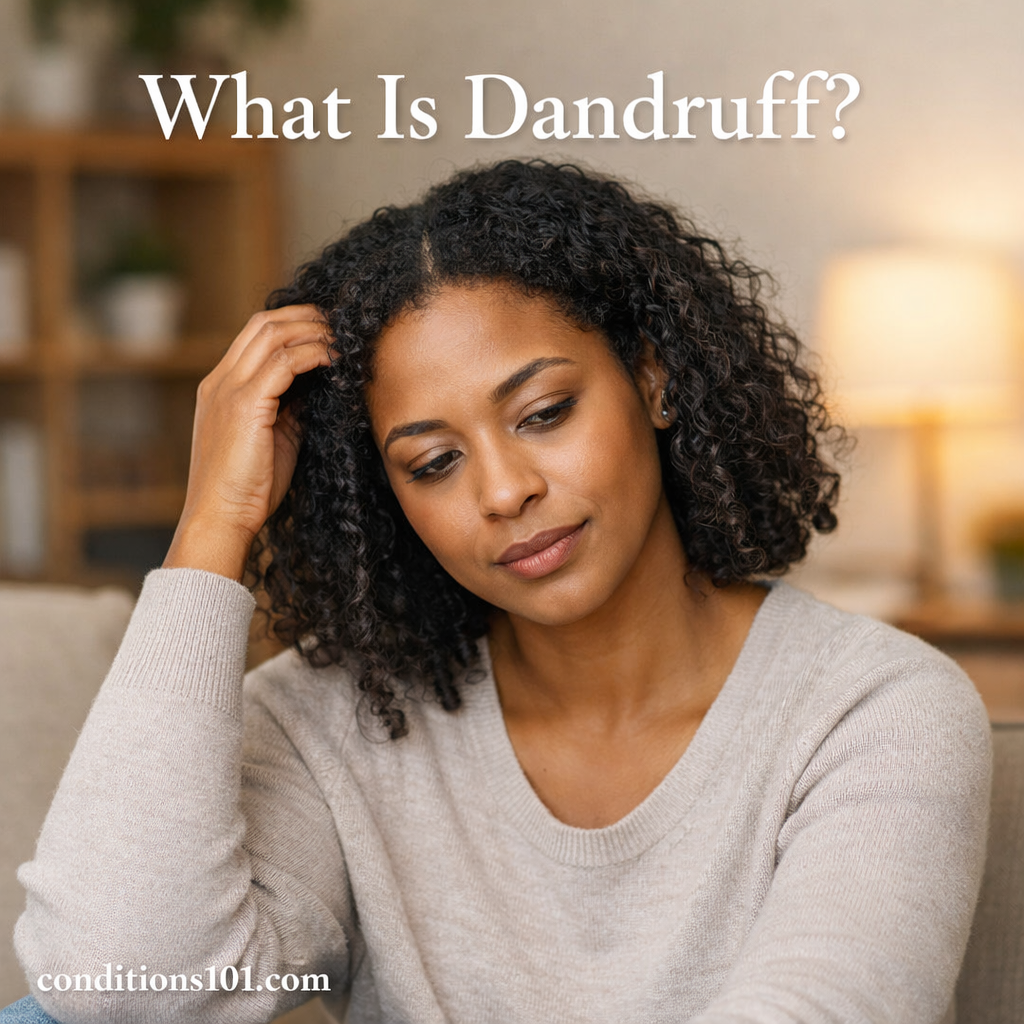
Dandruff is a common scalp condition that causes small pieces of skin to flake off the scalp. These flakes are often visible in the hair or on clothing, particularly darker fabrics. While dandruff can be inconvenient or uncomfortable for some people, it is generally harmless and widely experienced.
This article provides a clear, educational overview of what dandruff is. It is intended for general information only and does not offer medical advice, diagnosis, or treatment.
Understanding Dandruff
The scalp naturally sheds skin cells as part of normal skin renewal. Dandruff occurs when this process happens more quickly than usual or when shed skin cells clump together and become visible.
Dandruff can affect people of all ages and hair types. The severity may range from mild, occasional flaking to more persistent and noticeable flakes. Symptoms may also vary over time.
Common features of dandruff include:
- White or yellowish flakes on the scalp or in the hair
- Flakes that fall onto shoulders or clothing
- Mild itchiness or a tight sensation on the scalp
- Symptoms that may worsen during colder or drier weather
What Causes Dandruff?
There is no single cause of dandruff. Instead, it is associated with several factors that influence how the scalp functions.
Natural Skin Cell Turnover
Skin cells on the scalp are constantly replaced. When this turnover happens too rapidly, dead skin cells can accumulate and shed in visible flakes rather than remaining unnoticed.
Scalp Oil Production
The scalp produces natural oils, known as sebum, to protect and moisturize the skin. In some individuals, excess oil can cause dead skin cells to stick together, making flakes more visible.
Sensitivity to Scalp Microorganisms
The scalp is home to naturally occurring microorganisms, including certain yeast-like fungi. Some people may be more sensitive to these organisms, which can be associated with increased flaking.
Environmental Influences
External conditions can affect the scalp and contribute to dandruff, such as:
- Cold or dry climates
- Low indoor humidity
- Seasonal changes
These factors may alter scalp moisture and skin shedding patterns.
Hair Care and Styling Habits
Certain grooming practices may also influence dandruff, including:
- Infrequent washing that allows oil and skin buildup
- Heavy use of styling products that remain on the scalp
- Incomplete rinsing of hair products
Is Dandruff the Same as Dry Scalp?
Dandruff and dry scalp are often confused because both can cause flaking, but they are not always the same condition.
Dry Scalp
- Caused by lack of moisture
- Flakes are typically small and dry
- Dryness may also affect other areas of the body
Dandruff
- Often linked to oil production and faster skin shedding
- Flakes may appear larger and slightly oily
- Usually limited to the scalp
Understanding the difference can help explain why flaking occurs, even though the visible symptoms may look similar.
Who Is More Likely to Experience Dandruff?
Dandruff can occur in anyone, but it is more commonly observed in certain groups.
Factors associated with higher occurrence include:
- Adolescents and adults
- People with naturally oily scalps
- Individuals experiencing ongoing stress
- Those living in colder or drier environments
Dandruff is not a sign of poor hygiene and does not indicate unclean hair or scalp.
Common Signs and Symptoms
The appearance and intensity of dandruff symptoms can vary from person to person.
Typical signs include:
- White, off-white, or yellowish flakes
- Flaking that becomes more noticeable in winter
- Mild to moderate scalp itchiness
- Flakes visible around the hairline, behind the ears, or on clothing
Symptoms may improve or worsen depending on environmental conditions and personal habits.
How Dandruff Differs From Other Scalp Conditions
Not all scalp flaking is dandruff. Several other scalp issues can cause similar symptoms.
Conditions sometimes confused with dandruff include:
- Scalp dryness caused by environmental factors
- Buildup from hair care products
- Skin conditions that lead to irritation or scaling
Because these conditions can look alike, visible flaking alone does not always point to a single cause.
Is Dandruff Contagious?
Dandruff is not contagious. It cannot be spread through touch or by sharing personal items such as combs, hats, or pillows. It develops due to individual scalp characteristics rather than person-to-person contact.
Does Dandruff Affect Hair Growth?
Dandruff itself does not prevent hair from growing or damage hair follicles. However, frequent scratching due to itchiness may contribute to temporary hair breakage in some individuals.
Can Dandruff Come and Go?
Yes. Dandruff often follows a pattern of flare-ups and improvement. Changes may be influenced by:
- Weather or seasonal shifts
- Stress levels
- Changes in hair care routines
- Environmental conditions
For many people, dandruff appears intermittently rather than remaining constant.
Key Takeaways About Dandruff
- Dandruff is a common condition involving visible scalp flaking
- It is not harmful or contagious
- Multiple factors can contribute to its development
- It is different from dry scalp, though symptoms may overlap
- Severity and frequency often change over time